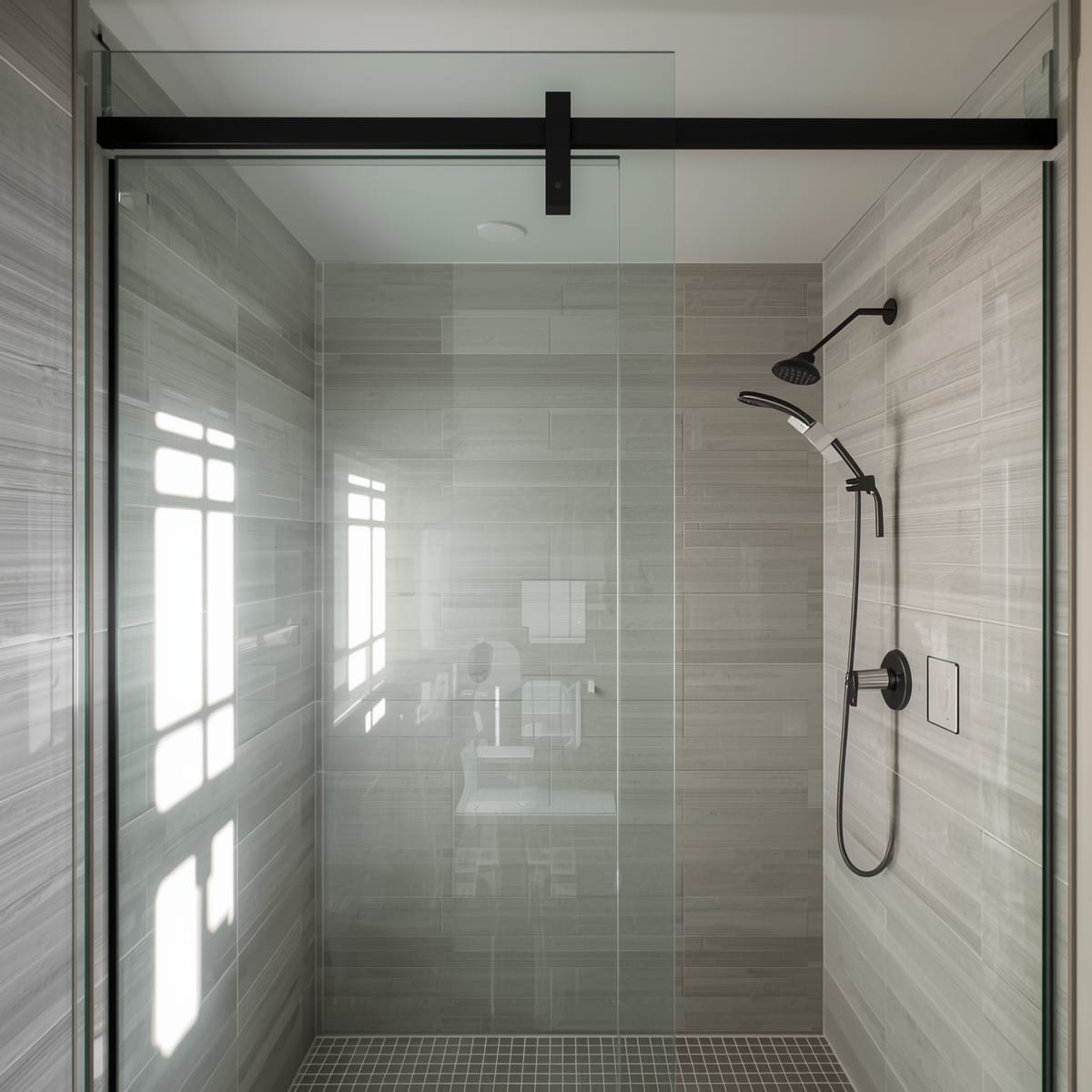
Why sliding doors suit small and modern bathrooms
A hinged shower door needs clear floor to swing into; a sliding door doesn’t. That single difference makes sliders ideal where space is tight, where a swinging door would hit the basin or toilet, or simply where you want a clean, flush look. They’re a natural fit for the constraints we work around in our small bathroom design ideas, and the linear, frameless versions read distinctly modern.
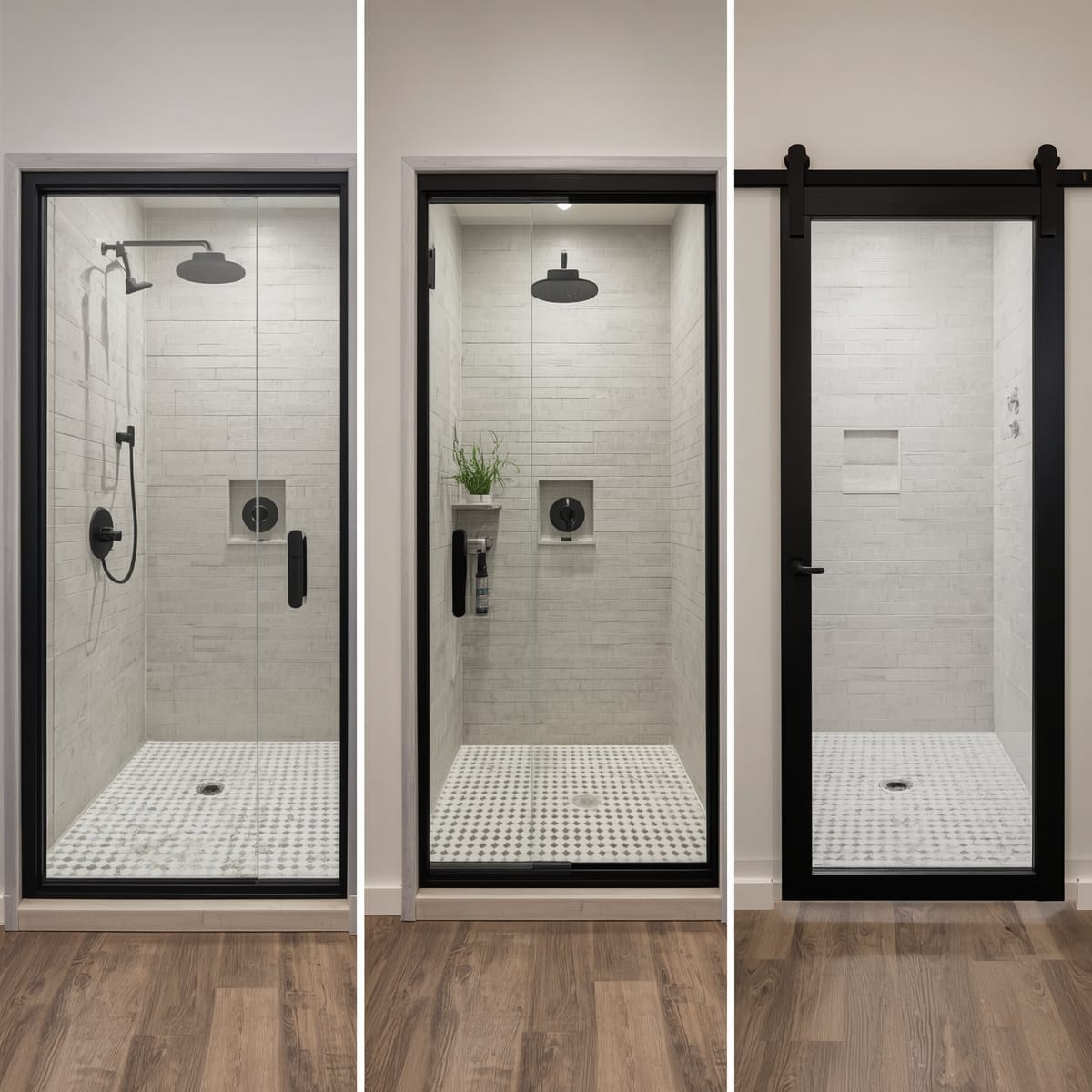
Framed, semi-frameless, or frameless
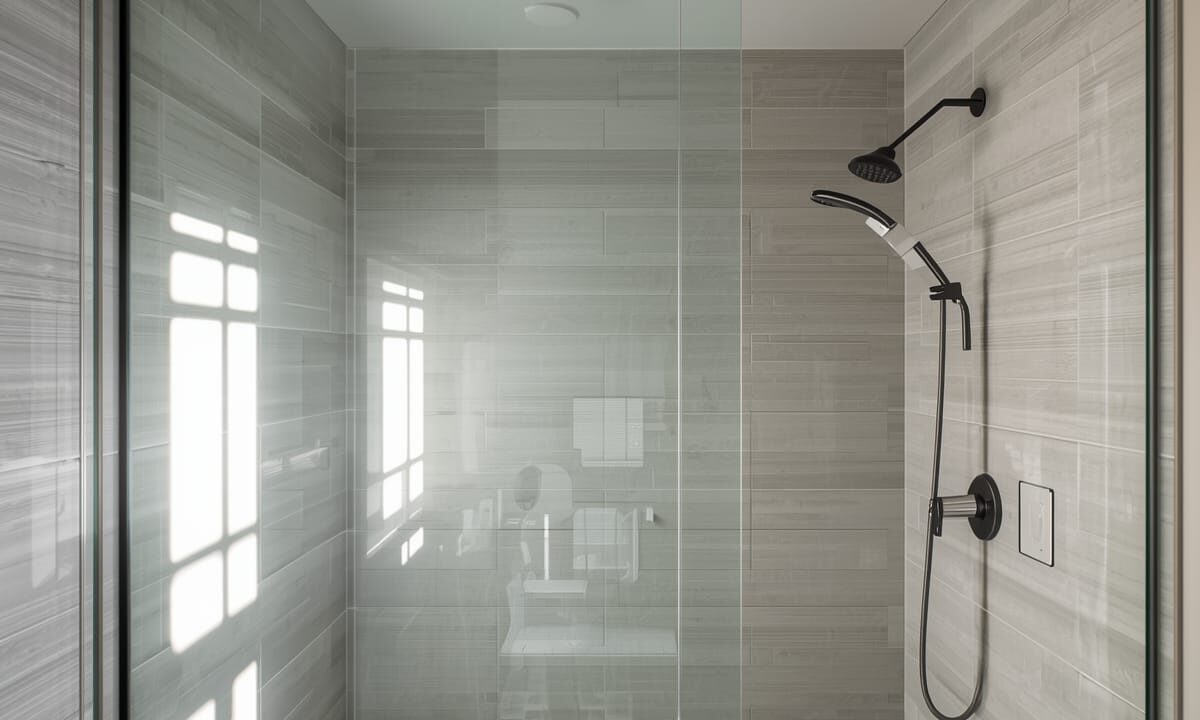
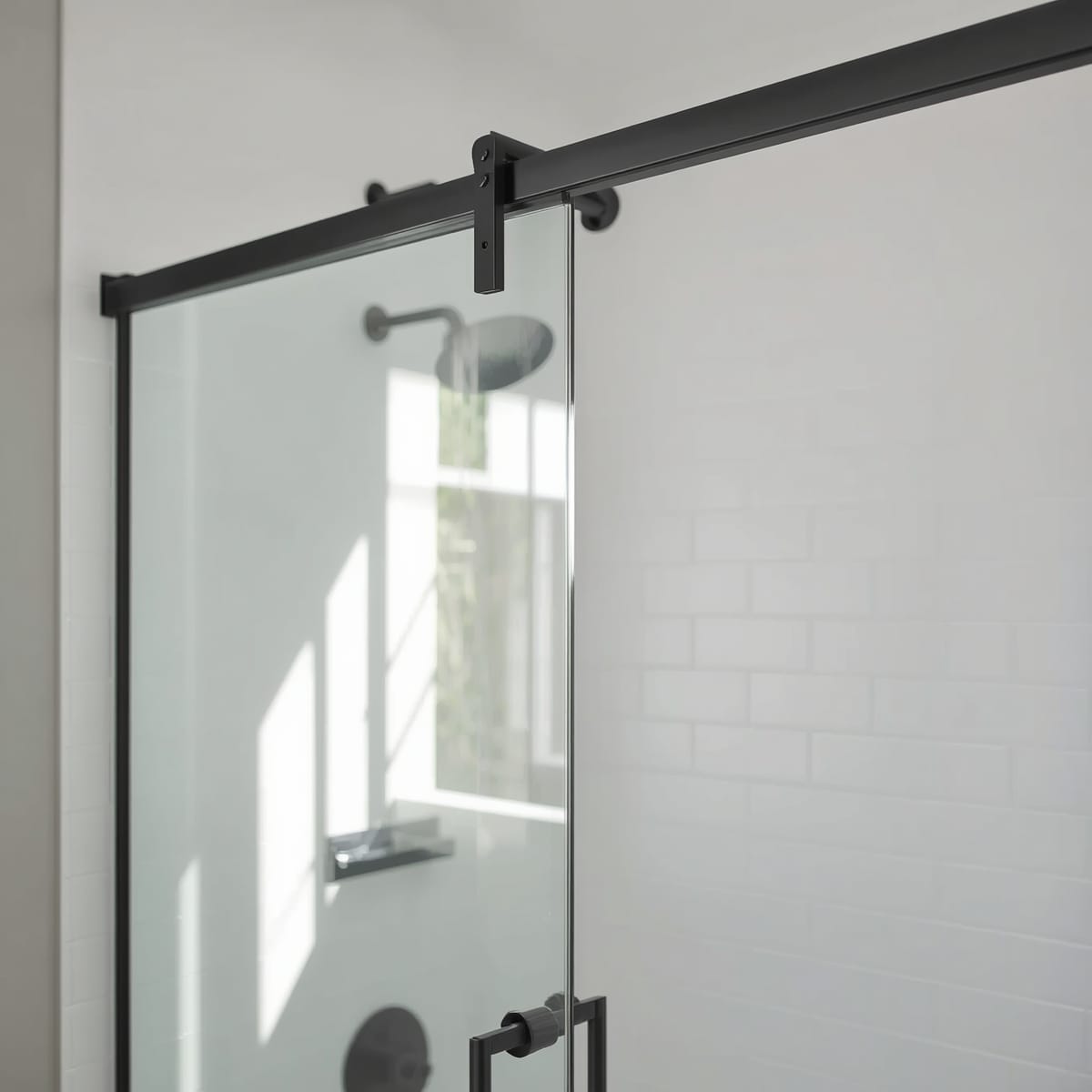
Framed doors are the most affordable and the most watertight, with metal around all edges and seals that contain water well – a sensible choice for an over-bath shower or a budget refit. Semi-frameless trims most of the frame for a lighter look while keeping some support. Frameless doors, often a ‘barn-style’ panel running on a top track, are the most striking and the priciest; they use thicker toughened glass and minimal hardware.
Match the choice to budget and to how much cleaning you’ll tolerate – more frame means more channels where grime collects, but also lower cost and better water control.
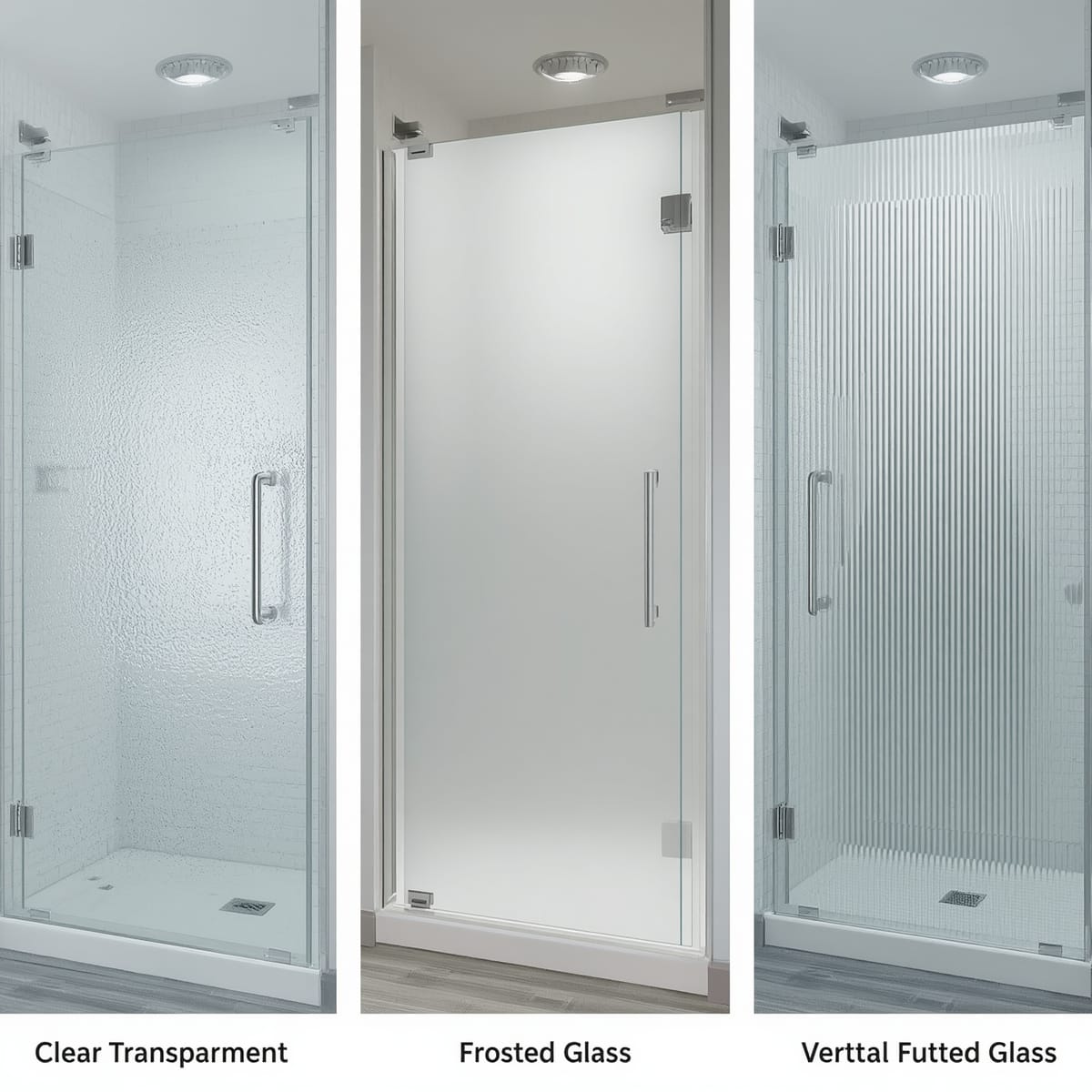
Clear vs frosted vs fluted glass
Clear glass shows off the tiling and feels the most open, but reveals every water spot. Frosted adds privacy and hides spotting – the same quality that makes frosted glass popular on cabinets – and suits shared or family bathrooms. Fluted or reeded glass adds vertical texture, is very forgiving of marks, and is currently the most fashionable option in modern bathrooms.
Consider the room: clear glass keeps a small bathroom feeling open, while frosted or fluted is better where the shower faces a doorway or you simply want more privacy.
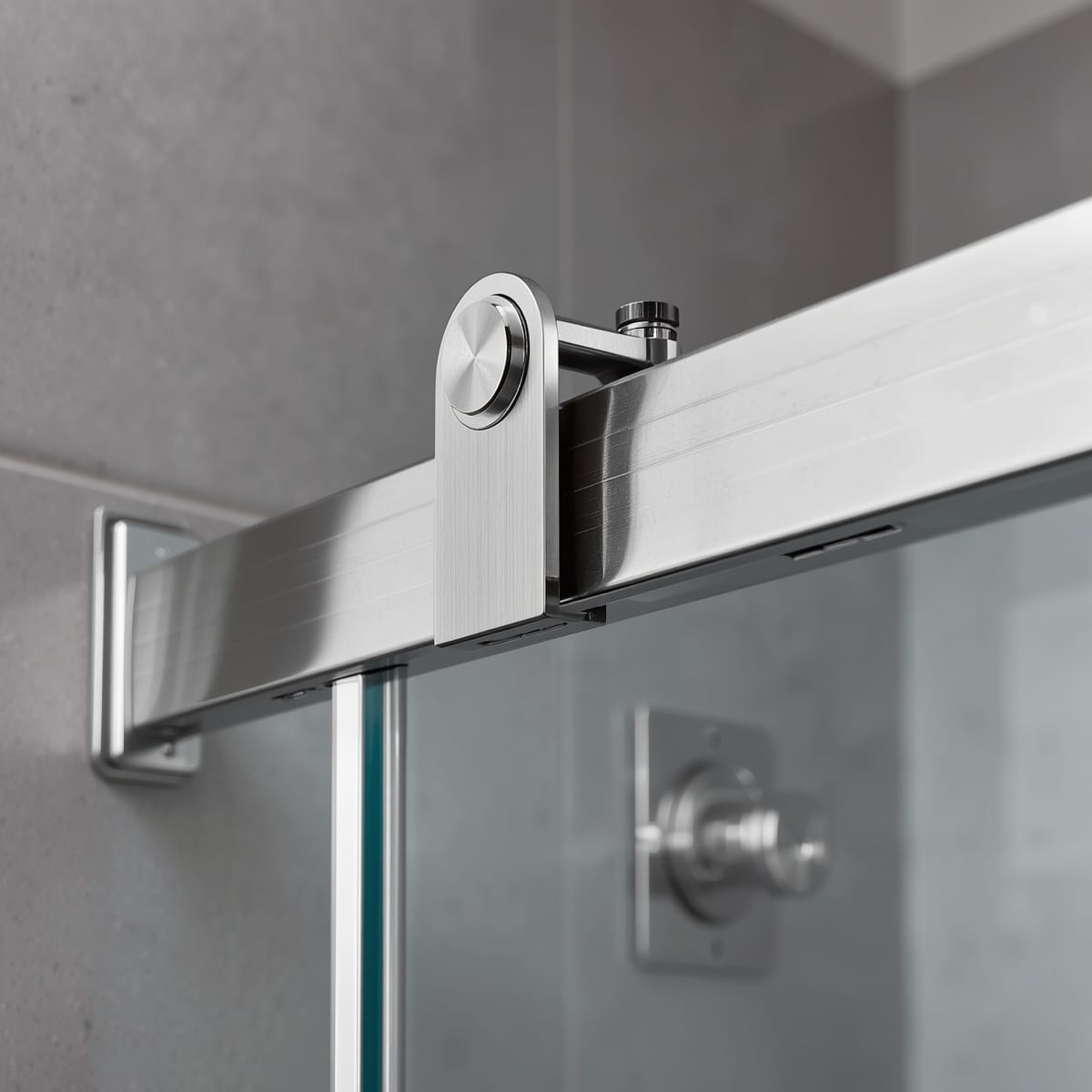
The hardware and track that won’t stick
The rollers and track decide whether the door glides smoothly for years or grinds and jumps within months. Look for stainless-steel or quality nylon rollers, a top-hung track so dirt and hair don’t collect in a bottom channel, and a soft-close stop to prevent slamming. This is the part to spend on even if you economise on the glass – a cheap mechanism is a daily irritation that’s expensive to replace later.
Hardware finish and style
The frame and handle finish sets the door’s character. Matte black is the easy modern update and hides water marks well; brushed brass or nickel reads warmer; chrome is classic and bright. Keep the shower hardware in the same finish family as the tap and other bathroom metals so the room looks coordinated rather than assembled piecemeal.
Keeping glass limescale-free
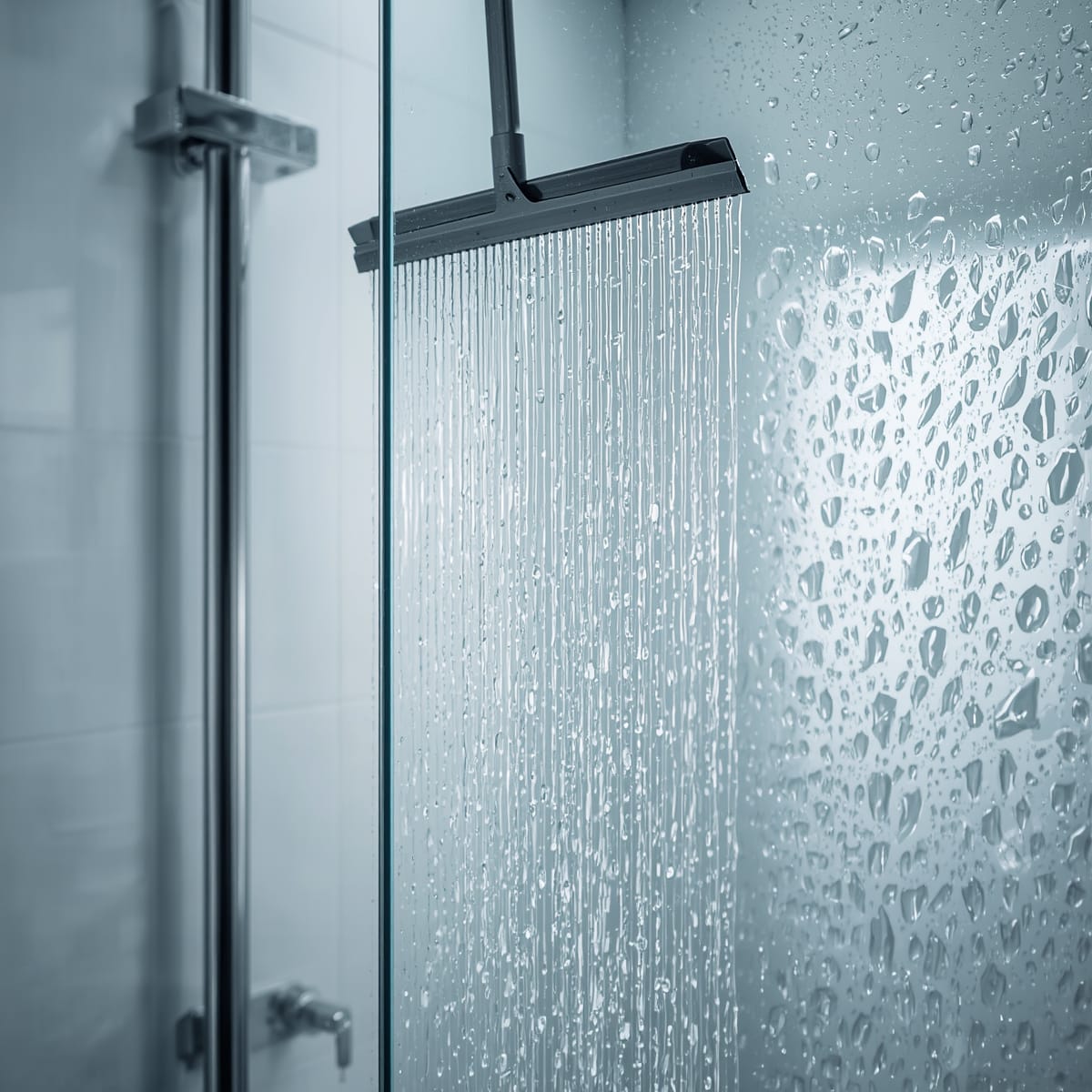
Limescale is the enemy of shower glass. A factory water-repellent coating makes water bead and roll off rather than dry into mineral marks; renew it roughly yearly. Keep a squeegee in the shower and give the glass ten seconds after each use, and you’ll rarely need to scrub. For existing scale, a mild acidic cleaner (or white vinegar) lifts it without scratching.
Fitting a sliding door into the wider scheme
Clean, glassy lines suit a pared-back room, so let the shower door sit within a coherent palette rather than fighting it. The same restrained, modern approach runs through our modern hall interior design ideas, and a softer, more traditional bathroom can still take a sliding door if you choose a framed version and warmer metals, in keeping with our classic home interior design ideas.