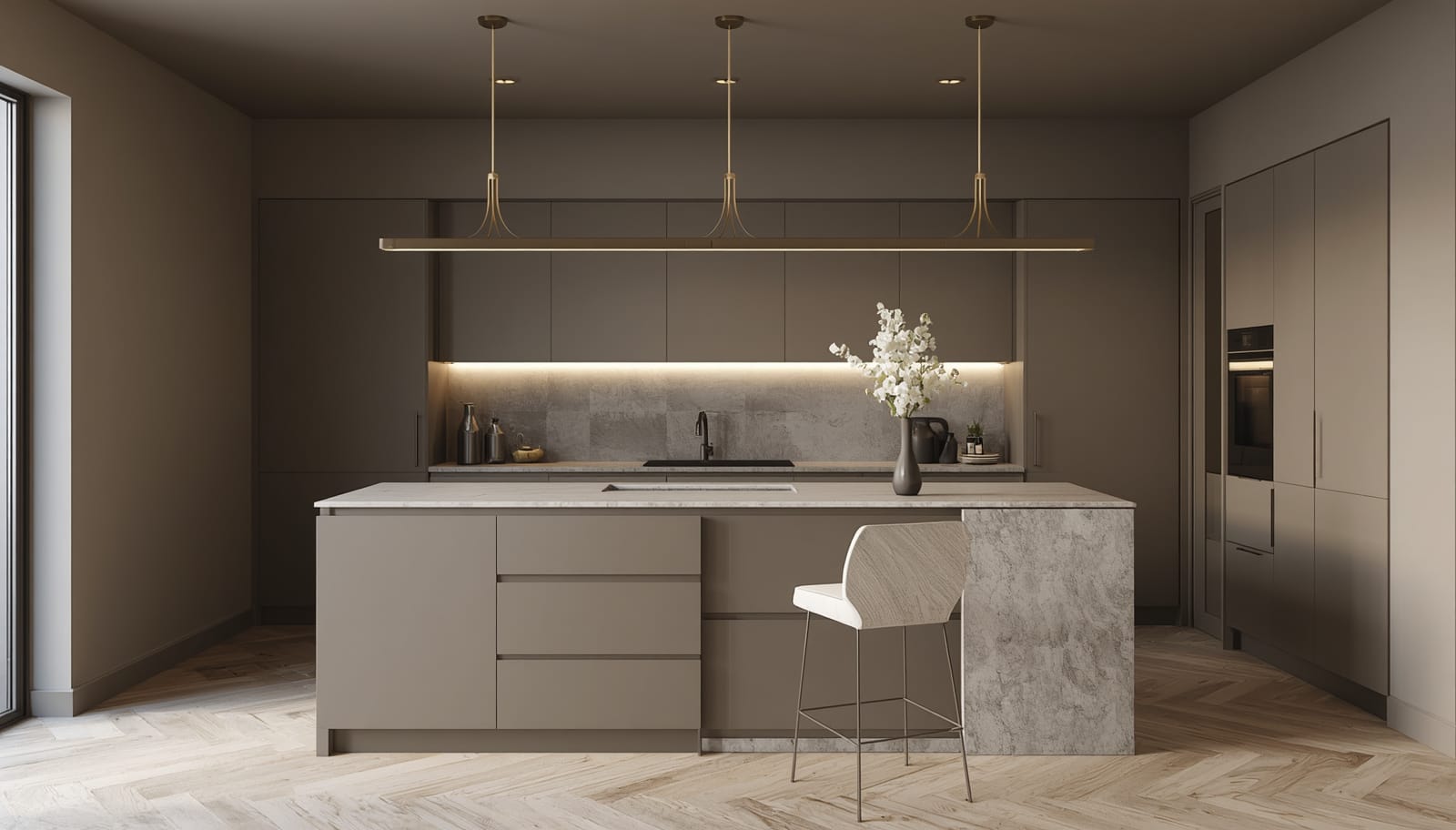
Cabinets are the kitchen’s biggest surface – so they set the mood
Cabinets take up more visual space than anything else in a kitchen, so their design decides whether the room reads modern, traditional, or somewhere in between. Modern cabinet design isn’t only about looking sleek; done properly it makes the kitchen easier to use, faster to clean, and more restful to be in. The trick is that simple should never mean boring – the right finish, handle, and storage can make a restrained kitchen feel genuinely expensive.
What actually makes a cabinet read ‘modern’
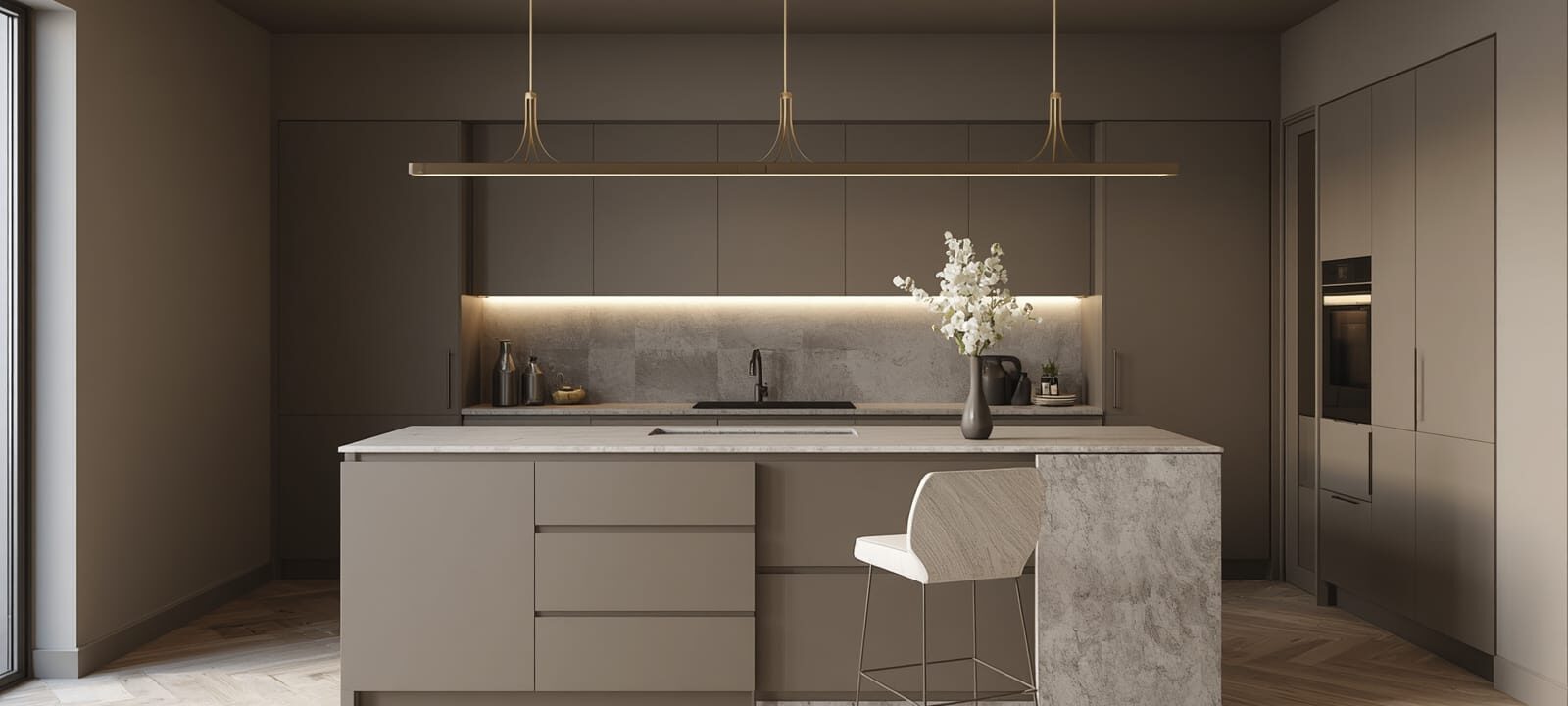
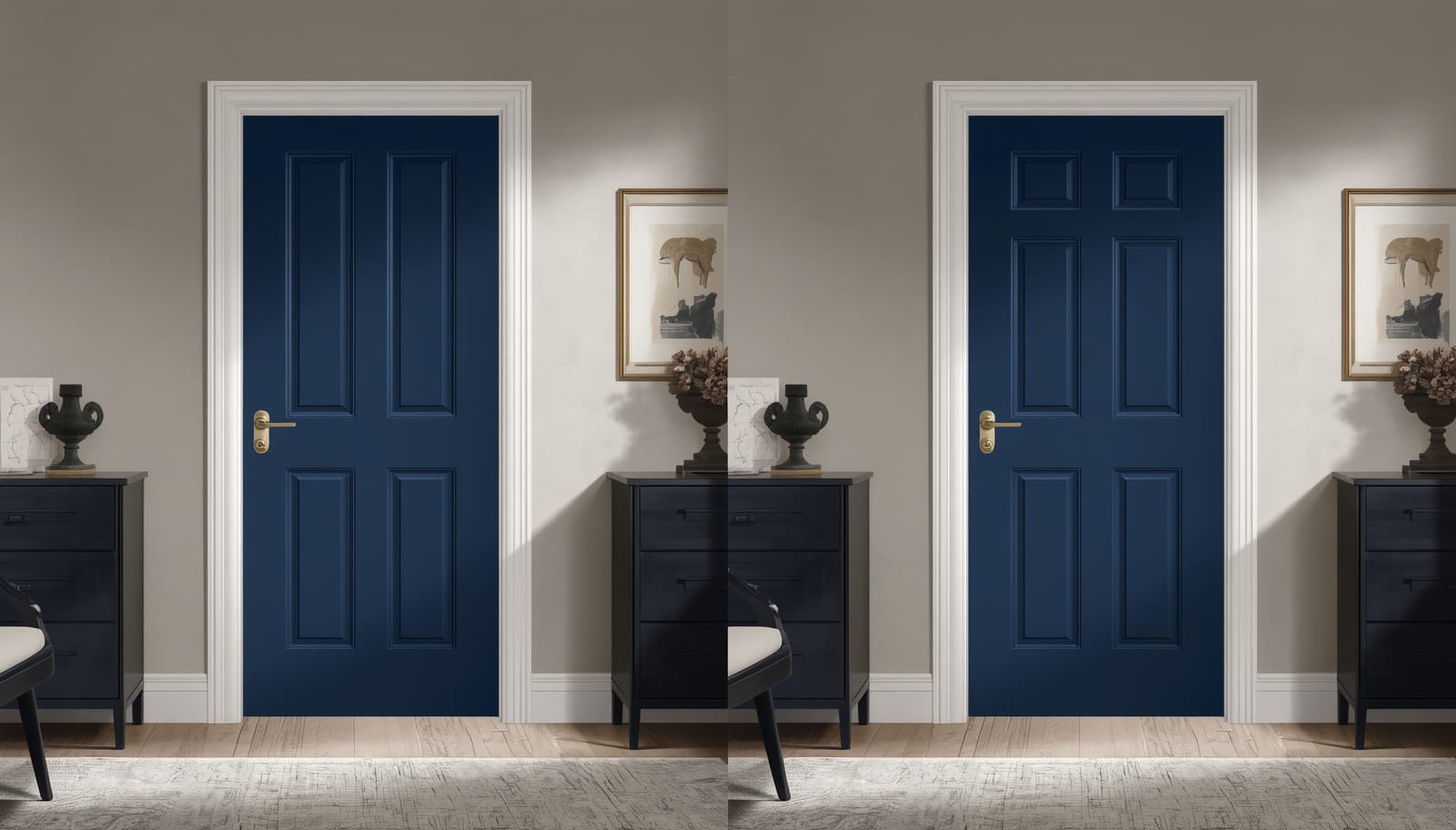
Modern cabinets share three traits: flat or lightly framed doors, minimal or hidden handles, and a restrained palette. The decoration lives in the material and the proportion rather than in mouldings and trim. Older styles lean on raised panels, beading, and ornate detail; modern doors go the opposite way and let shape, colour, and grain do the talking.
If you strip a kitchen back to clean fronts, a continuous worktop, and one considered finish, it reads modern almost automatically. Everything below is about choosing those few elements well.
Flat-panel vs shaker: where each wins
A flat slab door is the purest modern choice and the easiest to wipe down – no grooves to collect grease. It suits minimalist and contemporary homes especially well. A slim-frame shaker keeps a shallow recessed panel; it still reads current and forgives an older property or a more traditional worktop, making it the safer pick if your taste sits between modern and classic.
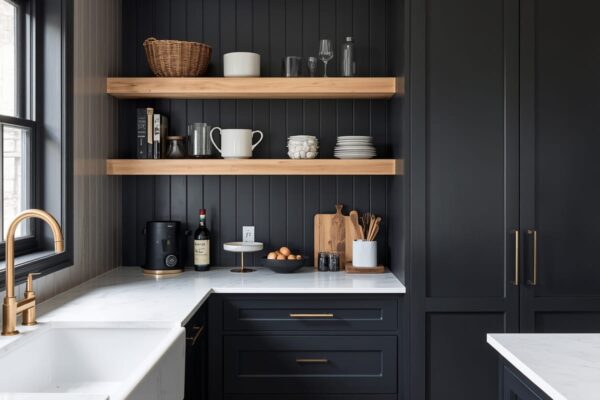
Both work across white, charcoal, navy, sage, and natural wood. If you’re tempted to go darker, our guide to black kitchen cabinets shows how to do it without the room feeling heavy, and the space-first principles in our small kitchen design ideas still apply if your room is tight.
The handle decision sets the whole tone
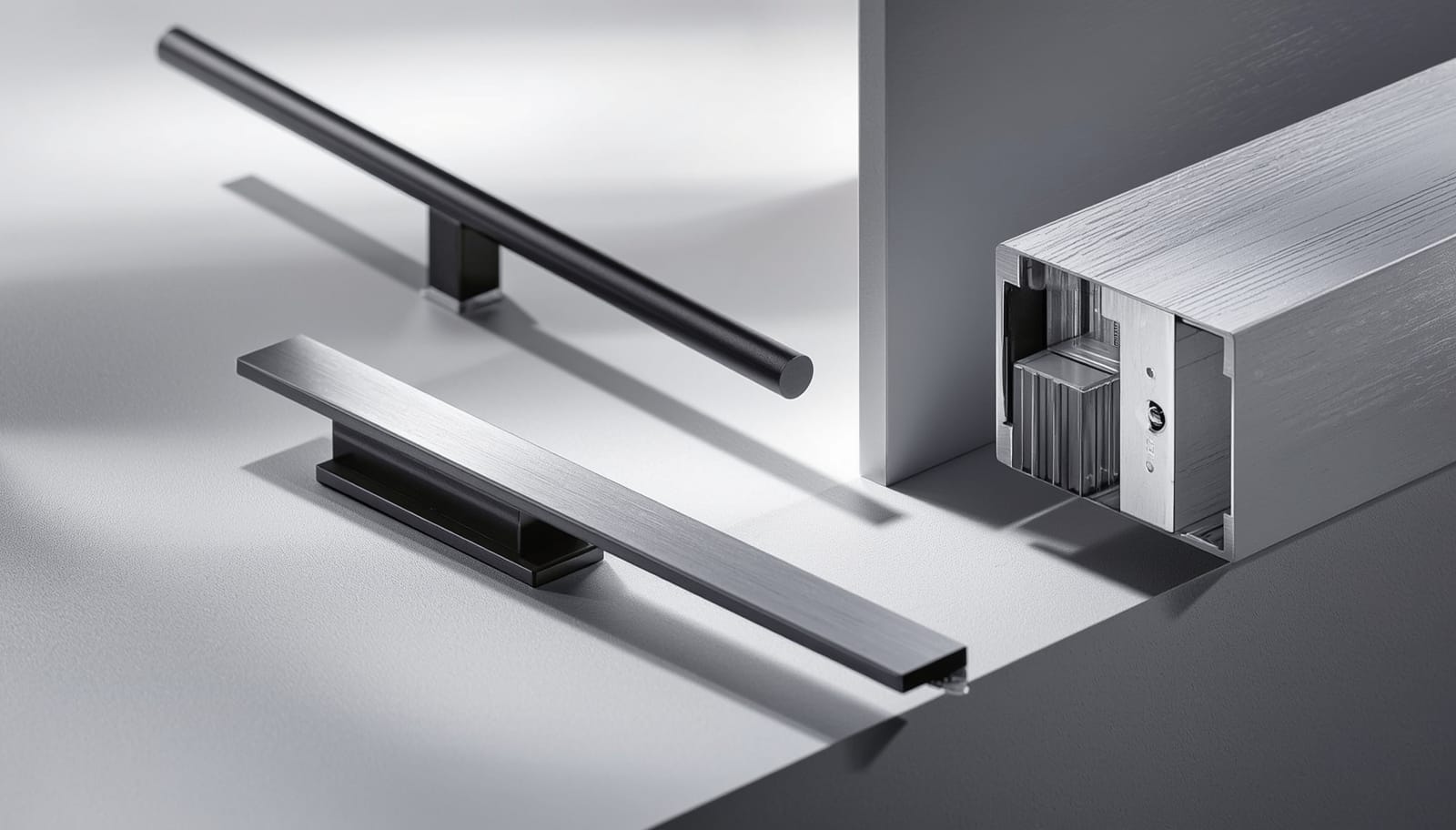
Handles are small but they change the budget and the look more than the colour does, so decide them first. A handleless kitchen – a routed J-pull channel or push-to-open mechanism – gives the most seamless, architectural look, but costs more and can be fiddly with wet or floury hands. A thin tubular bar handle in brass, matte black, or brushed steel reads modern and is the cheapest way to refresh existing doors.
Edge pulls and recessed finger pulls sit between the two. Whatever you choose, keep it consistent across the run; mixing handle styles is the fastest way to make a modern kitchen look unplanned.
Matte, gloss, or wood-grain laminate
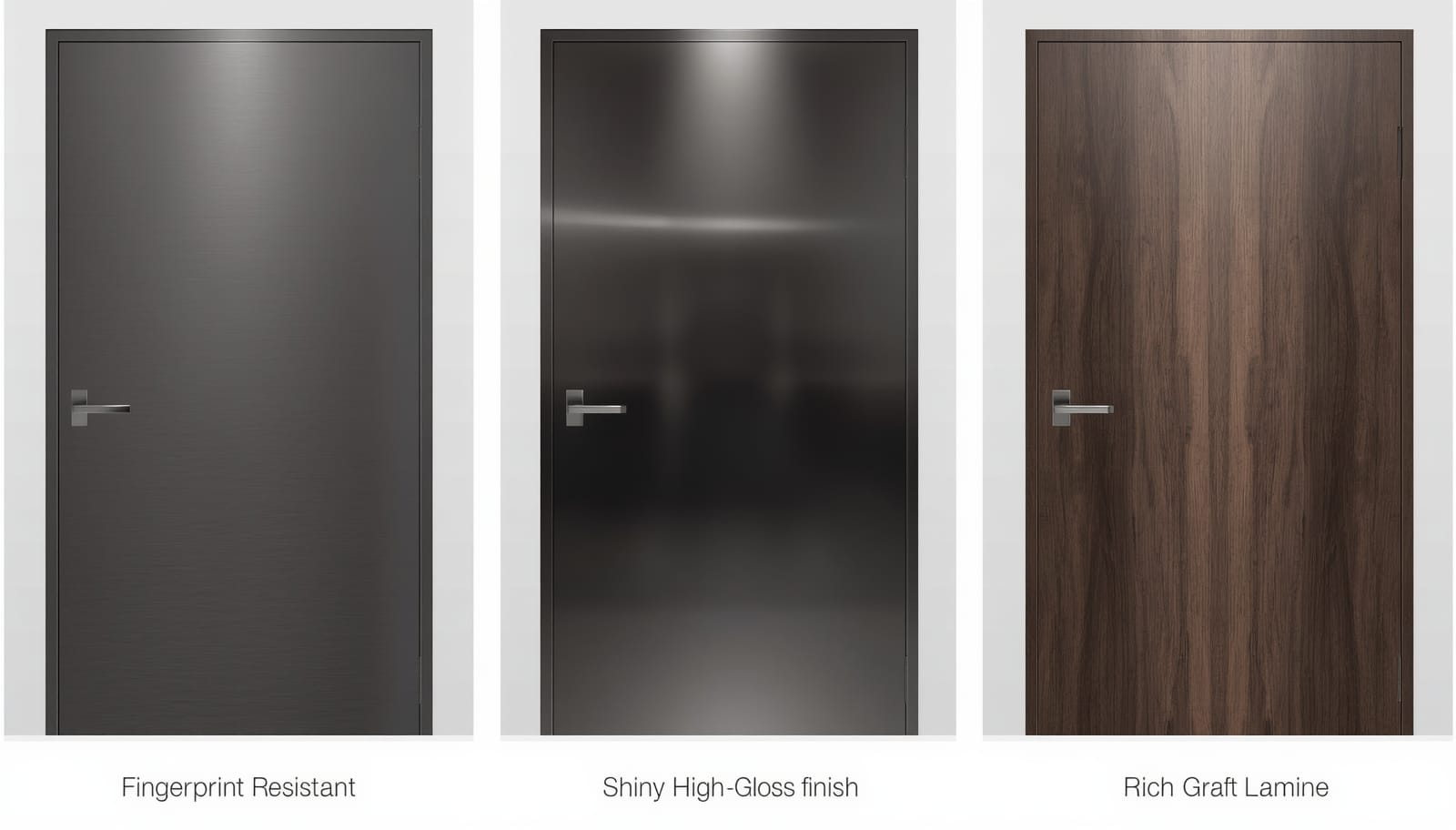
Finish is where modern kitchens win or lose on daily liveability. Matte and fingerprint-resistant laminates suit busy, well-lit kitchens and hide marks; they’ve become the default for a reason. High-gloss bounces light into darker rooms and looks crisp, but shows every fingerprint and water spot, especially near handles. Textured wood-grain laminate adds warmth, hides marks well, and softens an otherwise cool scheme.
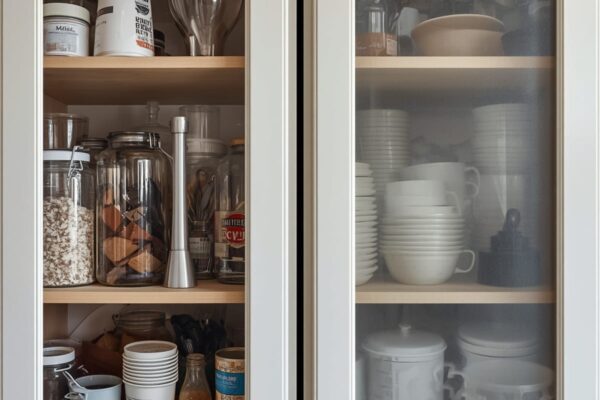
If a full wall of doors feels heavy, breaking it up with frosted glass upper cabinets keeps the look light while staying modern.
Colour and pairing the modern kitchen
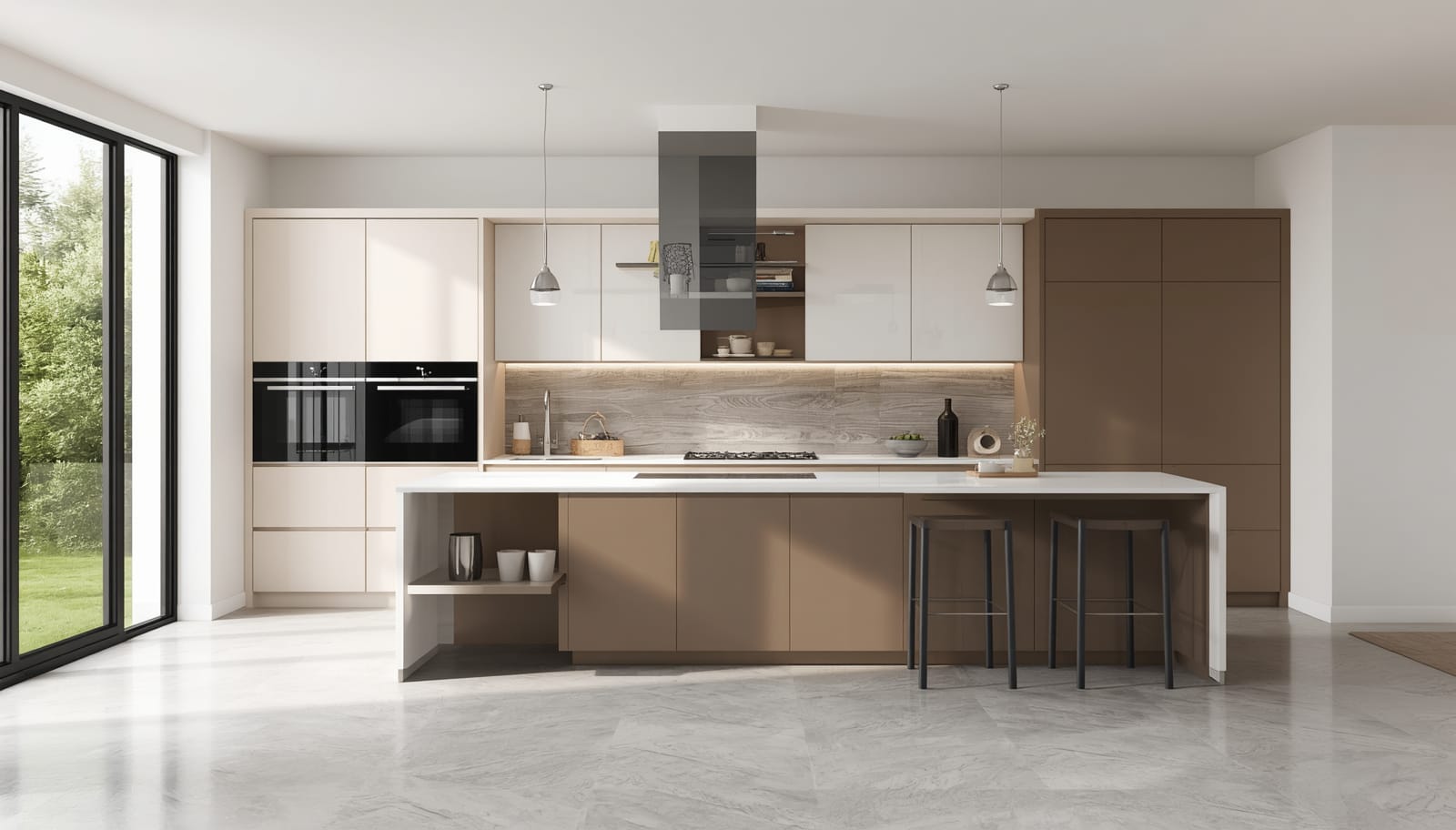
Modern palettes tend to be restrained: white, greige, charcoal, navy, forest green, and natural wood, usually with no more than two main colours. The most reliable upgrade is two-tone – pale wall units to keep the room airy, with a deeper colour on the base units or island to ground it. A wood or stone worktop warms a cool palette; a matte black or quartz worktop sharpens it.
Metals matter too: brass and warm bronze read softer and more current than chrome against modern fronts. Keep the metal consistent across handles, tap, and light fittings.
Storage that does the modern part invisibly
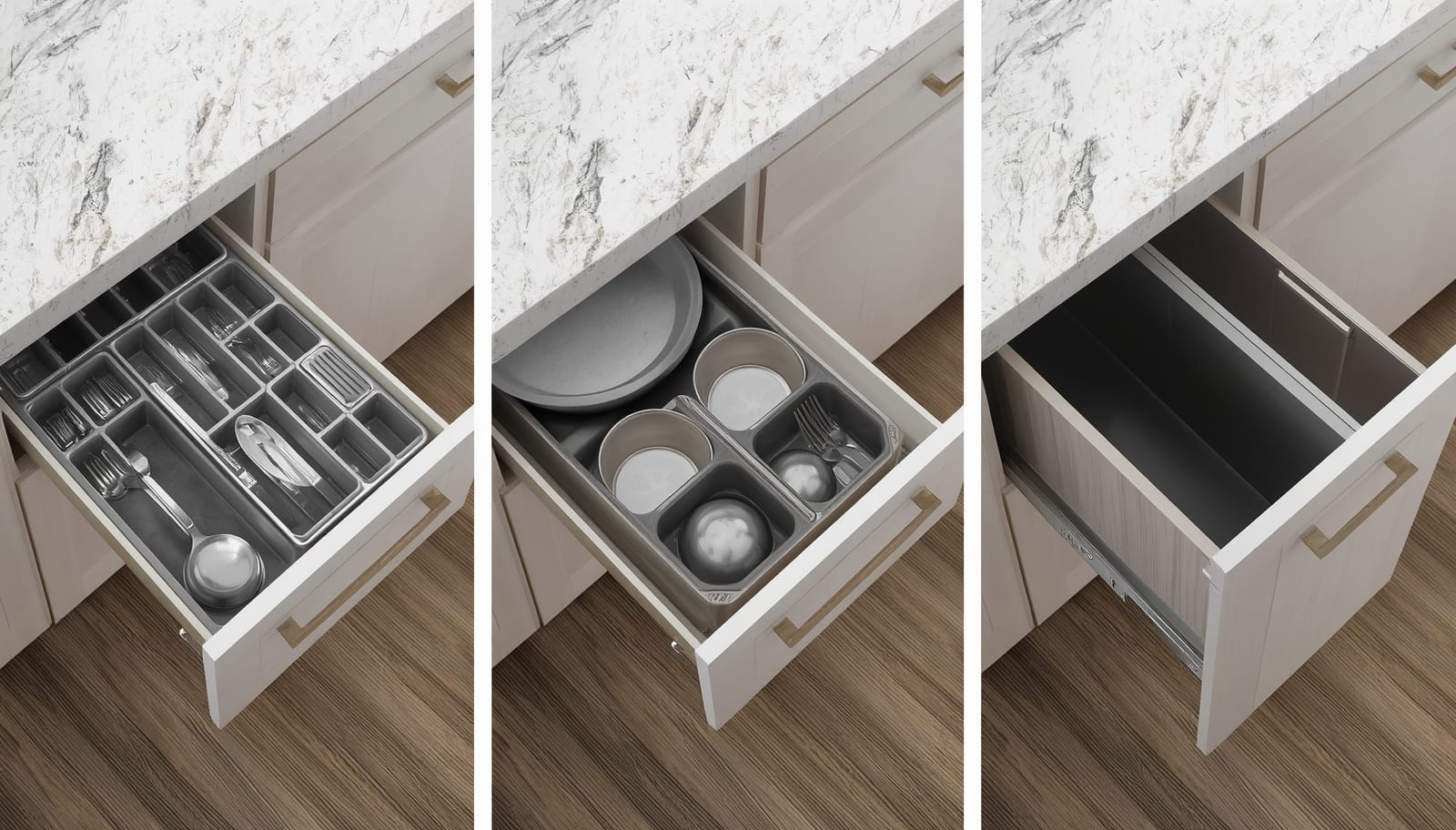
The cleanest-looking kitchens hide hard-working interiors. Deep pan drawers with adjustable pegs, cutlery and utensil dividers, a pull-out bin (ideally with separate recycling), a tall larder, and a corner solution all keep the minimal exterior from costing you storage. Integrated, hidden appliances – a panelled dishwasher, a concealed extractor – reinforce the seamless look.
In a tight footprint, lean on the same vertical and drawer tricks from our small kitchen design ideas so the pared-back fronts don’t mean less capacity.
Where to spend and where to save
Cabinet carcasses are broadly similar across price points – the boxes are mostly the same engineered board – so the doors, hinges, and worktop are where money shows. Worth the spend: soft-close hinges and runners, quality door fronts in a finish you’ll keep clean, and good internal fittings. Easy to save: economise on the carcasses, choose laminate over solid for the doors if budget is tight, and refresh rather than replace by swapping just the handles and worktop on an otherwise sound kitchen.
Common modern-kitchen mistakes
The usual missteps are mixing too many finishes (pick one or two and commit), choosing high-gloss in a room you’ll struggle to keep smear-free, and going so minimal that you sacrifice the storage you need. Another is forgetting the lighting – even the best cabinetry looks flat without good task light on the worktop. Keep it consistent, practical, and restrained, and a modern kitchen stays looking current for years.