A small kitchen is a discipline, not a disadvantage
A small kitchen does not have to feel like a compromise. In most flats and terraced houses it is the room where every square inch has to earn its place, and that constraint, handled well, produces a space that is calmer and faster to work in than many large kitchens. The goal is never to fake the look of a vast luxury kitchen in a tiny footprint. It is to make a compact room genuinely efficient, easy to clean, and pleasant to stand in while the kettle boils.
Get four things right – layout, storage, colour, and lighting – and almost any small kitchen comes good. This guide works through them in the order you should actually tackle them, because decisions made early (where the sink goes) constrain the fun ones made later (which tiles you pick).
Start with how you actually cook
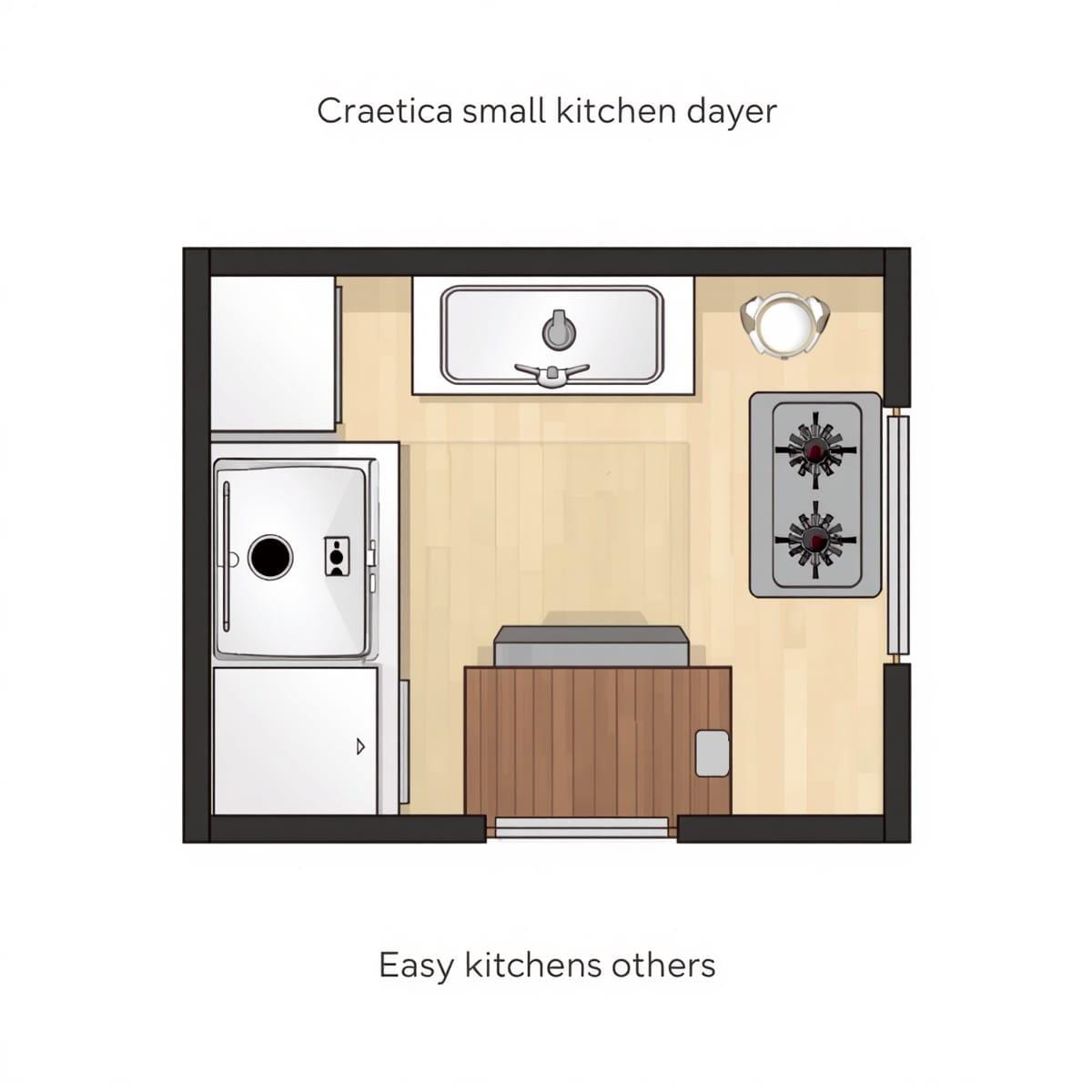
Before you look at a single cabinet door, watch how the kitchen gets used. The three points you return to constantly are the sink, the hob, and the fridge – the classic work triangle. In a small kitchen you want them close enough that you pivot between them in a step or two, but not so cramped that the oven door collides with the dishwasher or that two people can’t pass.
It helps to think in zones rather than appliances: a wet zone (sink, dishwasher, bin), a hot zone (hob, oven), and a cold/storage zone (fridge, dry goods). Keep each zone’s tools nearby – pans by the hob, knives and chopping boards between sink and hob, plates near the dishwasher. When the room is organized around your movements, it feels twice its size.
Choose the layout the room is asking for
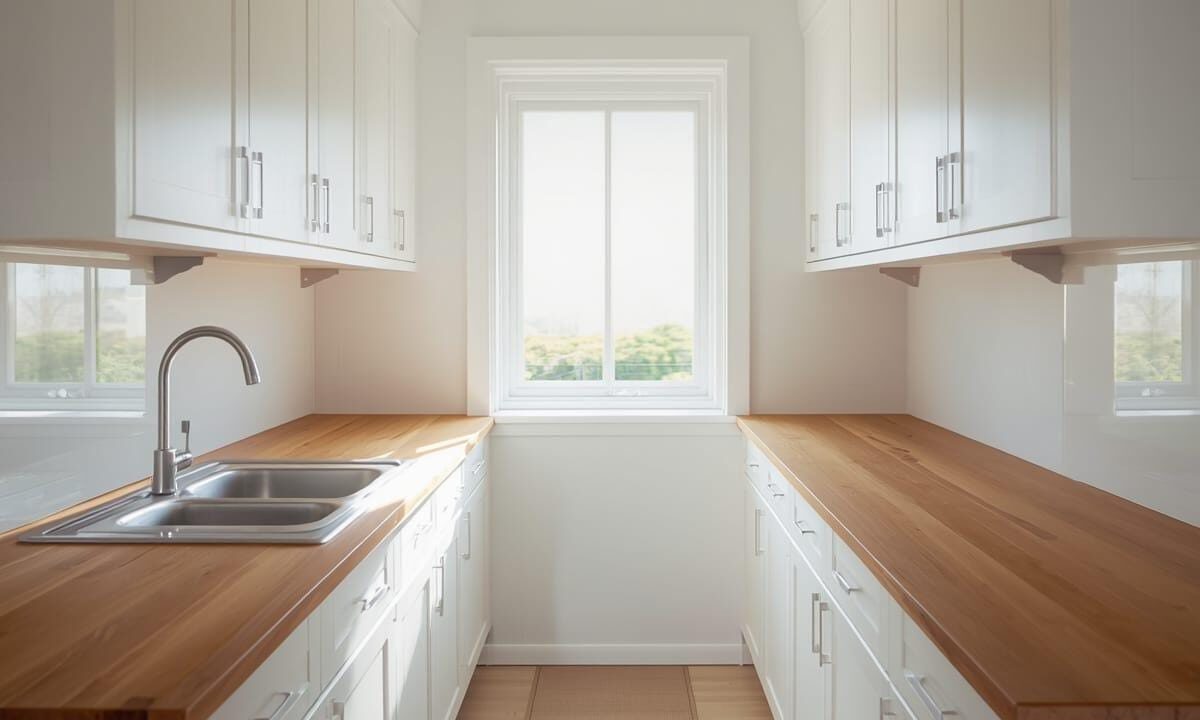
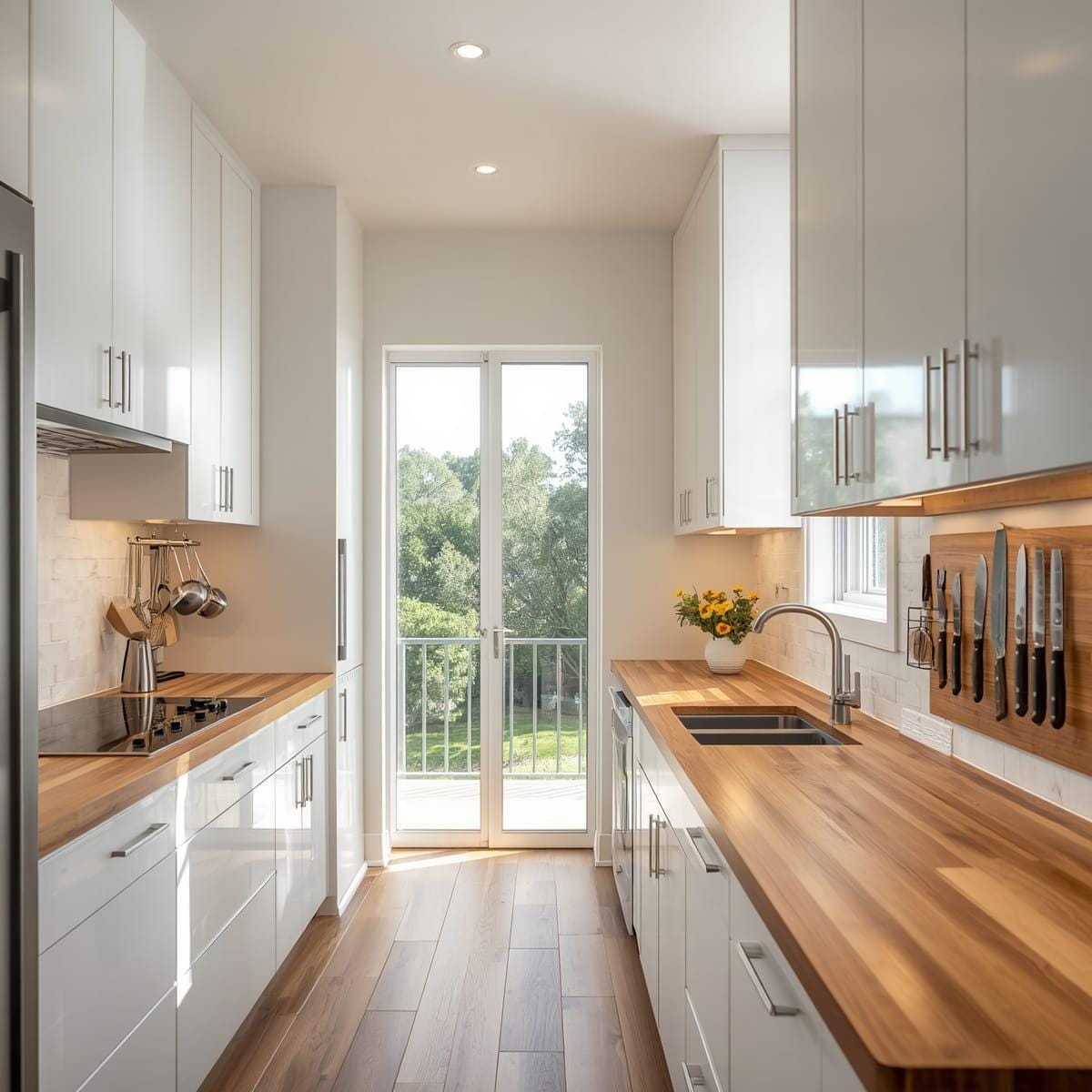
A galley (cabinets on two facing walls) is the most efficient small-kitchen layout and suits long, narrow rooms; aim for at least 1.0–1.2m clear between the runs so drawers and the oven door can open. An L-shape wraps two adjoining walls, leaves a corner for the sink or hob, and frees the rest of the room for a small table. A single-wall kitchen suits studios and open-plan corners, and a peninsula can add worktop and casual seating without the bulk of a full island.
Resist the urge to fill every wall. A clear walking path and a couple of generous runs of worktop will age far better than a layout crammed with units. If you’re starting from bare cabinetry choices, our modern kitchen cabinet design ideas guide covers door styles and finishes that suit tight rooms.
Steal the vertical space everyone ignores
When floor space is fixed, the walls become your best friend. Most kitchens stop the upper cabinets a foot below the ceiling and lose an entire shelf of storage to a dust trap. Run uppers to the ceiling for the things you rarely reach – the roasting tin, the seasonal platters – and keep daily items lower.
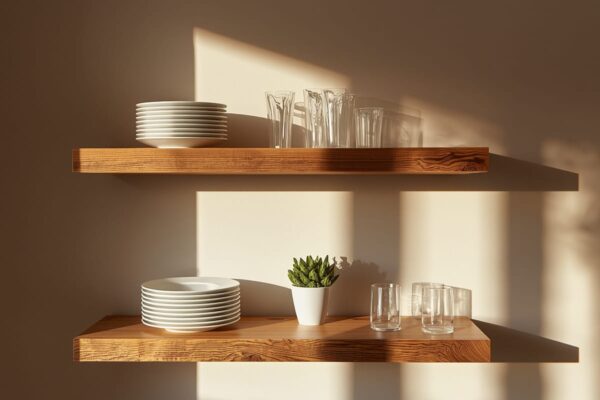
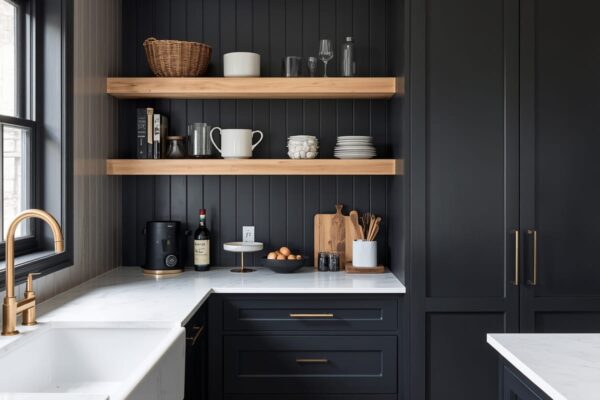
Beyond cabinets, a hanging rail along the backsplash holds utensils, mugs, and small pans; a magnetic strip frees a whole drawer of knives; and a narrow shelf above the window catches herbs and oils. If you want some of that wall to feel open and bright rather than boxed-in, a short run of open kitchen cabinet ideas for everyday plates and glasses keeps the room breathing without the clutter of full open shelving everywhere.
Pull-outs, drawers, and corner solutions
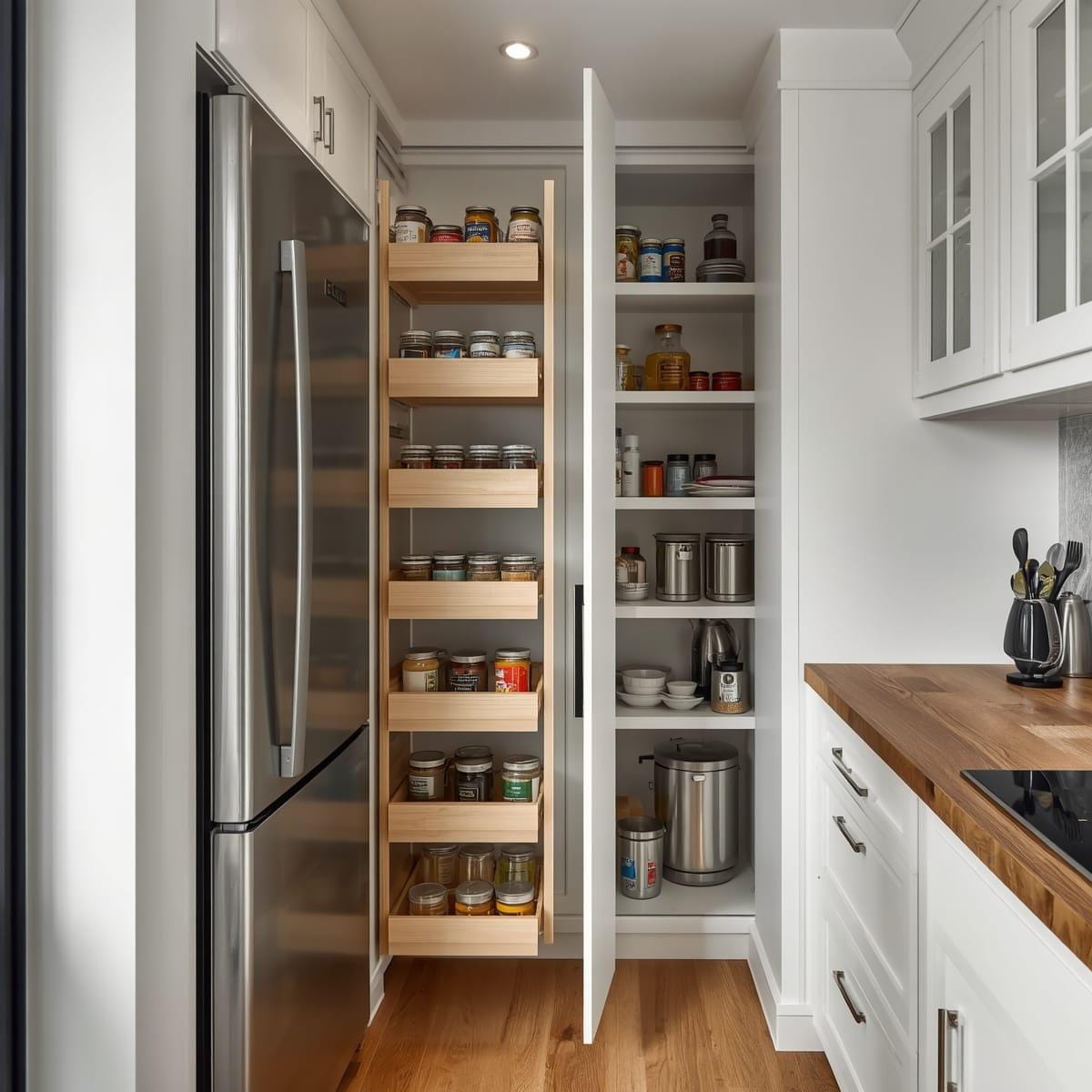
A deep base cupboard swallows everything past the front 20cm; you end up on your knees with a torch. Swap doors for drawer stacks wherever you can – drawers bring the contents to you and let you store plates flat, which most people find easier than a wall rack. A tall pull-out larder, even a slim 150mm one beside the fridge, becomes a pantry you can see into at a glance.
Corners are the classic dead zone. A carousel (lazy Susan), a magic-corner pull-out, or simply angling a cabinet turns that space into usable storage. Add drawer dividers, a pull-out bin, and a tray for baking sheets, and a small kitchen will out-store a careless large one.
Light colours, then a deliberate accent
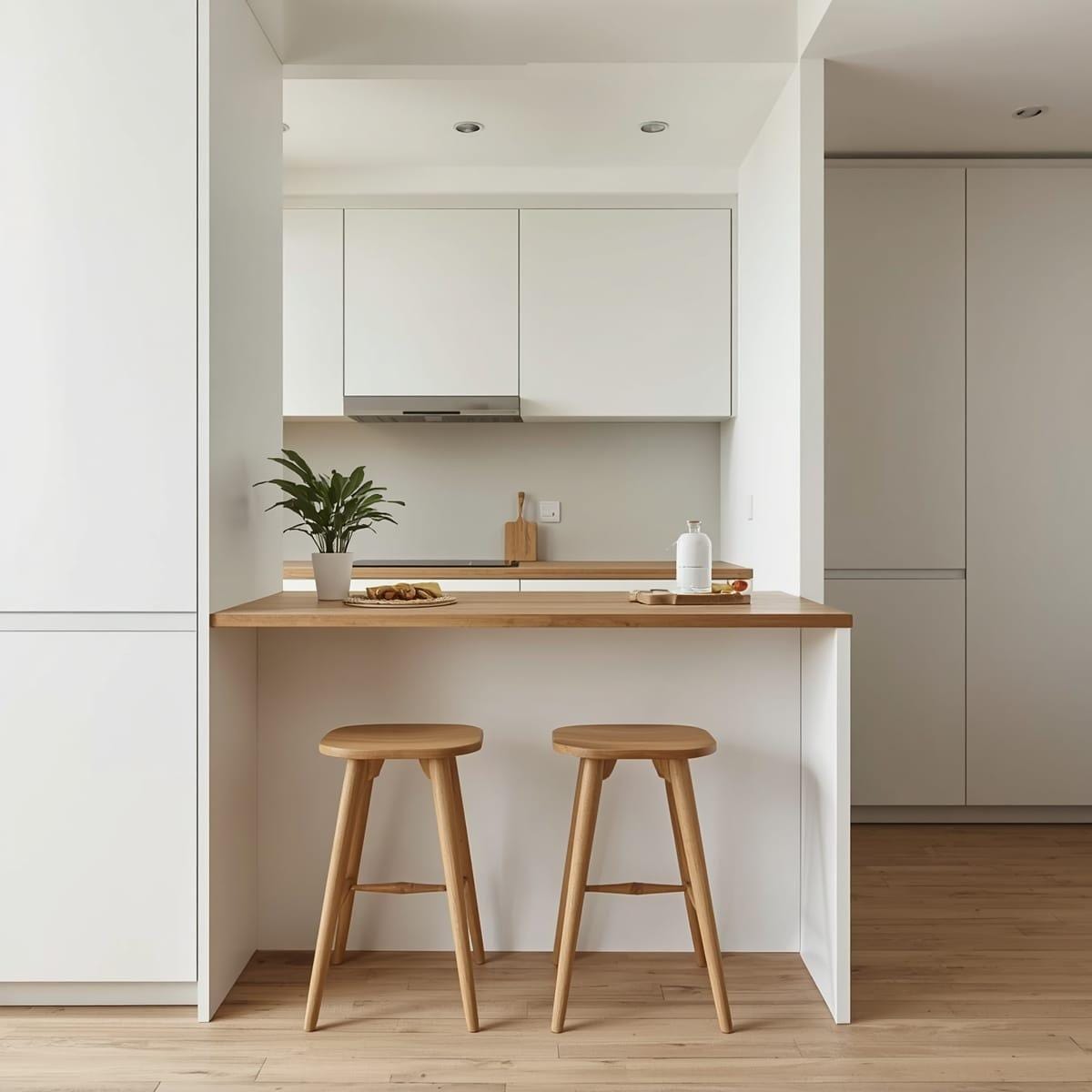
Pale cabinets, a light worktop, and a reflective backsplash bounce daylight and make a small room read larger. That doesn’t mean an all-white box. A wood worktop, brass handles, or a soft sage base cupboard adds warmth and personality. A popular, low-risk move is two-tone: lighter uppers to keep the top of the room airy, with a slightly deeper or warmer colour on the lowers to ground it.
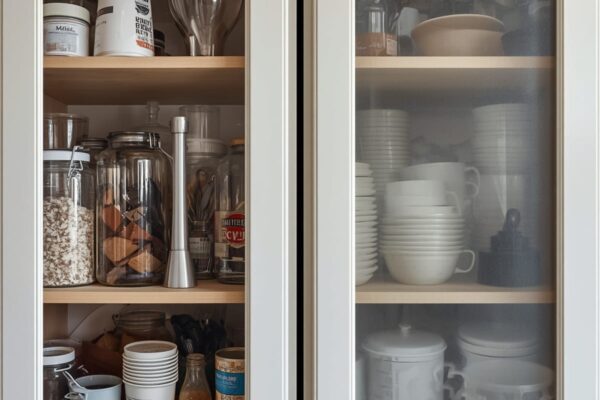
If you love drama and the room has the light for it, you can go dark on the lower run – our guide to black kitchen cabinets explains how to do that without the room feeling closed in. In a genuinely dark kitchen, frosted glass upper doors lift the space without exposing every mug.
Lighting in layers
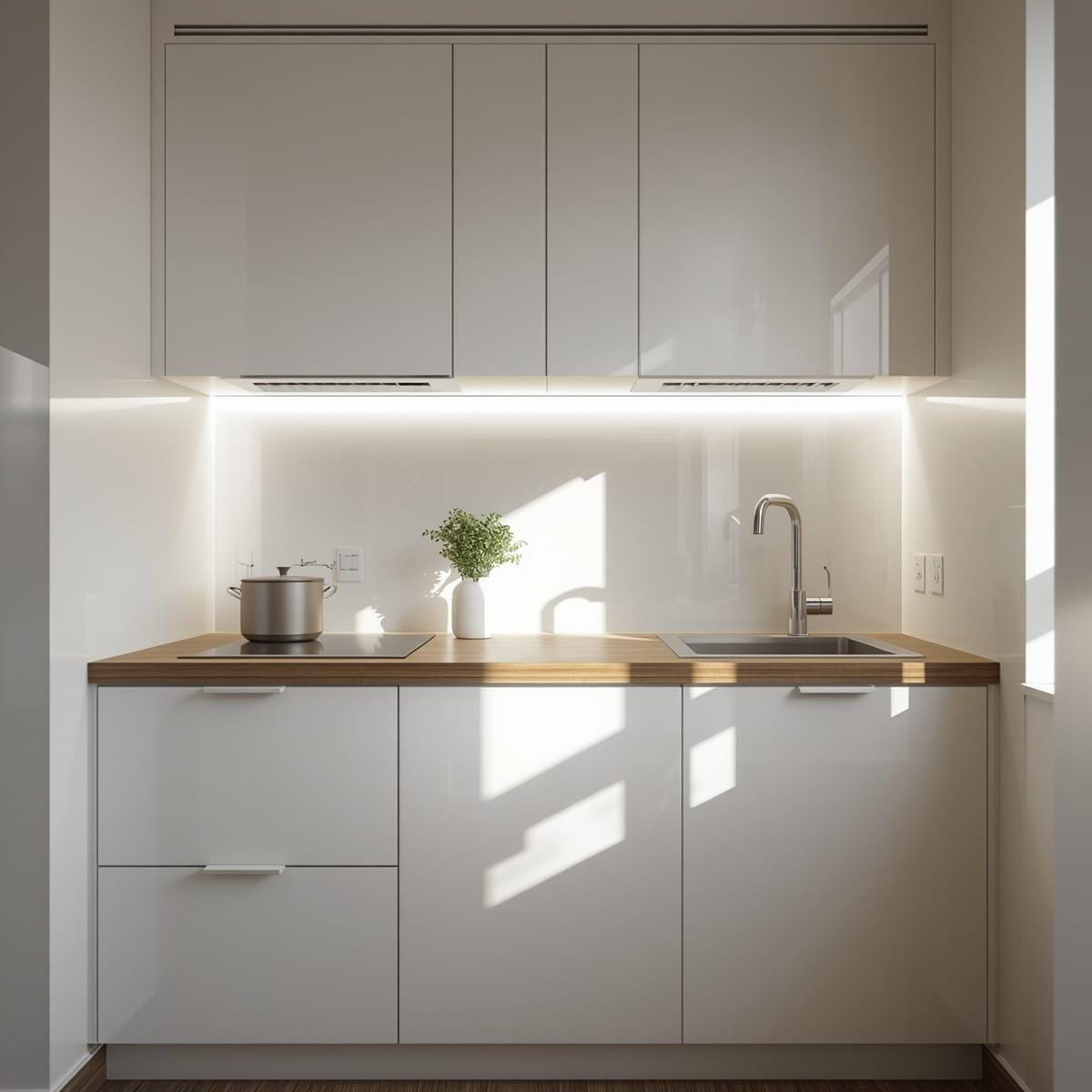
A single ceiling light rarely does enough in a small kitchen, leaving the worktop in your own shadow. Layer three types: ambient (a ceiling source or recessed downlights), task (under-cabinet strips over the prep area – the single biggest upgrade most kitchens can make), and a little accent (a pendant over a breakfast bar, or internal cabinet lights).
Choose warm-white bulbs (around 2700 – 3000K) for kitchens; cool blue light flattens wood and stone and makes the room feel clinical. Protect natural light too – skip heavy curtains at the window and use a simple blind or nothing at all.
Worktop and prep space: protect what matters
Worktop is the resource you run out of fastest. Guard a clear stretch beside the hob and another beside the sink – these are your real prep zones – and keep small appliances off them. A pull-out board, an over-sink chopping board, or a draining rack that sits in the sink can temporarily double your work surface when you need it.
Materials matter less than continuity: a single light worktop that runs unbroken reads larger than several contrasting surfaces. Wrapping the same material a little way up the wall as a slim upstand or full backsplash also makes the room feel cohesive.
The appliances worth downsizing (and the ones to keep)
Right-sizing appliances can buy back the exact metre of worktop that makes daily cooking pleasant. A 60cm dishwasher becomes a 45cm slimline; a full fridge-freezer becomes an under-counter pair or a slim 55cm model; a four-burner hob becomes two large plus two small, or a domino pair you only fit what you use. A combination microwave-oven can replace two separate appliances.
Don’t downsize blindly, though. If you batch-cook or have a family, a too-small oven or fridge creates daily friction that’s worse than a slightly tighter worktop. Match the appliance to how you actually live – the same honest, space-first thinking we apply to a small bathroom layout.
Squeezing in somewhere to sit
Even a tiny kitchen can usually find a perch. A 30cm overhang on the end of a run turns into a breakfast bar for two stools; a drop-leaf shelf folds flat against the wall when not in use; a narrow peninsula adds both worktop and casual seating. Backless or low stools that tuck fully underneath keep sightlines clear and the floor uncluttered.
A budget priority list
If money is tight, spend where it’s felt daily and save where it isn’t. Worth the money: drawers over doors, good under-cabinet lighting, a quality tap, and soft-close hinges. Easy to economise: cabinet carcasses (the boxes are similar across price points; the doors and worktop do the visual work), open shelving instead of extra wall units, and a painted feature rather than expensive tiles. A fresh handle and a brighter backsplash can transform a dated small kitchen for very little.
Common mistakes to avoid
The biggest mistake is visual overload – heavy dark cabinets, busy tiles, and bulky appliances all at once in a compact room. The second is ignoring corners and the top foot of wall. The third is buying oversized appliances that steal the movement space you need. Keep the palette calm, work the verticals, right-size the kit, and a small kitchen becomes one of the most satisfying rooms in the house to use.