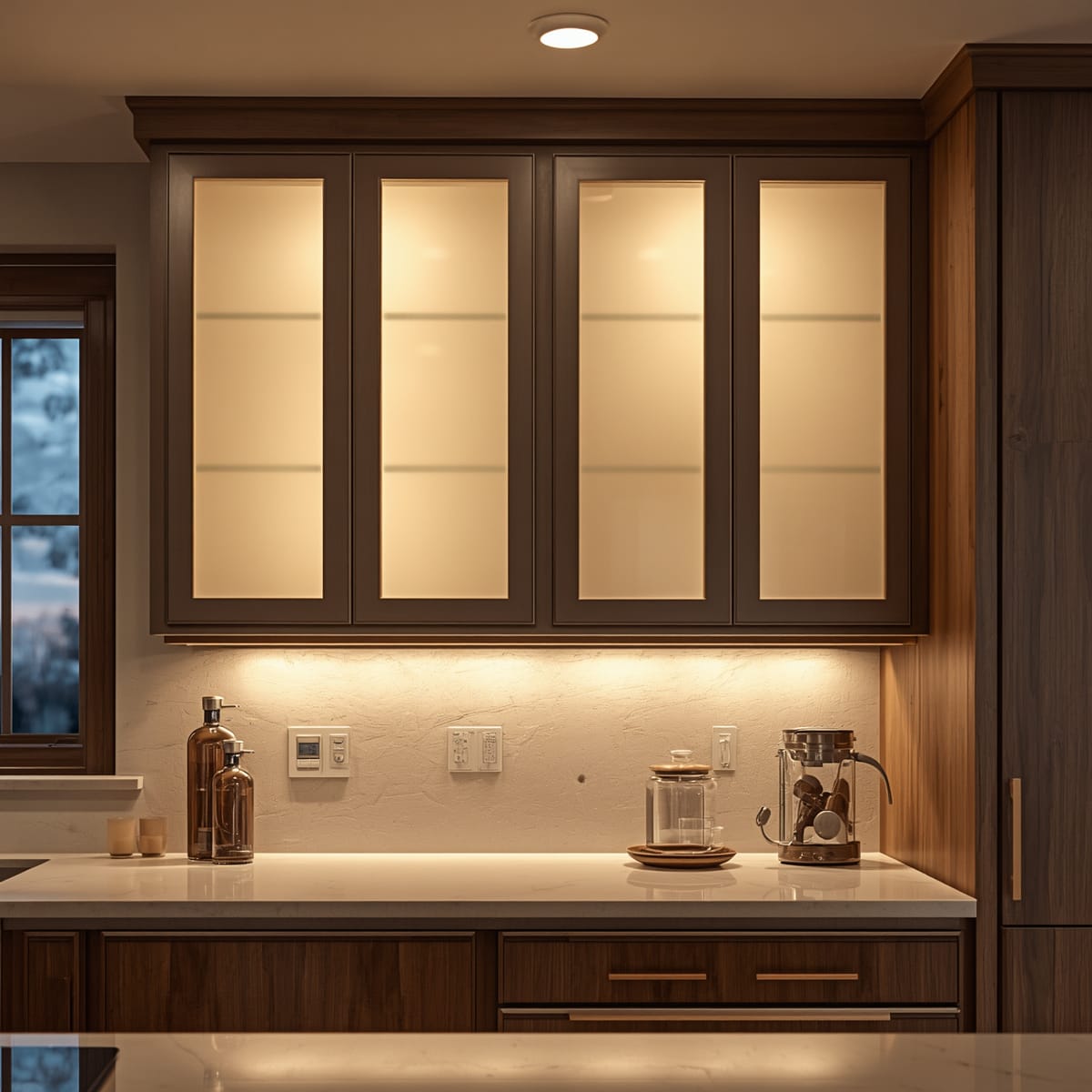
Why frosted glass earns its place
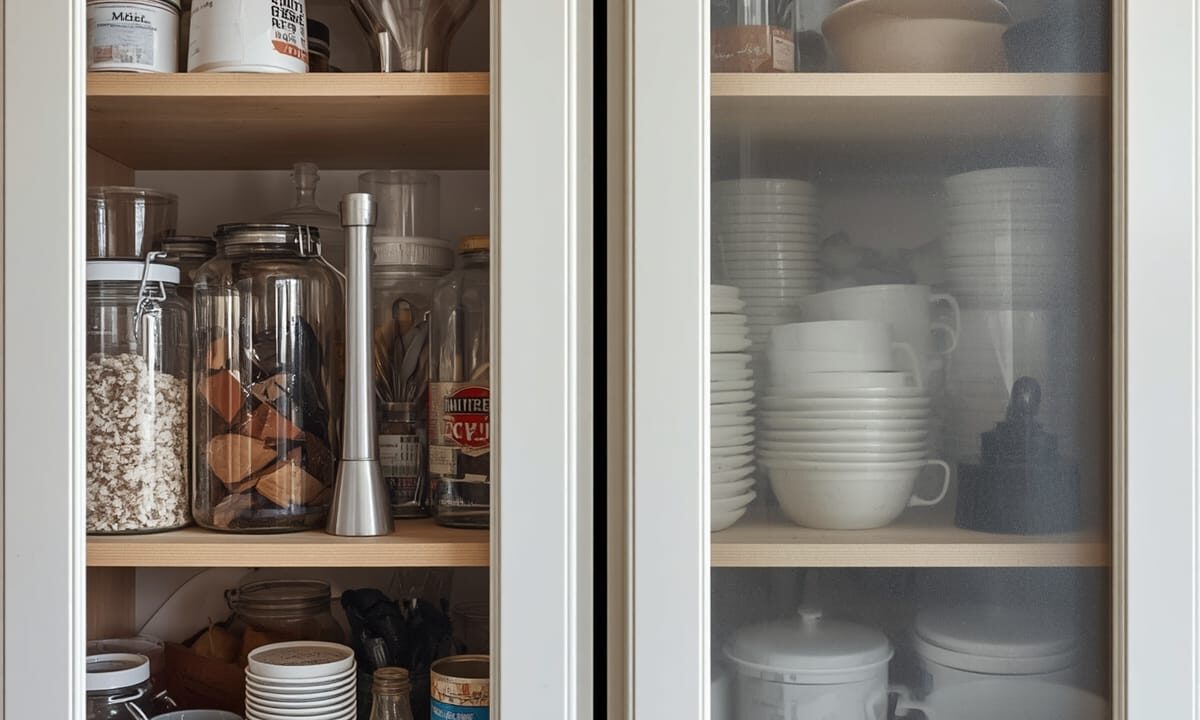
Glass-fronted cabinets bring lightness and a sense of openness to a kitchen, breaking up a solid wall of doors. The problem with clear glass is that it only looks good when the shelves behind it are perfectly styled – which, in a real kitchen, they rarely are. Frosted glass keeps the airy feel while blurring the contents into soft shapes, so a slightly messy shelf still reads as intentional. It’s the practical middle ground between solid doors and full open shelving.
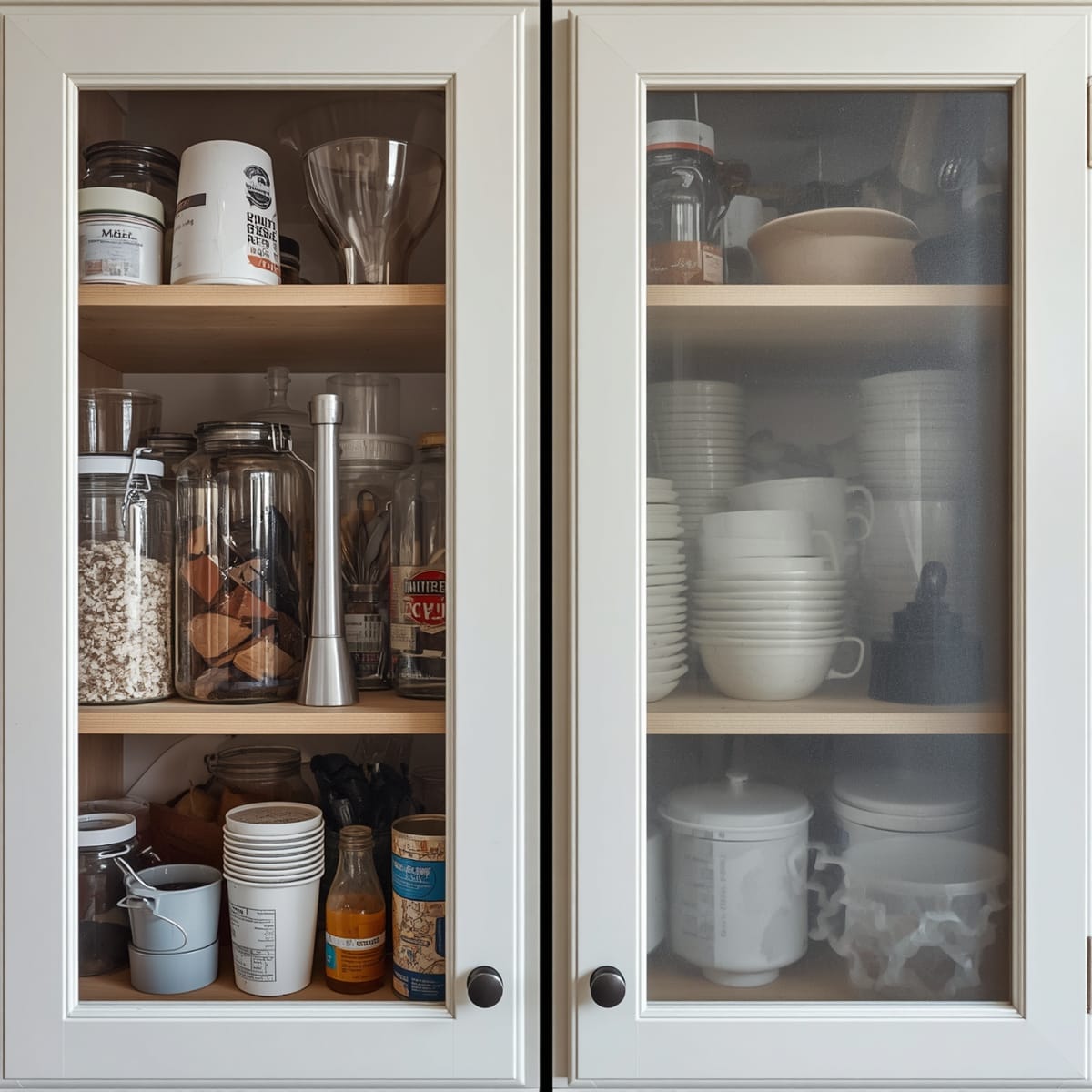
Why frosted beats clear for most kitchens
Clear glass works in a showroom because everything inside is matched and arranged. At home, it turns your cupboard into a display you have to maintain daily. Frosted removes that pressure: you get the design benefit of glass – depth, light, a break in the cabinetry – without the obligation to keep every mug aligned.
If you’re weighing display against tidiness, frosted is the tidier, lower-effort cousin of our open kitchen cabinet ideas; it shows that you have nice things without showing the chaos.
Where to use frosted fronts
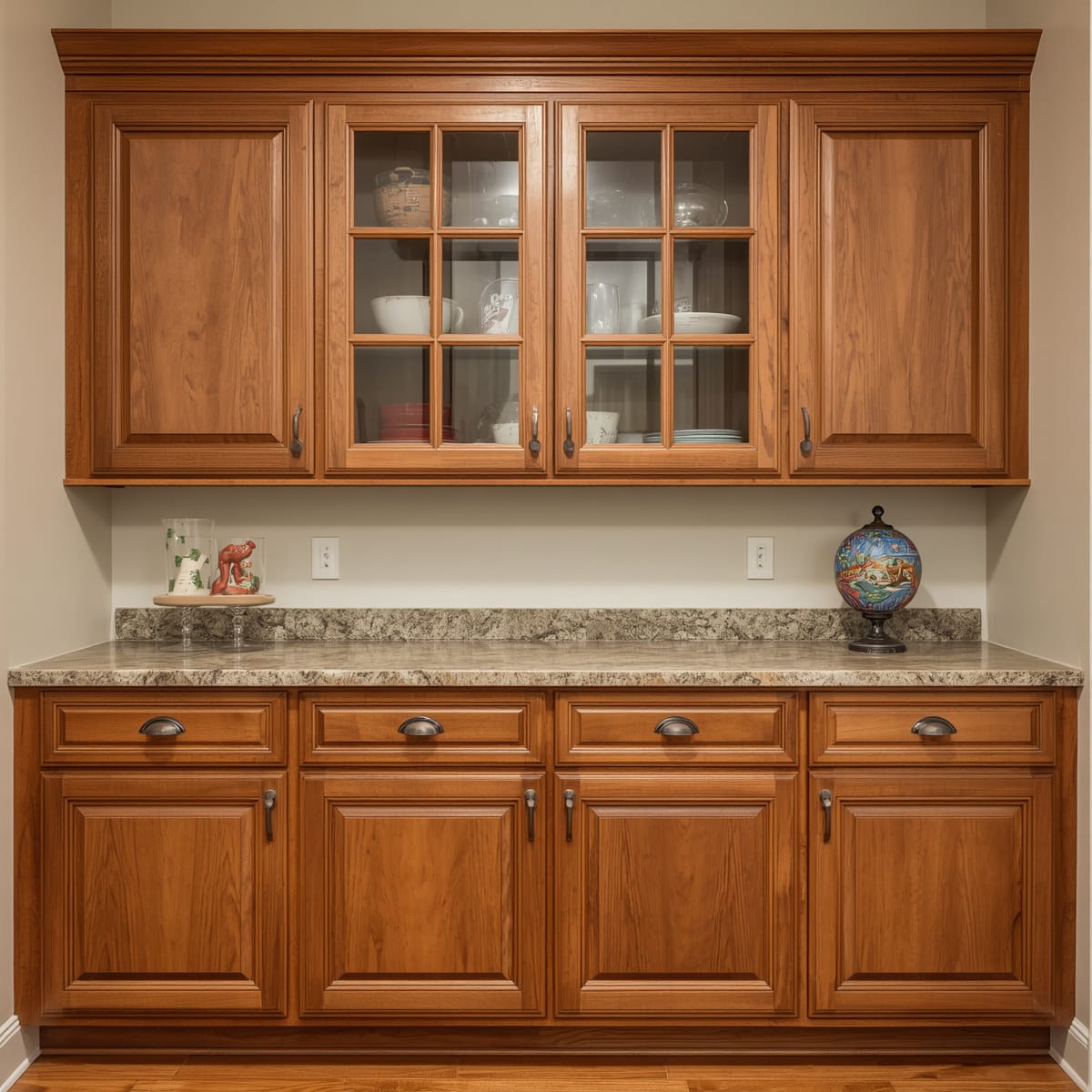
Frosted works best on upper cabinets and dedicated display runs, and on a tall larder door where you want lightness without exposure. Keep solid doors on the lower units, where the heavy pans, the recycling, and the clutter live. A common, balanced approach is solid lowers with one or two frosted upper runs to lift the room.
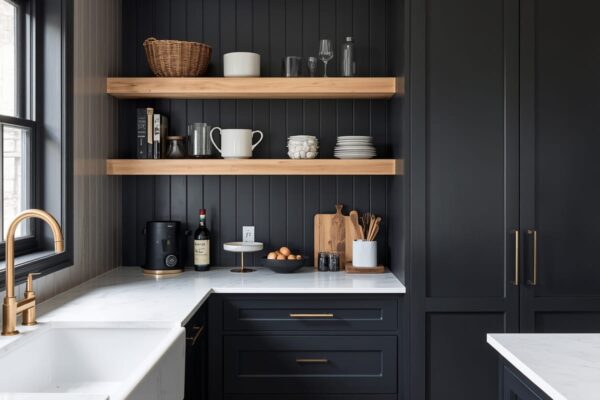
The same logic scales up: in a larger scheme, frosted uppers pair beautifully with the deeper tones in our black kitchen cabinets guide, where the glow of glass softens an otherwise dark wall.
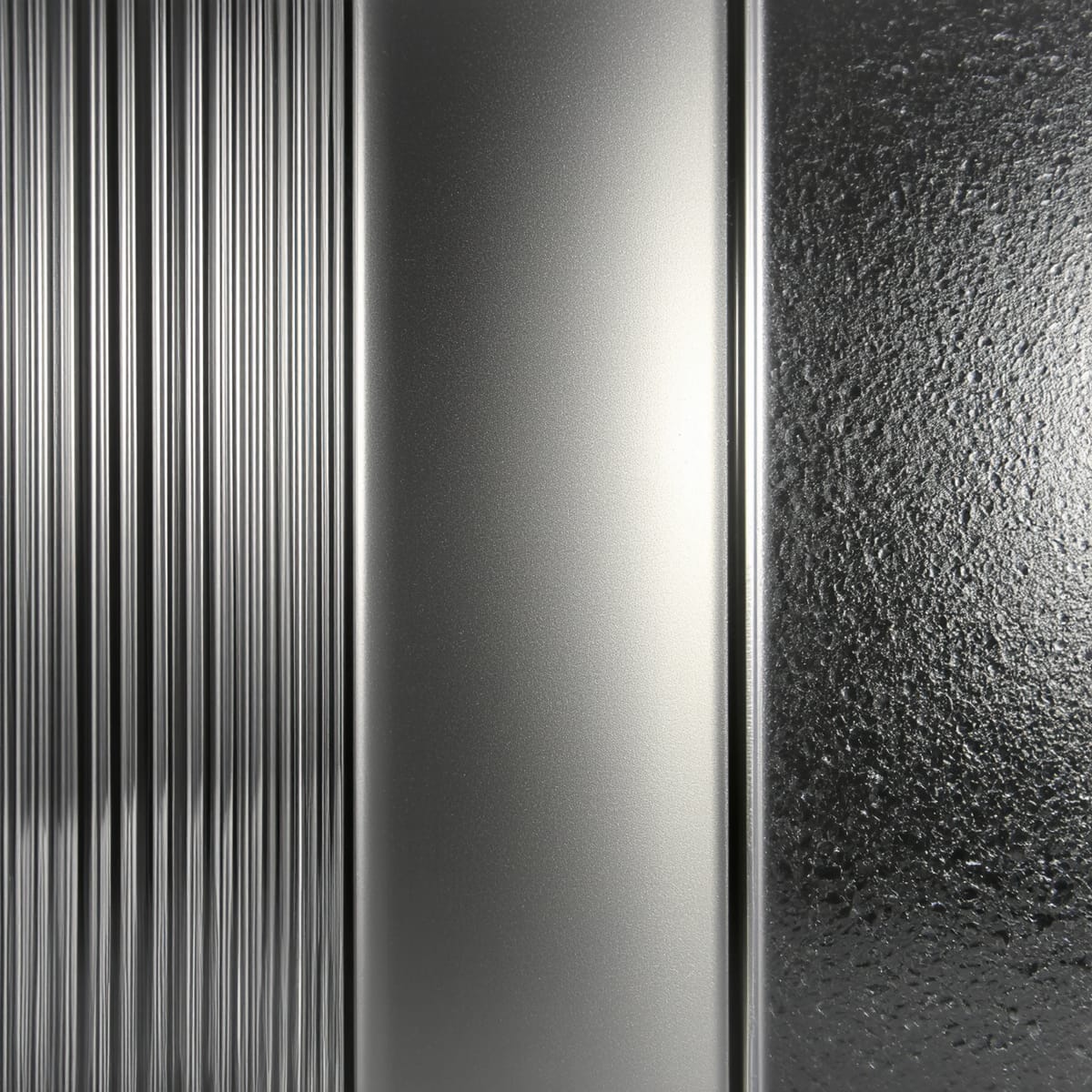
Reeded, satin, and acid-etched: the finishes
Reeded (fluted) glass has vertical ridges that add texture and a period-meets-modern feel; it’s having a strong moment and hides contents moderately. Satin and acid-etched glass are smooth and uniformly cloudy, reading cleaner and more contemporary, and they hide contents most. Sandblasted finishes sit in between.
Choose based on how tidy the interior will realistically be and the look you want: reeded for texture and character, satin or acid-etched for a calm, modern surface.
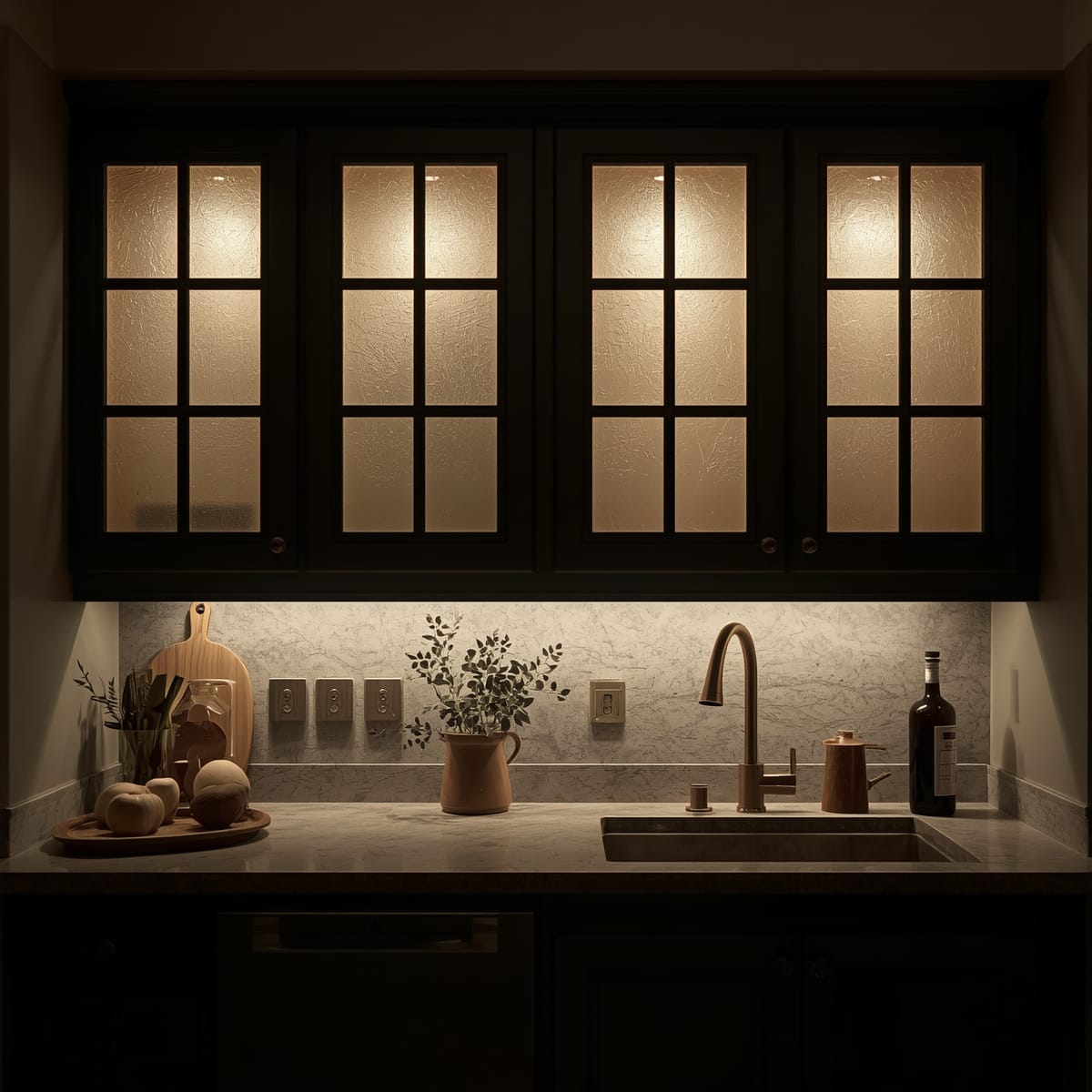
Lighting frosted cabinets at night
Frosted glass comes alive with interior LED lighting. Rather than spotlighting clutter the way lit clear glass would, a warm-white strip inside makes the whole panel glow softly, turning the cabinets into a gentle feature once the main lights are off. This works especially well in open-plan kitchens that face into a dining or living area, where the lit cabinets read as ambient lighting in the evening.
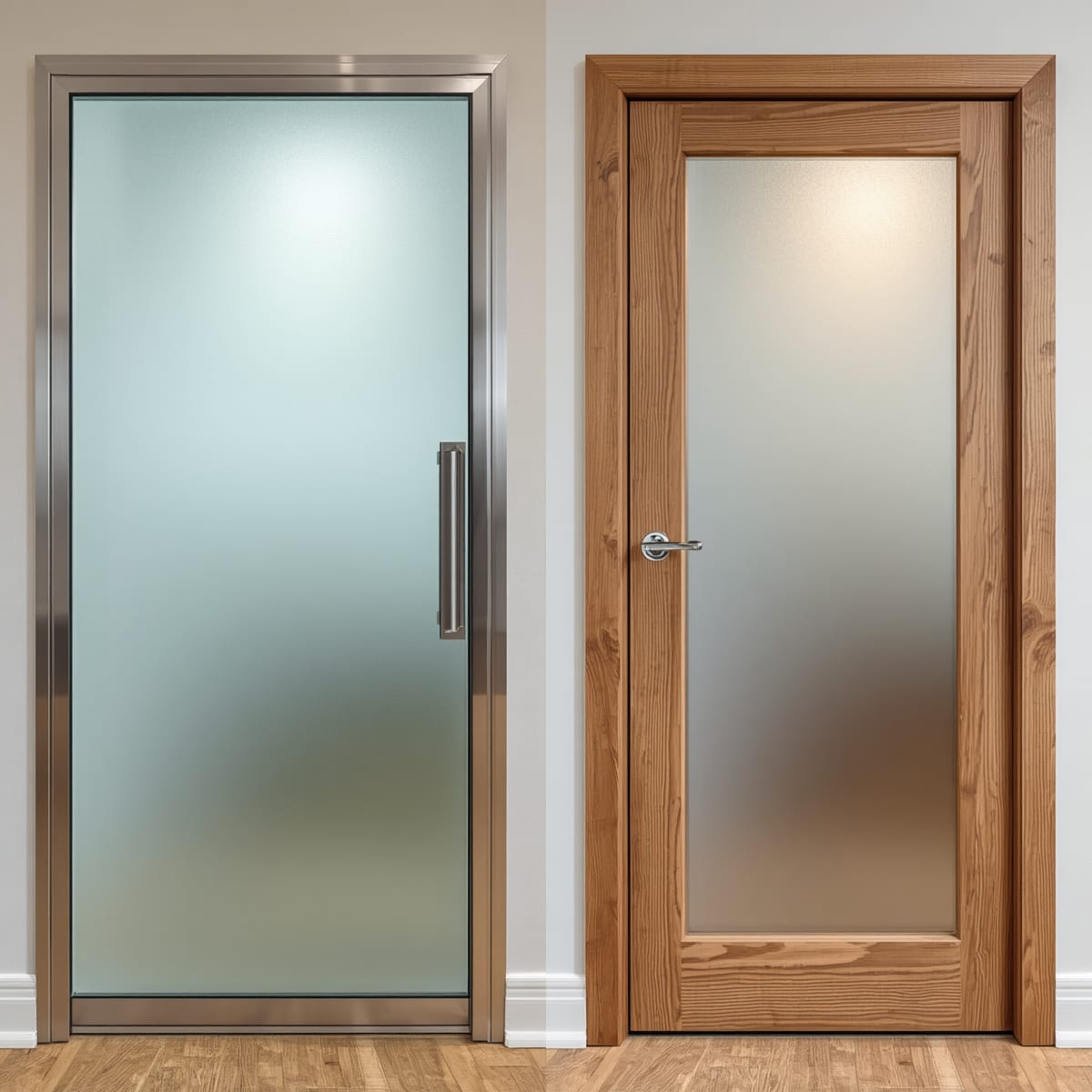
Frames, handles, and ordering tips
Frosted panels sit in a frame, and the frame matters as much as the glass: slim aluminium for a sharp modern look, timber for something softer and warmer. The frame colour should tie into your handles and other metals. Decide handle and frame finish together, following the coordination advice in our modern kitchen cabinet design ideas.
When ordering, confirm whether the glass is toughened (safer and more durable) and how the panel is fixed, so a future breakage can be replaced without scrapping the whole door.
Cleaning and care
The frosted face resists fingerprints better than high-gloss but still marks, particularly around handles. A spray of glass cleaner and a microfibre cloth keeps it clear; avoid abrasive pads that can scratch the etched surface. Reeded glass needs a little more attention in the grooves but rewards it with texture that hides everyday marks between cleans.
Frosted glass beyond the kitchen
The same trick – privacy and light coexisting through frosted glass – carries straight into the bathroom. Our guide to sliding glass shower doors uses frosted and fluted glass for exactly this reason, letting daylight through while keeping the space private, so a coherent material thread can run through the whole home.