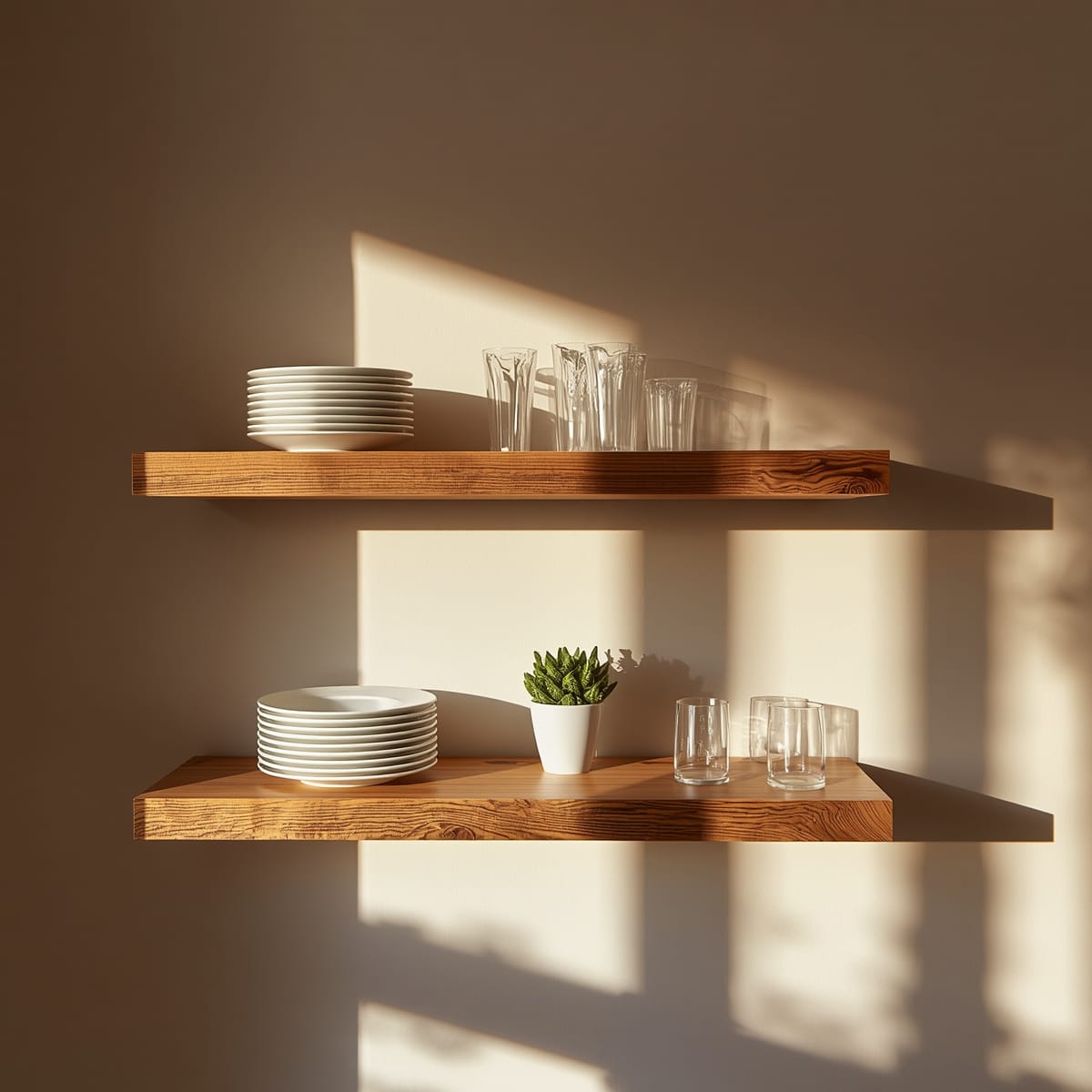
Open shelving is a styling commitment – be honest with yourself
Open shelves look light, welcoming, and a little less builder-standard than wall-to-wall cabinets, which is why they’re so popular online. The catch is that they put everything on show, including dust and the contents of your cupboards. If you genuinely enjoy keeping things tidy and own a reasonably coordinated set of crockery, they’re a joy to live with. If your shelves will quietly become a dumping ground, keep most storage closed and use just one open run as an accent.
Before committing, picture your real kitchen on a Tuesday evening, not the showroom. That honest test decides how much open shelving you should actually have.
Where open storage actually works
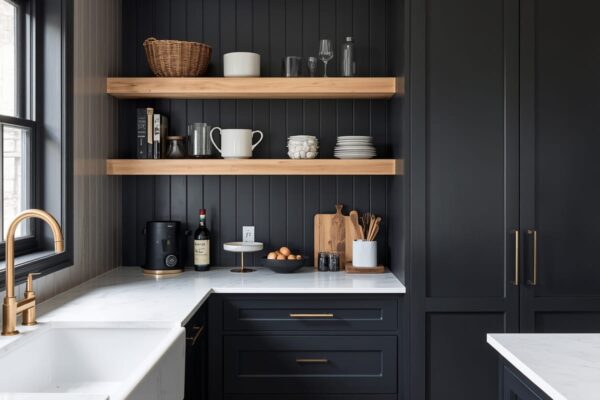
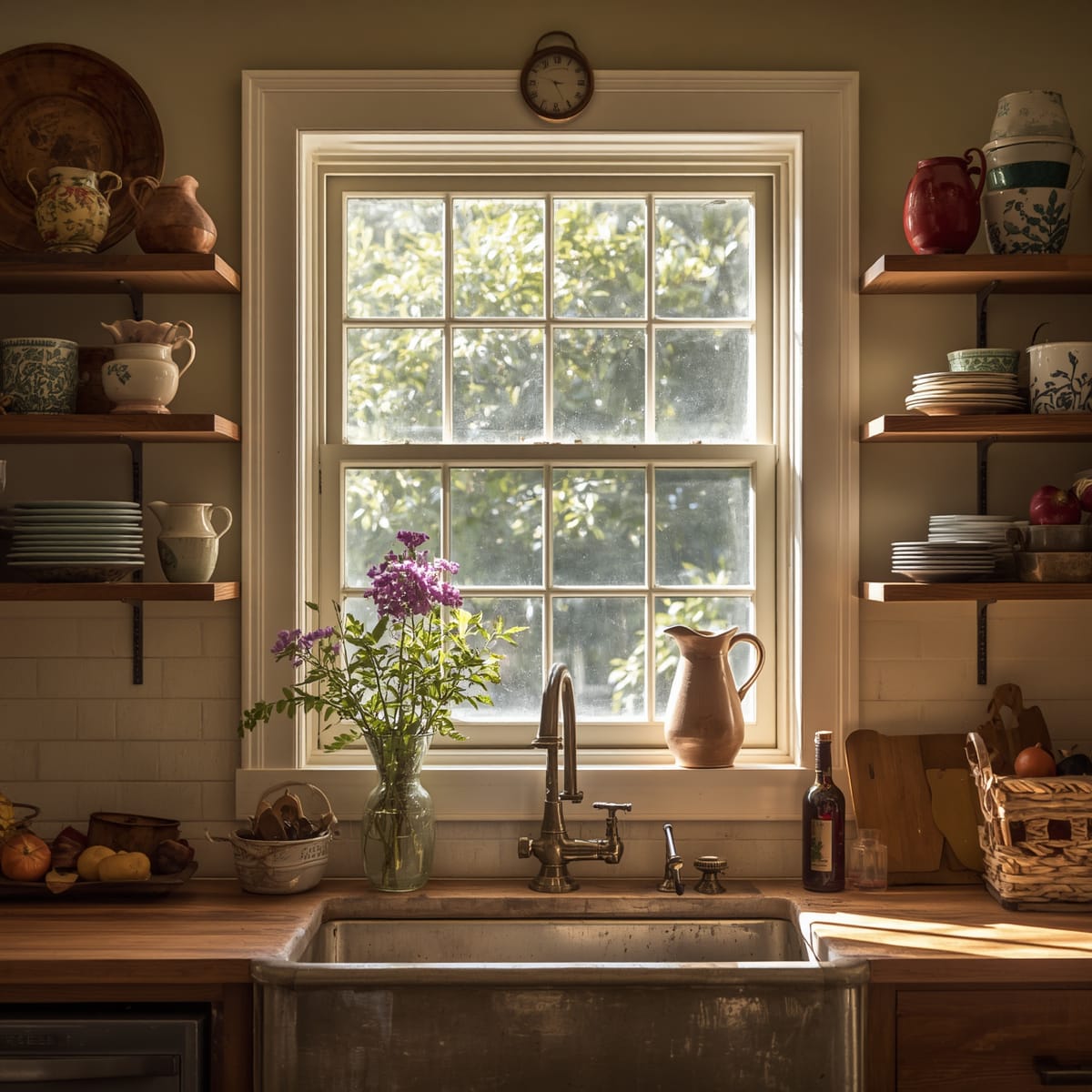
Position open shelves near where you use the items: cups and glasses by the kettle, plates by the dishwasher, oils and a few jars by the hob. Keep them clear of the area directly above a frying zone, where grease films everything within a week. They also work beautifully flanking a window, where solid units would block light.
In a tight room, a short open run keeps the walls from feeling boxed in – the same lightness-versus-storage balance we strike in our small kitchen design ideas.
Materials, brackets, and load limits
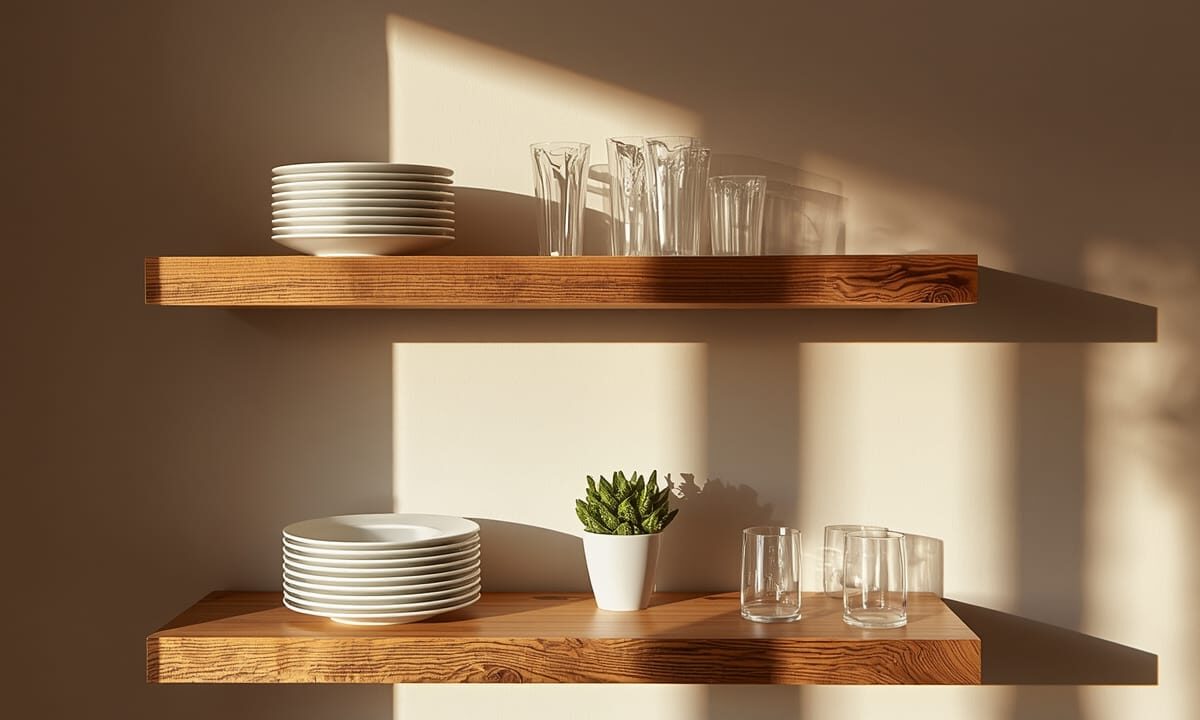
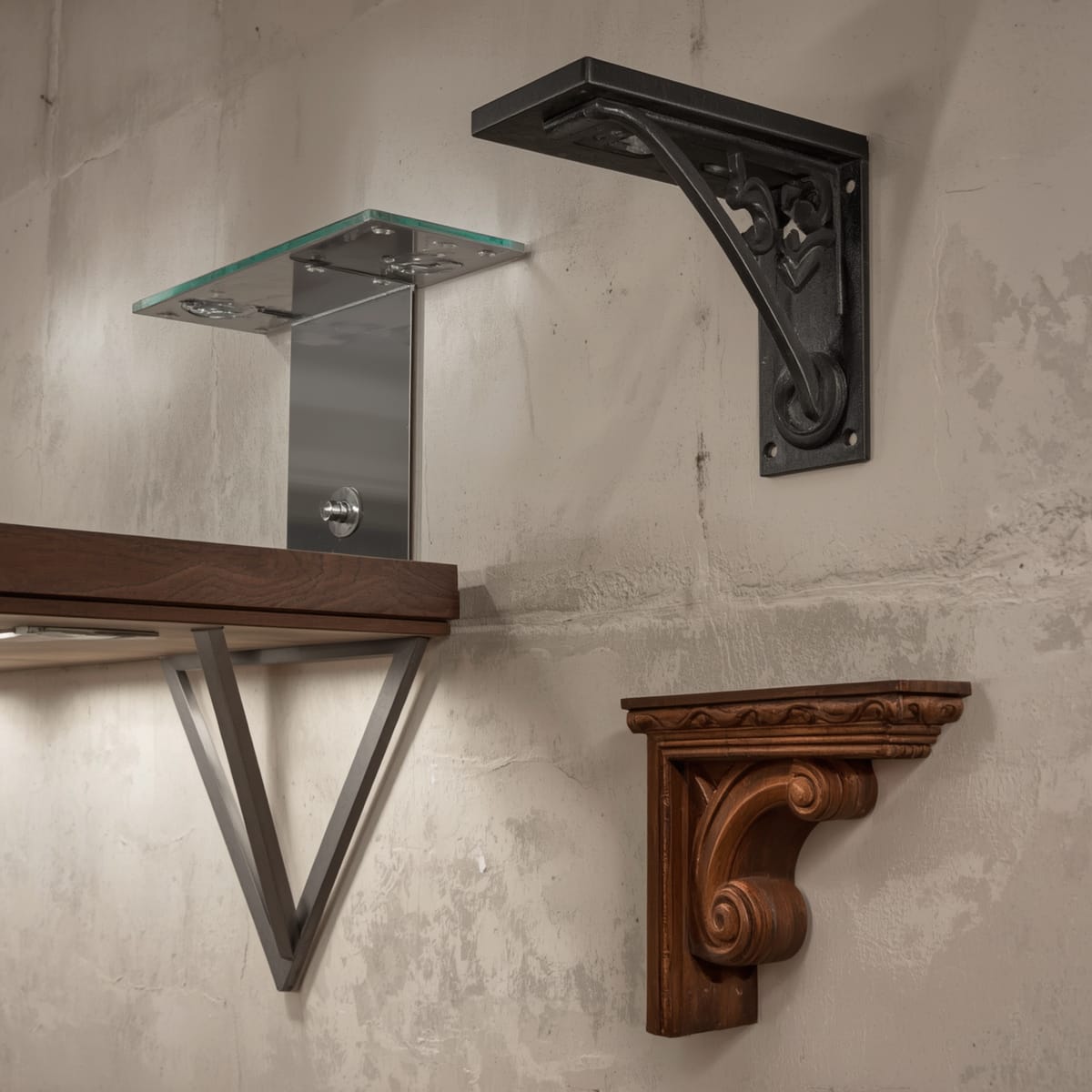
Thick solid-wood or good-quality plywood shelves look best and sag least; thin shelves bow under a stack of plates and look flimsy. Concealed floating brackets give the cleanest line but must be fixed into studs or solid masonry to carry real weight. Metal L-brackets and timber corbels carry more and suit industrial or classic looks respectively.
Match the support to the load: don’t hang a long, lightly fixed shelf and then pile a full dinner service on it. Space brackets for the weight, not just the look, and check your wall type before drilling.
Style shelves so they don’t look cluttered
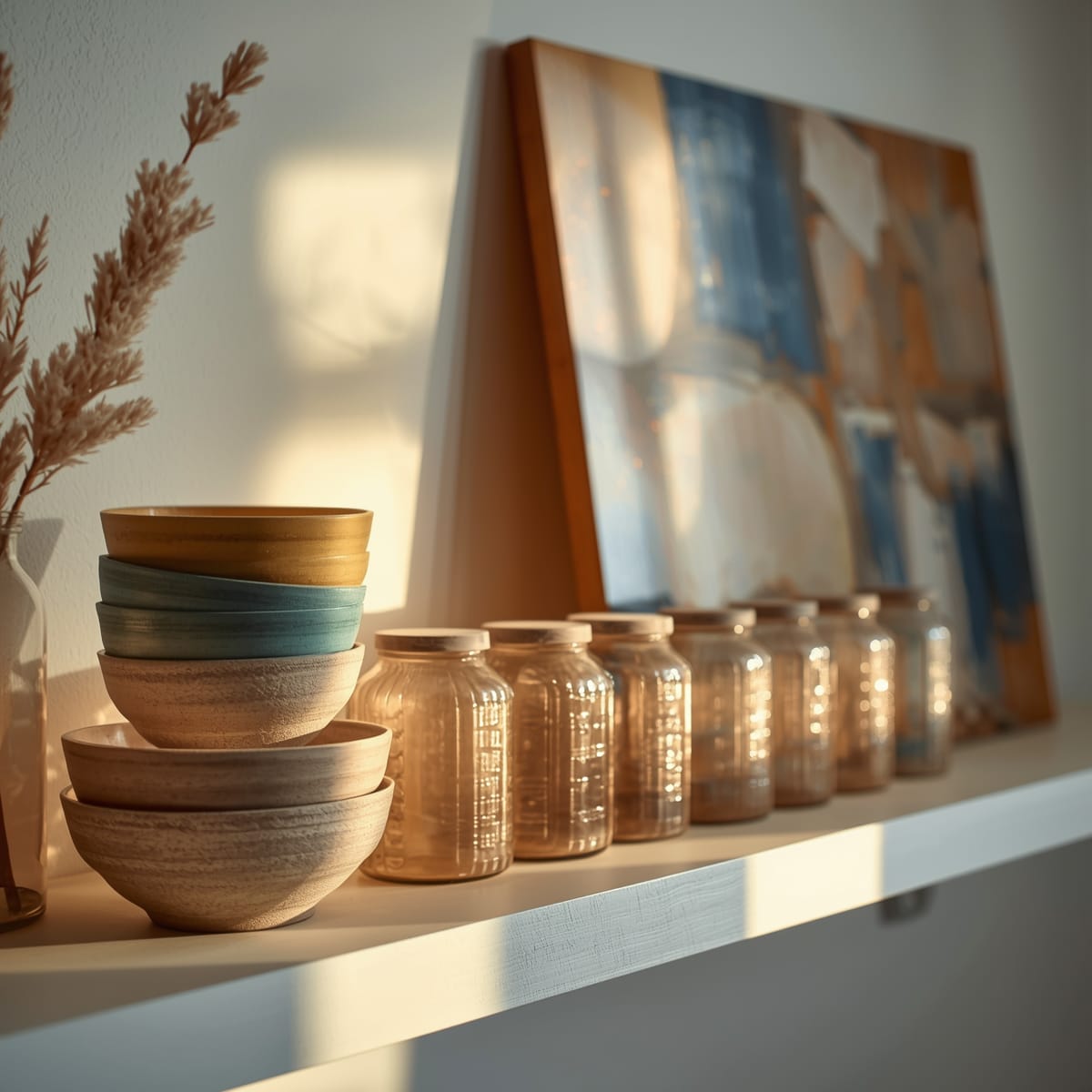
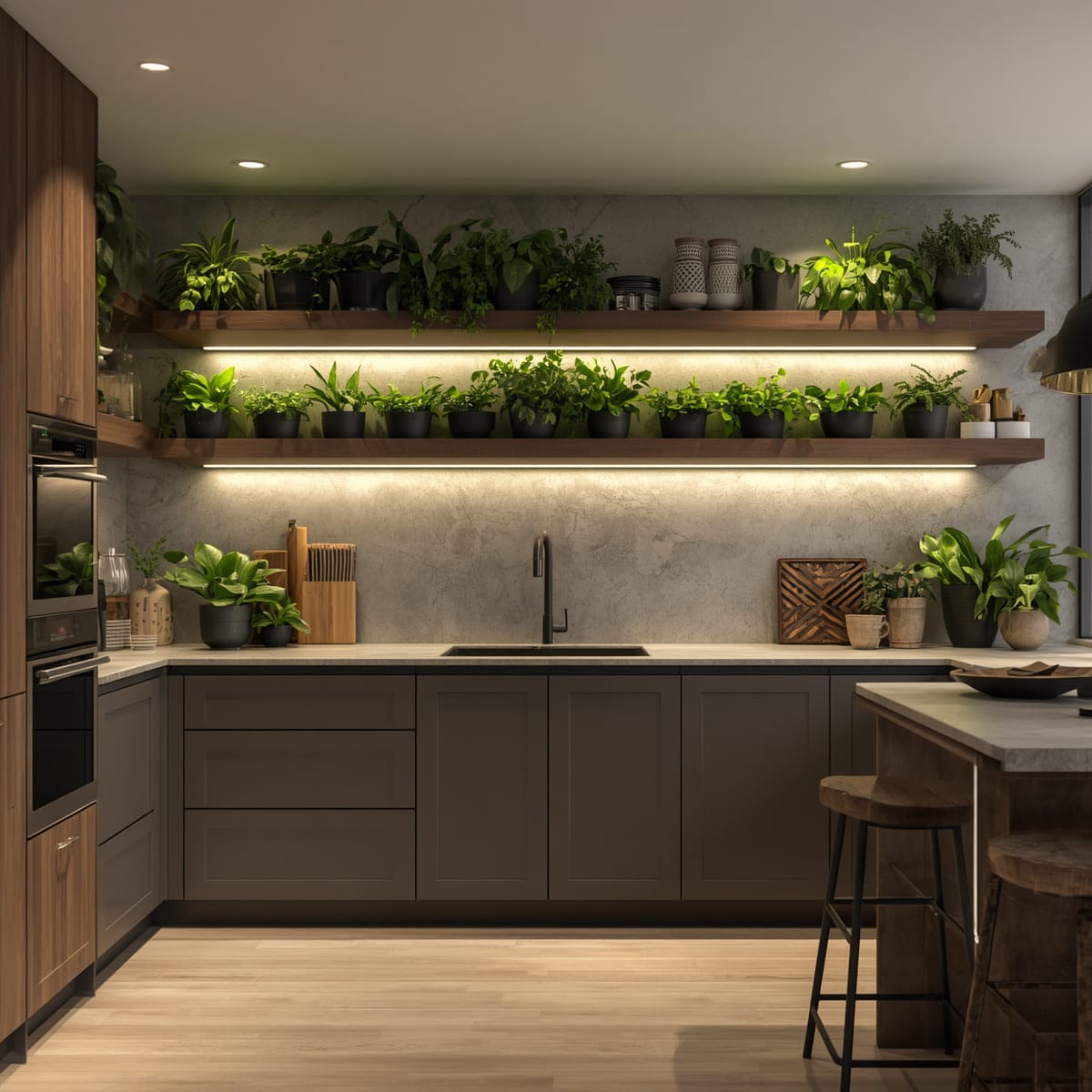
The difference between ‘curated’ and ‘chaotic’ is editing. Group items by type and colour, stack rather than scatter, and leave clear gaps so the eye can rest. A row of matching jars, a stack of plain bowls, and one leaning board or piece of art read calm; fifteen mismatched mugs read like a jumble sale.
Keep the everyday, attractive pieces on display and hide the plastic tubs and rarely used gadgets behind doors. Warm wood shelving carries this look especially well, which is why it pairs naturally with the tones in our wooden bedroom furniture ideas elsewhere in the home.
Mixing open and closed storage
The most liveable kitchens combine the two. Closed base units and a tall larder hide the bulky and the unattractive, while one open run displays the nice everyday pieces. This gives you the airy, characterful look without sacrificing the storage that keeps the room functional.
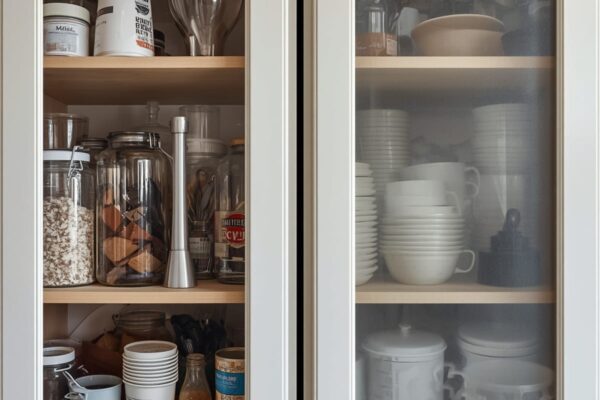
If you want some lightness without full exposure, frosted glass doors are a halfway house, and the broader cabinetry choices in our modern kitchen cabinet design ideas cover how to blend open and closed cleanly.
Keeping open shelves practical
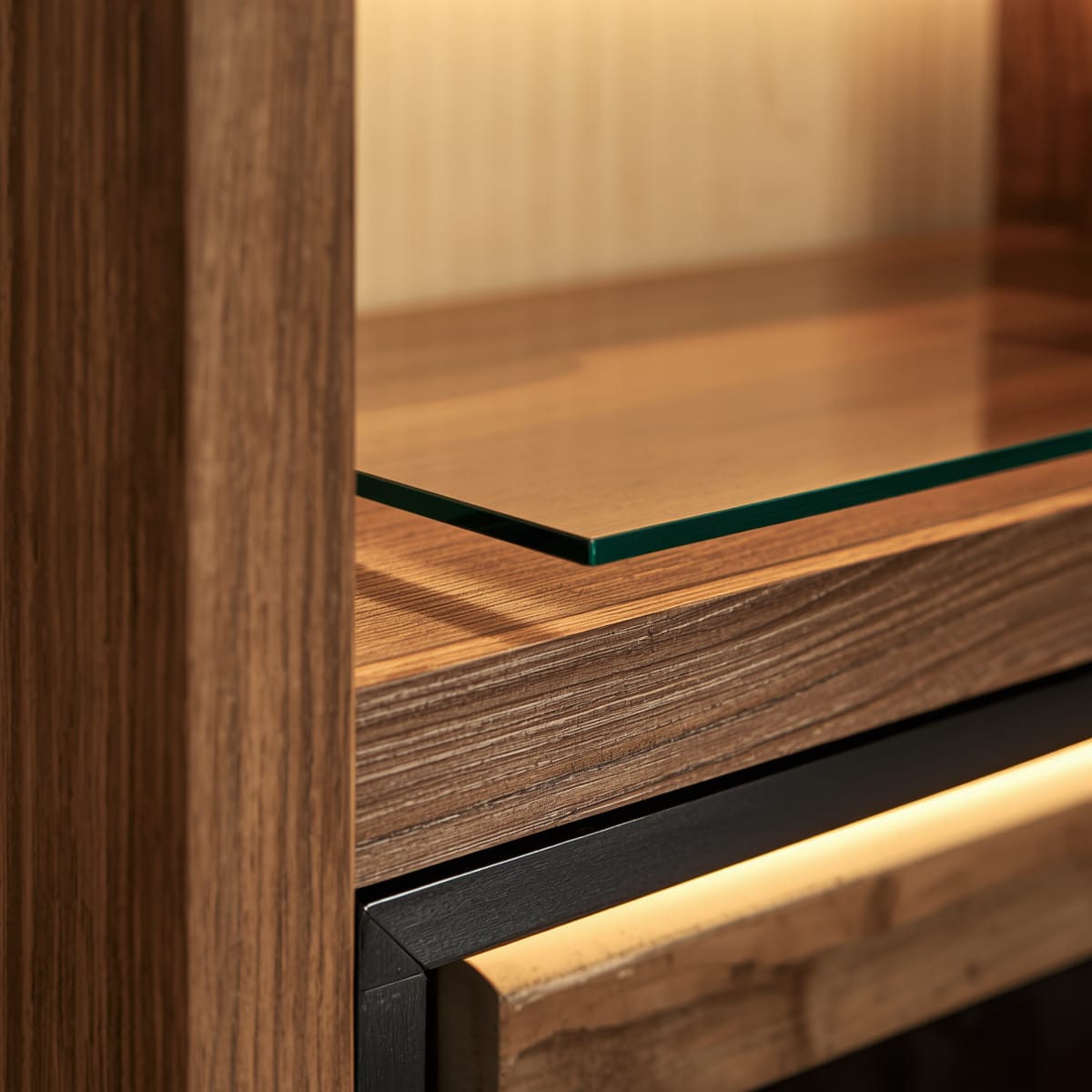
Open shelving needs a little routine. Wipe shelves weekly and rotate items so nothing sits long enough to gather grease and dust. Avoid storing anything you only use once a year on display – those belong behind a door. A small lip or rail on a shelf stops items sliding, which is worth it in a busy household with children.
Common open-shelving mistakes
The frequent errors are overloading thin shelves until they bow, placing open shelves directly over the hob, filling them with mismatched everyday clutter, and going all-open with no closed storage to hide the mess. Treat open shelving as a deliberate accent backed by plenty of closed storage, and it stays looking the way it did the day you installed it.