Pick the focal wall (TV or sofa)
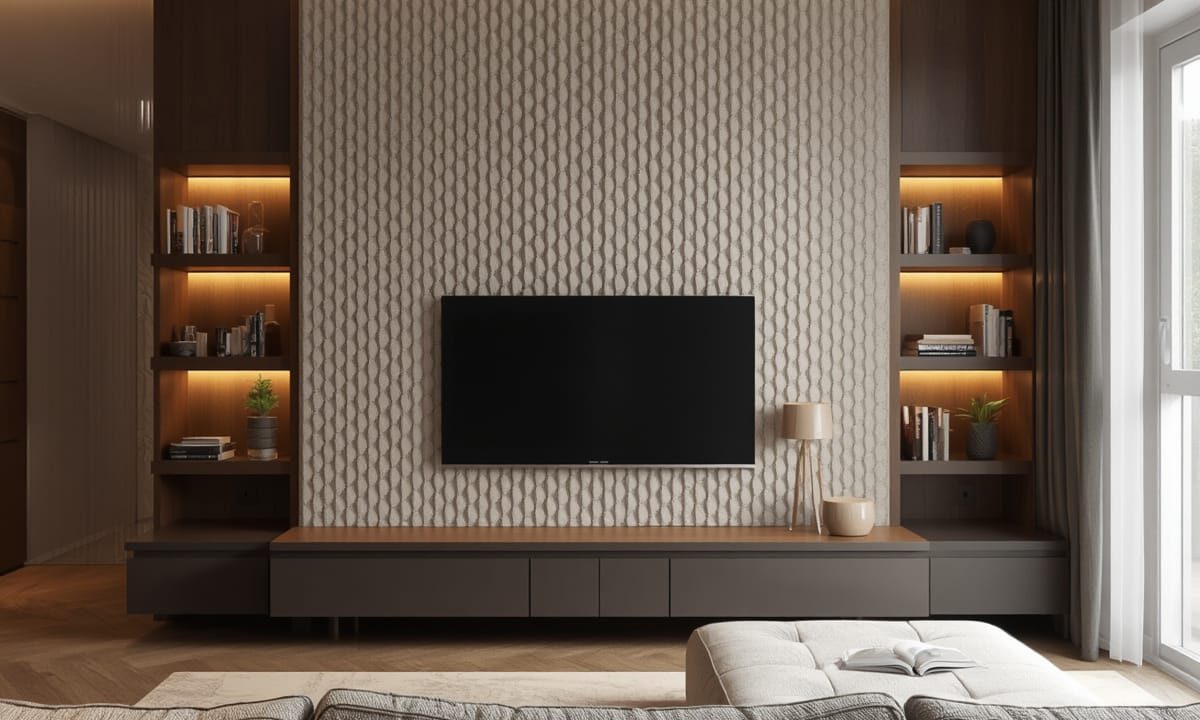
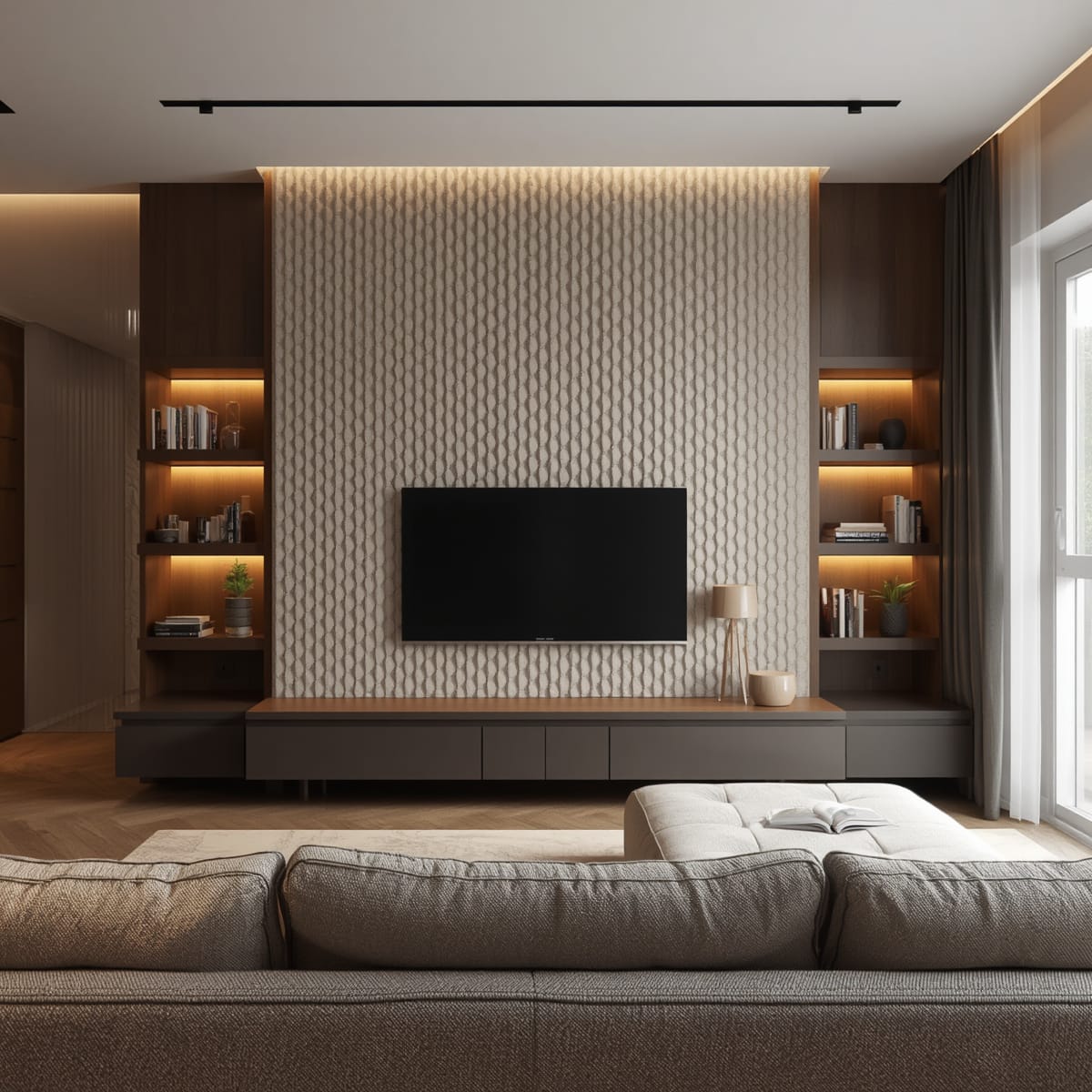
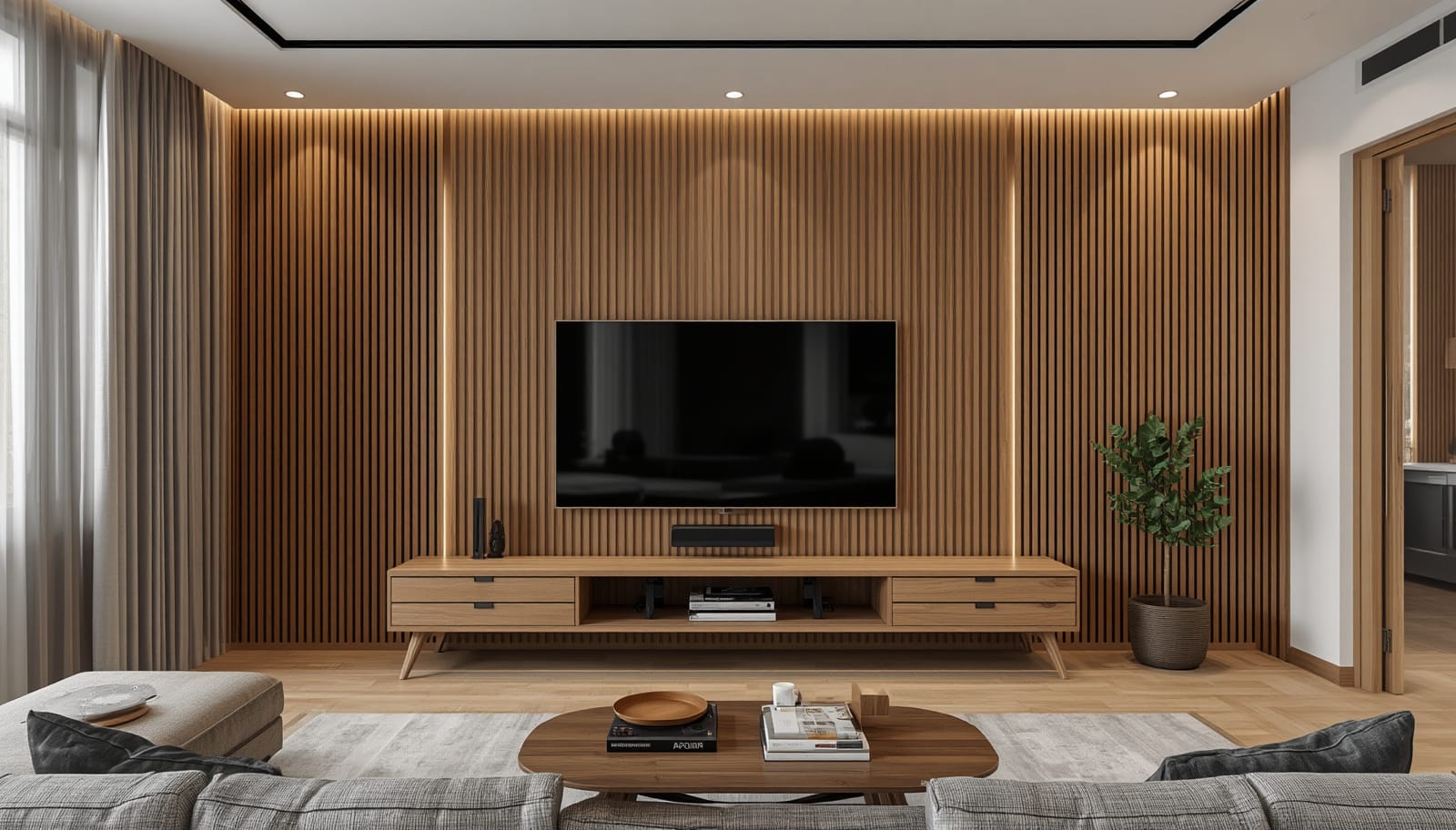
In a living room, texture should land where eyes already go: the wall behind the wall-mounted TV, or the wall above the sofa. Putting a feature wall on a random side wall scatters the room’s focus and rarely looks deliberate. Choose the one wall everyone faces and commit the texture there.
This one-focal-wall discipline is the same we use behind a bed in our 3D wallpaper for bedroom walls guide – just applied at a larger scale, where the wall and the room can carry more.
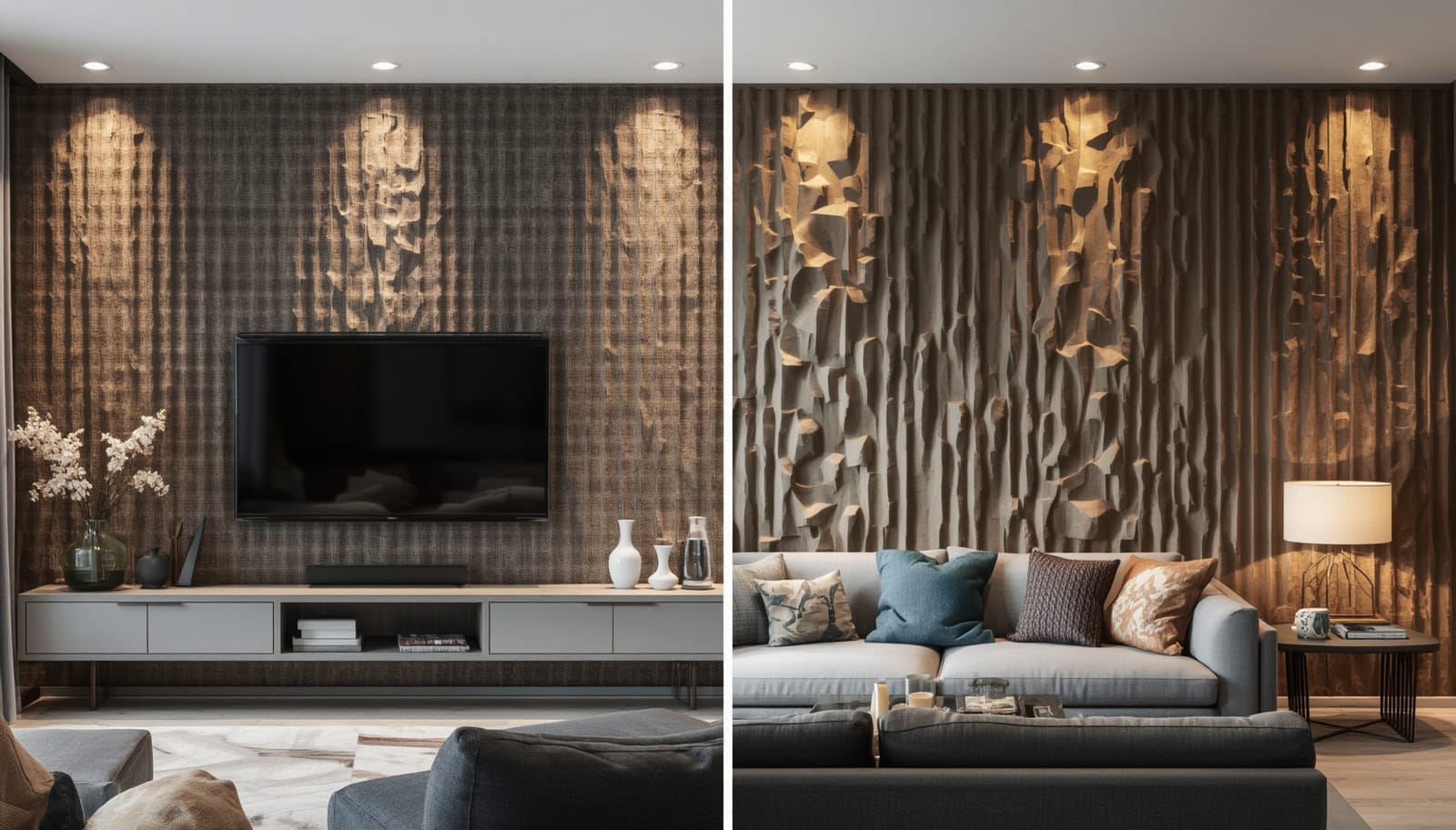
Scaling pattern to a larger room
Living-room walls are big, so the pattern has to be big too. A small, busy texture simply disappears across a long wall – or worse, reads like a mistake. Choose a generous repeat or a continuous texture (vertical slats, large waves, oversized geometry) that you can read from across the room. As a rule, the further back people sit, the bigger the texture should be.
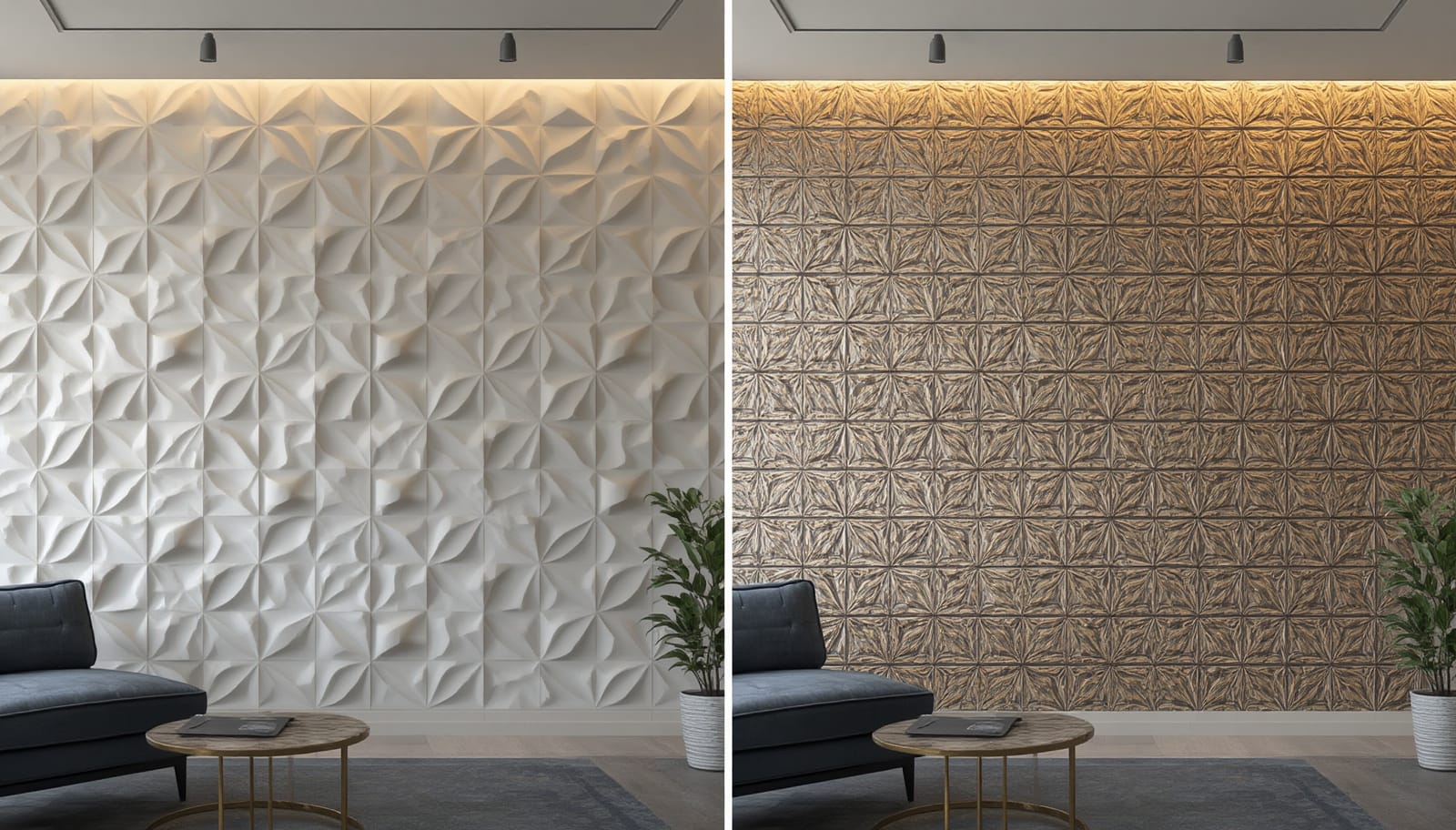
Material options: foam, PVC, plaster, timber
Lightweight PVC and foam panels are cheap, easy to fit, and wipeable – practical for a busy room. Gypsum or plaster panels feel premium and paint beautifully. Timber slat panels add warmth and a tactile, modern look. Each suits a different budget and feel, so choose based on durability needs and the overall scheme.
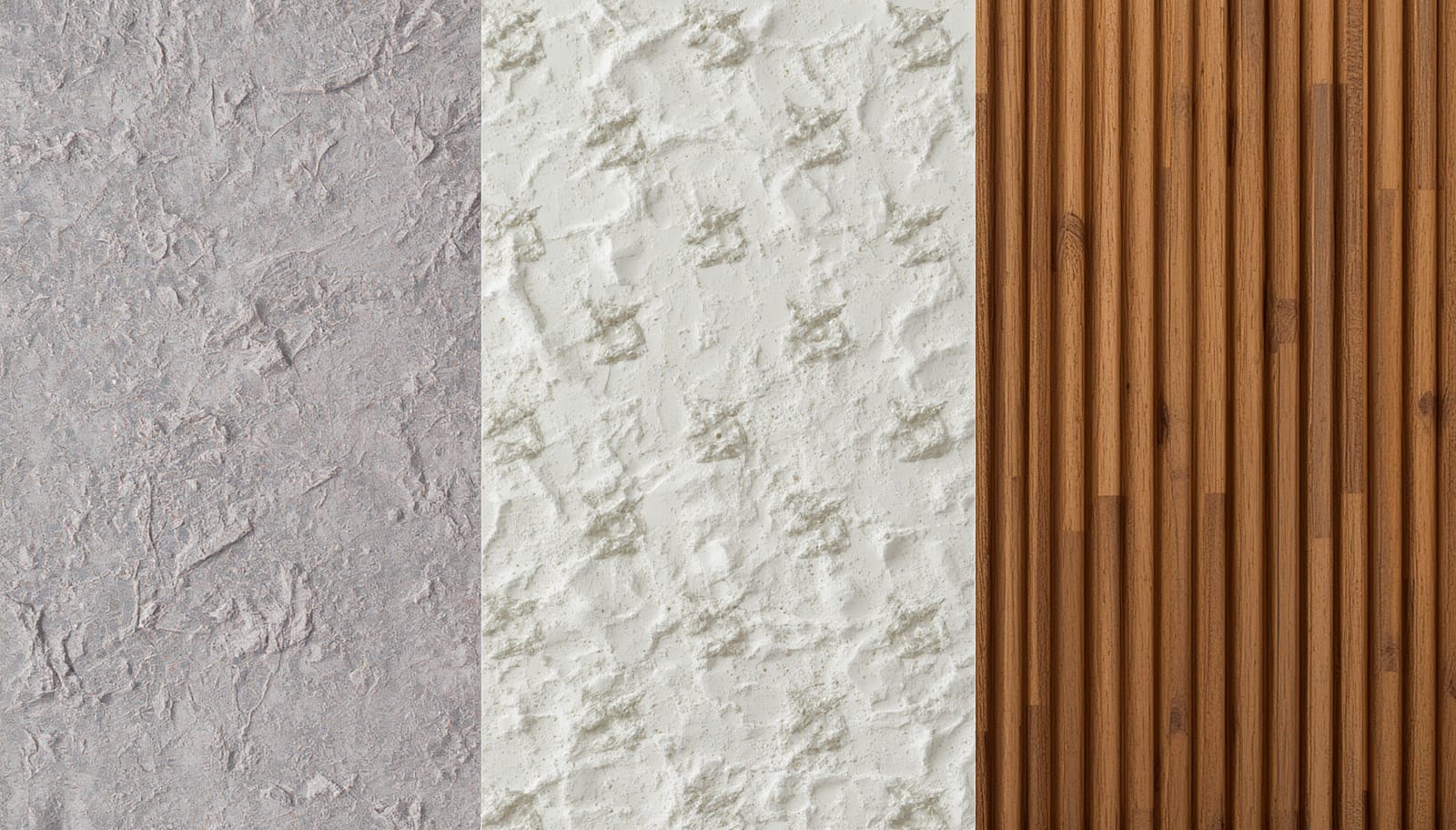
The quiet bonus: acoustics
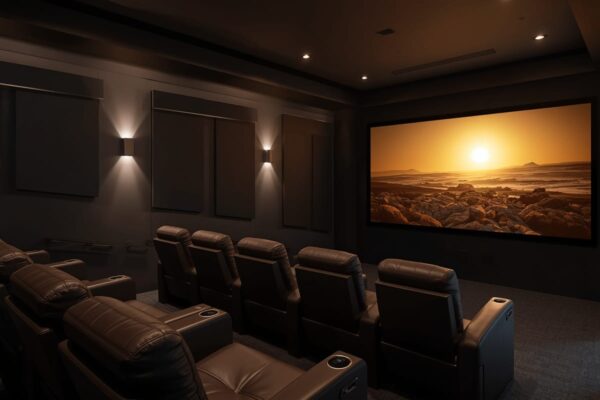
A textured wall, especially timber slats backed with felt, genuinely softens echo in a hard-surfaced room. That’s a real advantage if the living room doubles as a media space, where bare walls bounce sound and muddy the audio. The acoustic benefit is covered further in our home theatre room design ideas, and a slat wall is an easy way to get some of it without a dedicated build.
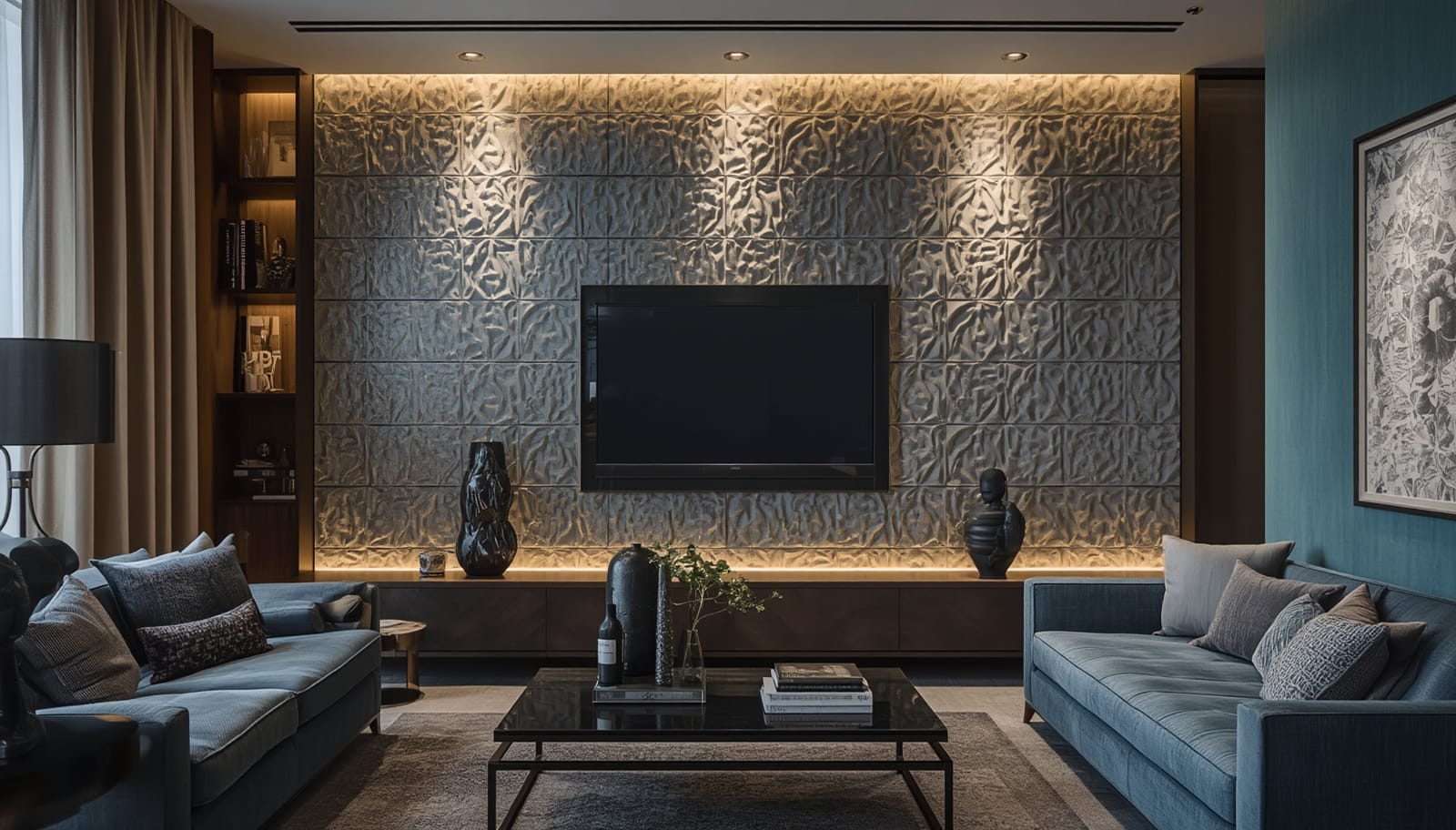
Coordinating with furniture and light
Keep the feature wall within your existing palette so it elevates the room rather than fighting it, and coordinate it with the sofa, shelving, and any media unit. A grazing light or LED strip across the texture turns it into a feature at night. The result should feel of-a-piece with the wider scheme – whether that leans toward a modern hall and interior look or a more classic interior.
Durability and cleaning in a high-traffic room
Living rooms get wrecked. Between siblings, pets, and constant cleaning, walls take a beating, so put tough, wipeable finishes like PVC or sealed plaster down low where hands reach. Keep delicate stuff up high.
Timber slats are a good shout too, they hide scuffs and dust off easily. Whatever you pick, make sure you can clean it, or your feature wall looks trashed within a year.
Cost tiers and what to expect
Foam and peel-and-stick panels are the budget entry point and fine for a quick refresh; PVC sits in the middle and balances cost with durability; plaster and bespoke timber-slat walls are the premium end and look it. Decide how long the wall needs to last and how much wear it’ll take before choosing a tier, rather than buying on looks alone.
Common living-room feature-wall mistakes
The frequent errors are choosing the wrong wall (a side wall instead of the TV or sofa wall), using a pattern too small for the room, clashing the wall with the rest of the palette, and lighting it flatly. Pick the wall everyone faces, scale the texture up, keep it in your palette, and light it from the side.