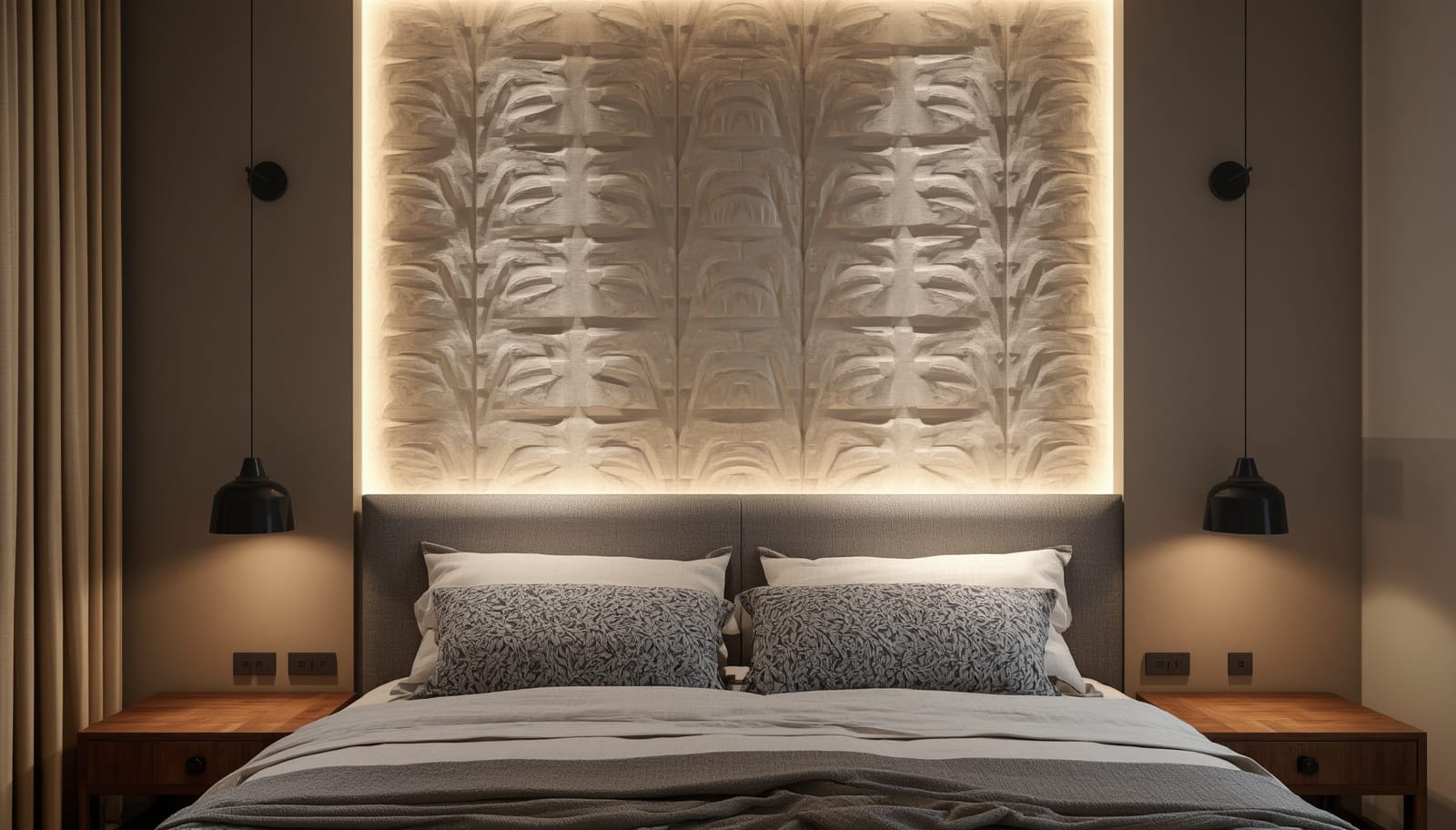
One wall, usually behind the bed
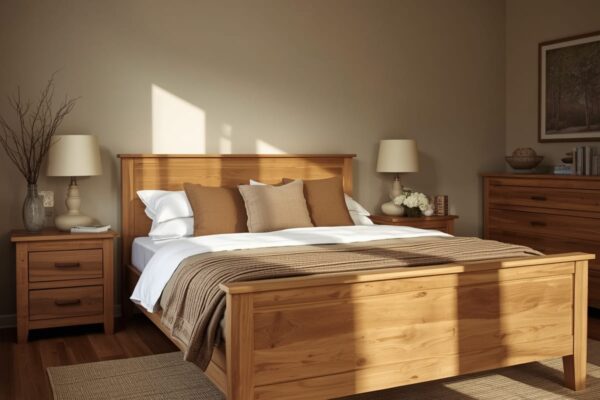
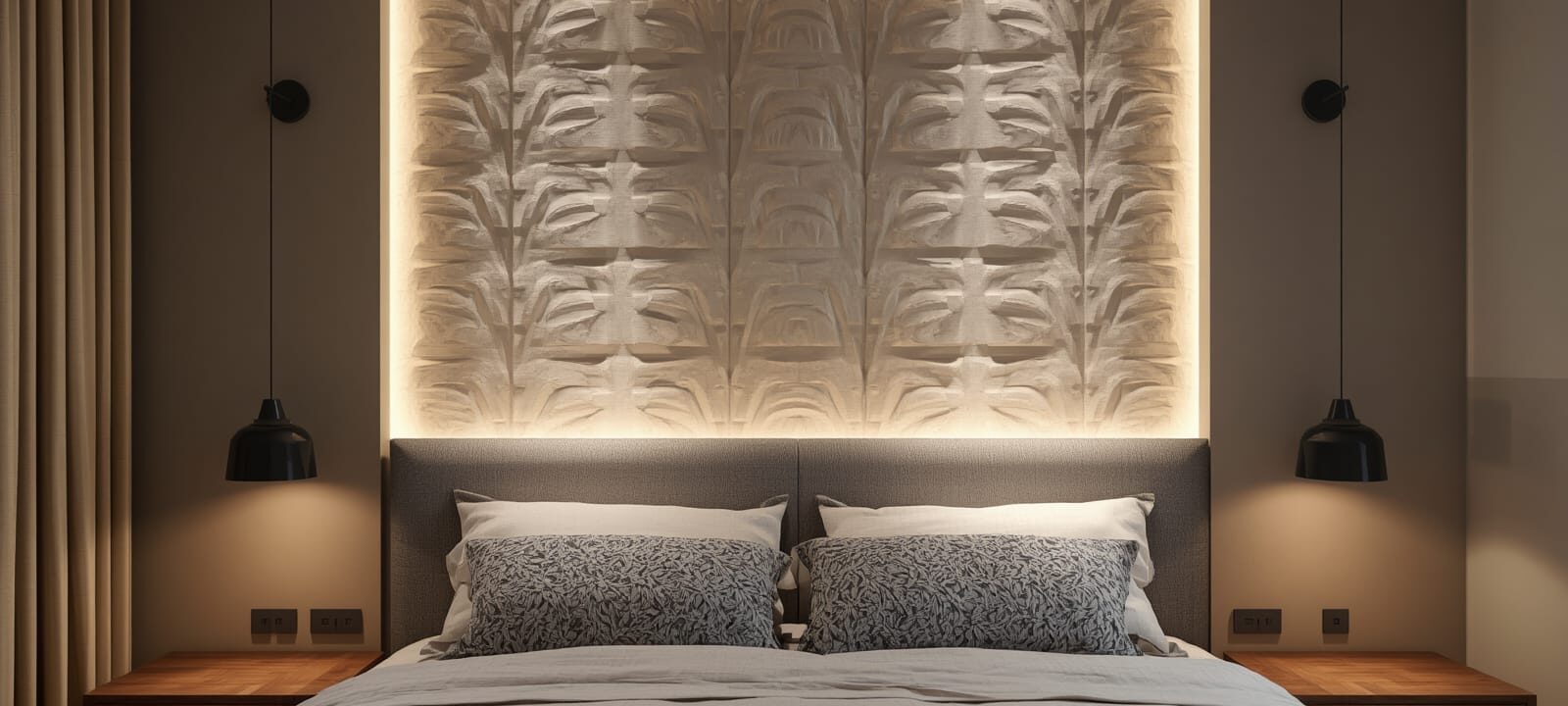
3D wallpaper earns its keep as a single feature wall, almost always behind the headboard, where it frames the bed and adds depth without taking floor space. Wrapping a whole room in texture quickly feels claustrophobic and busy. Treat it as the room’s focal point and keep the other three walls plain, so the furniture- like a simple modern bedroom set– reads cleanly against it.
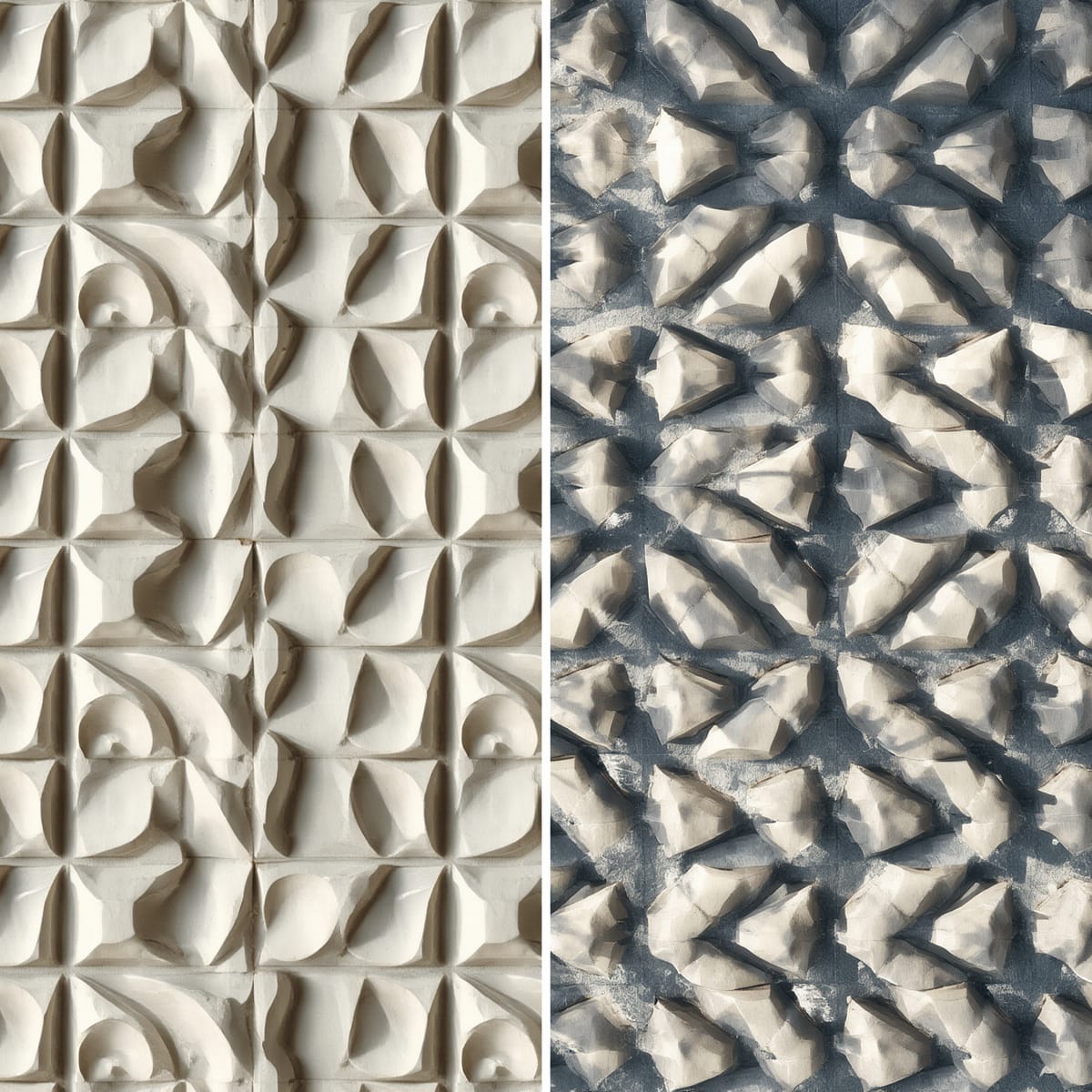
Textured 3D vs printed faux-3D
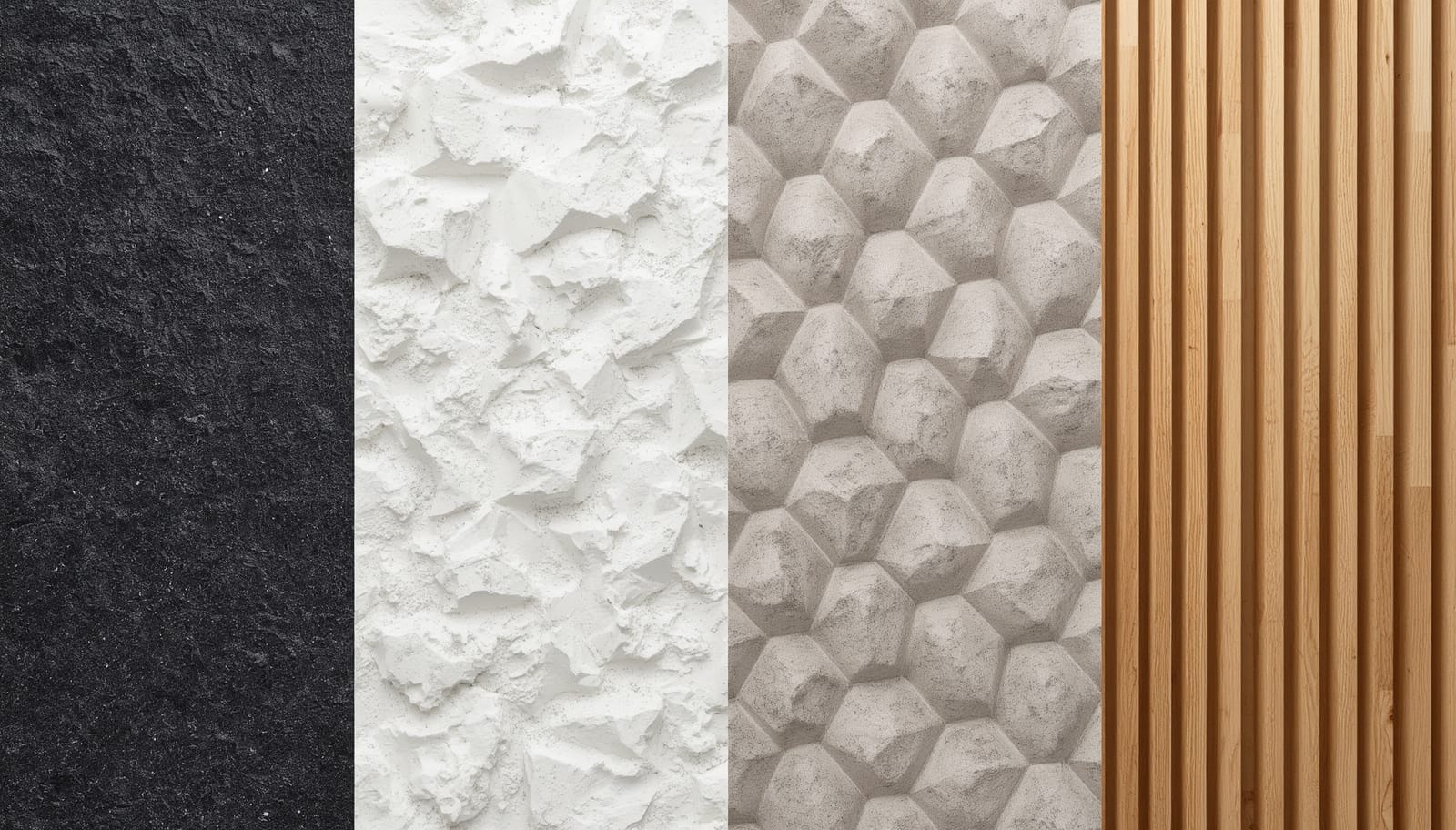
There are two very different products sold as ‘3D’. Genuine 3D panels- foam, PVC, plaster, or timber slats- have real relief that catches light and shadow and reads as texture you can feel. Printed ‘faux-3D’ wallpaper uses painted highlights and shadows to fake depth; it’s cheaper and easier to hang but flatter in person. Decide up front whether you want true texture or just the look, because the price and effort differ a lot.
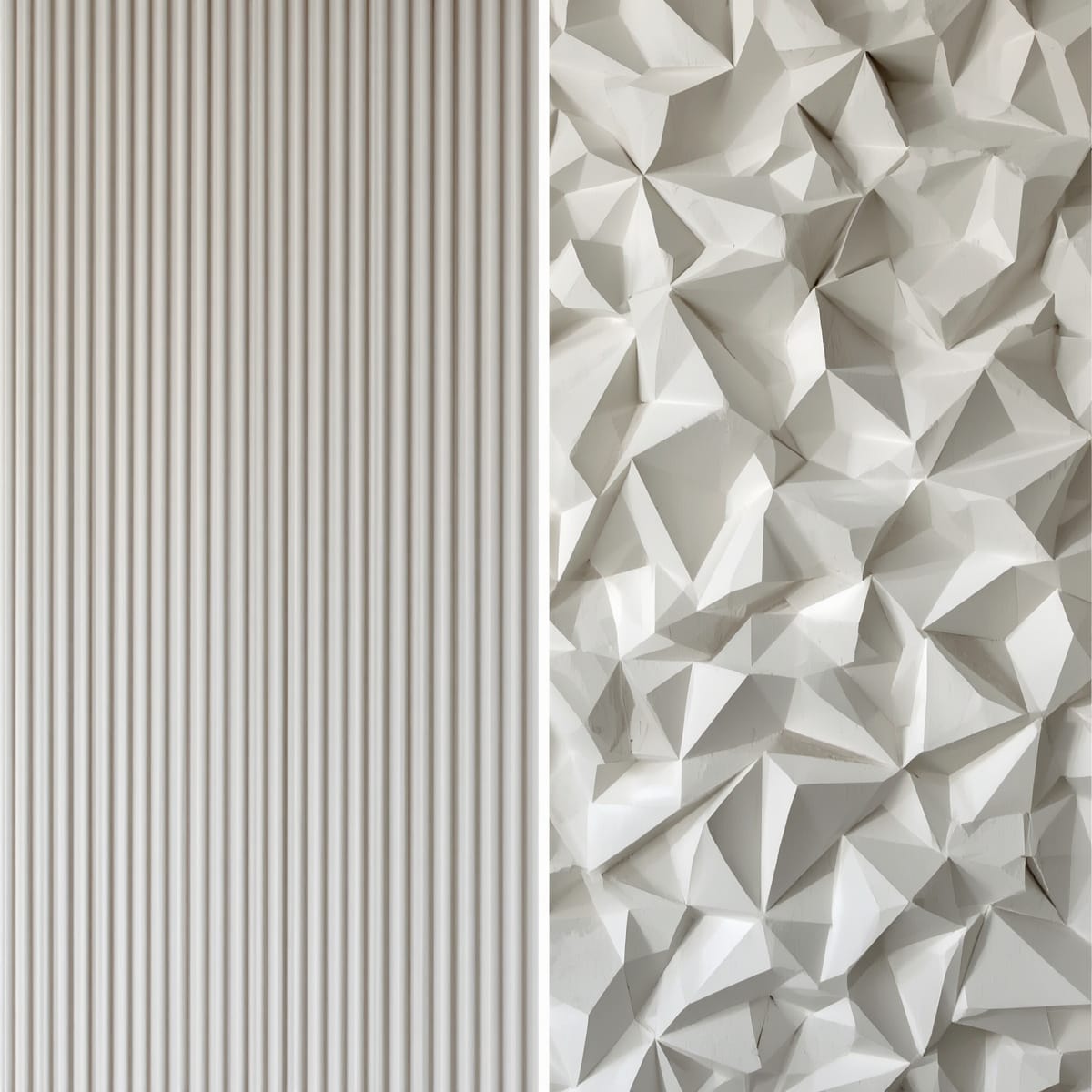
Patterns that calm vs patterns that shout
Behind a bed, gentle, repeating textures- fluting, soft waves, subtle geometric relief- rest the eye and suit a space meant for sleep. Bold, high-contrast geometry can feel restless and is better suited to a hallway or living room than a bedroom. Keep the panel colour close to the surrounding wall tone so the texture, not a loud pattern, does the work.
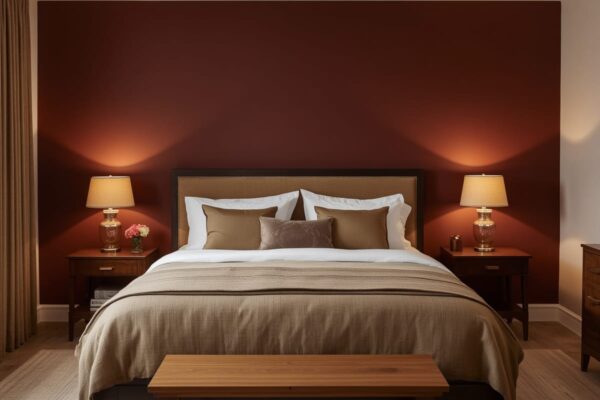
For a colour-led feature instead of a textural one, see our pink bedroom and red bedroom guides.
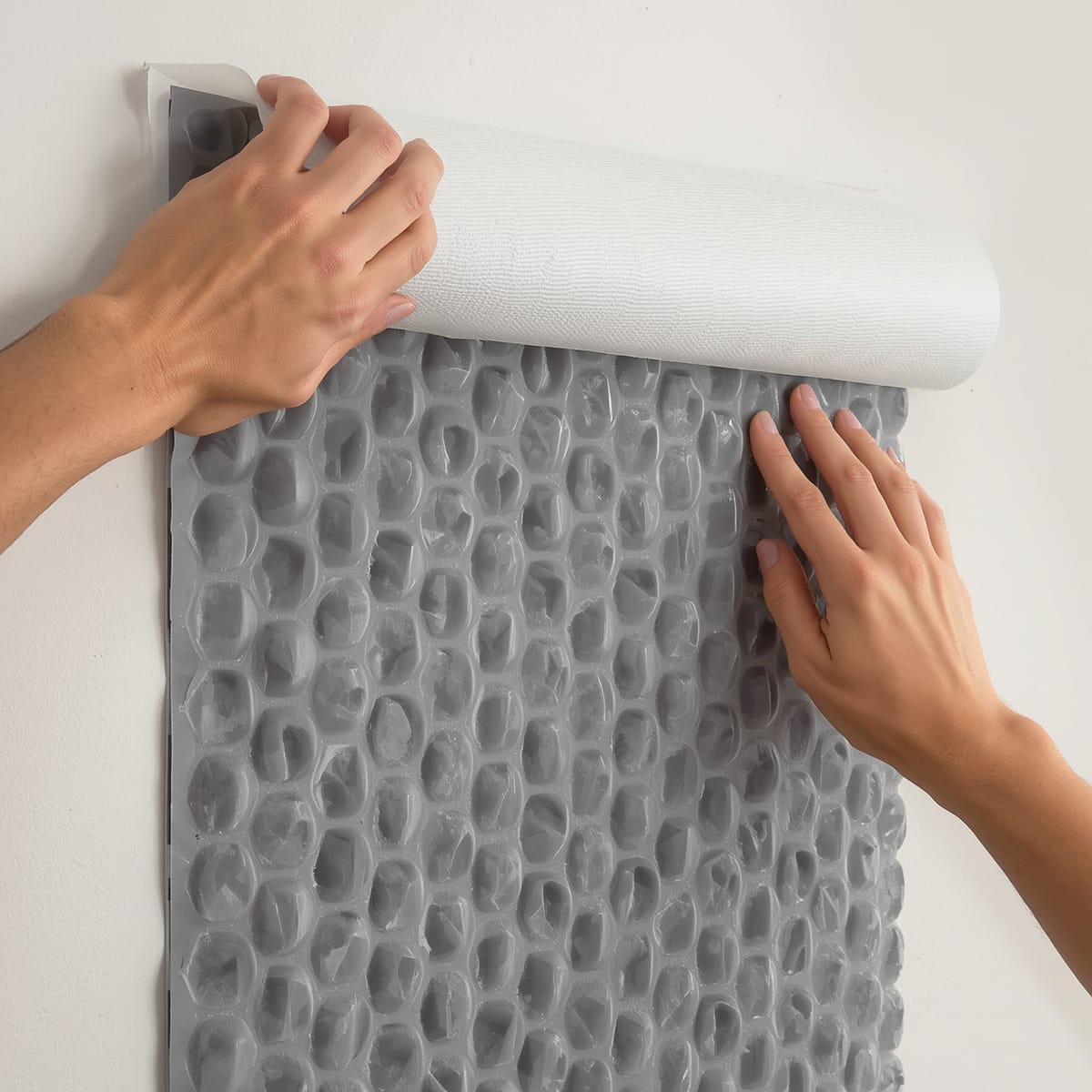
Materials: foam, PVC, plaster, and timber
Lightweight foam and PVC panels are inexpensive, easy to cut and fit, and wipeable- a good entry point and the friendliest for renters. Gypsum or plaster panels feel premium, paint beautifully, and are more durable but heavier and pricier. Timber slat panels add warmth and genuinely soften echo in the room. Match the material to your budget, your walls, and whether you’ll want to remove it later.
Prep, hanging, and getting clean seams
A 3D wall is only as good as the surface beneath it. Fill, sand, and prime first, because relief and grazing light exaggerate every bump and dent. Plan the pattern repeat so seams land sensibly around the headboard and at the edges, and dry-lay panels before fixing. Take your time with alignment- on a textured wall, a misaligned seam is far more obvious than on flat paper.
Renter-friendly and reversible options
For renters or the commitment-shy, peel-and-stick foam panels and removable 3D wallpapers add texture and come off cleanly without damaging the wall. They’re also ideal for a child’s room where the look may change- a removable textured or themed wall can be swapped as tastes evolve without redecorating the whole room.
Lighting to show the texture
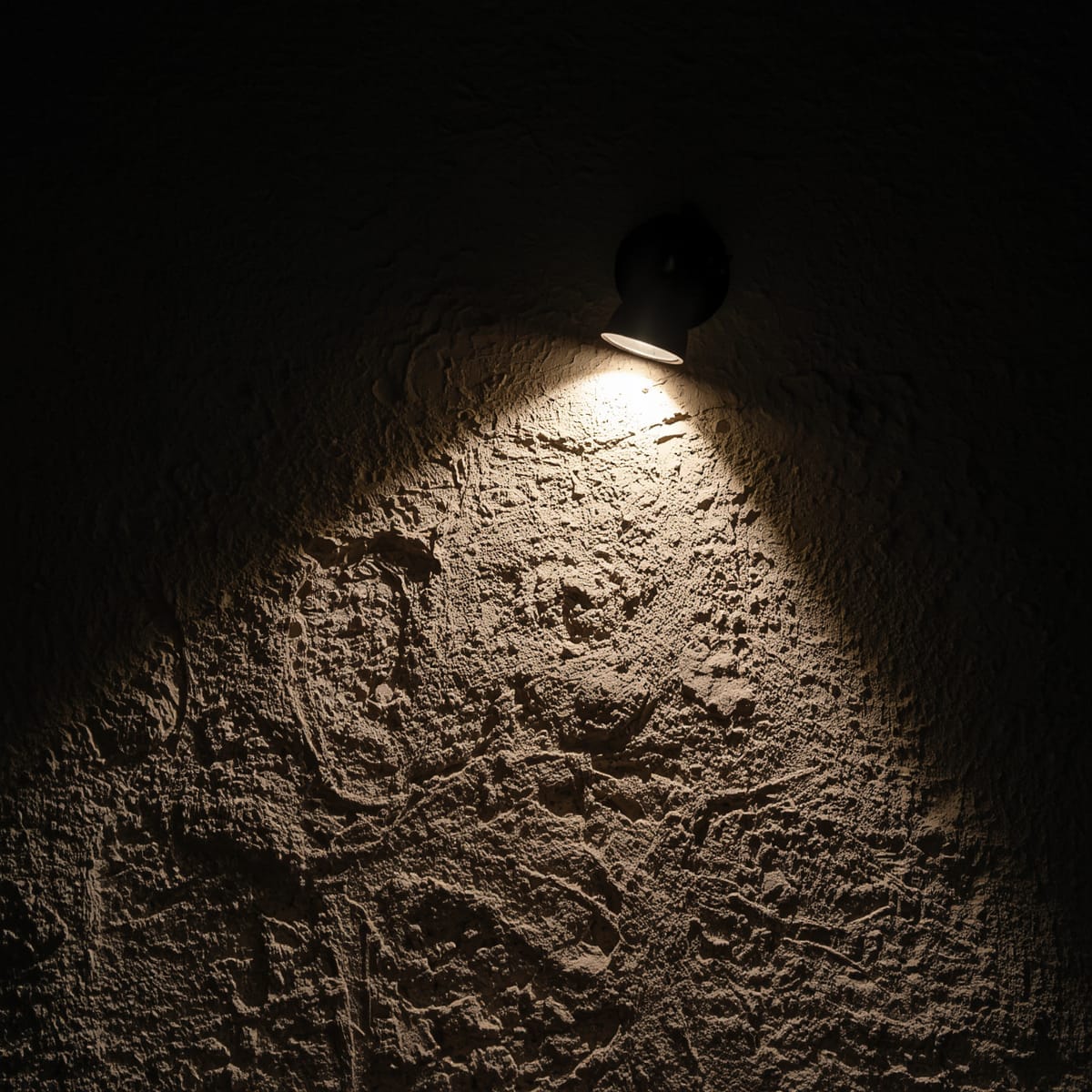
Texture is essentially invisible under flat overhead light. A wall light, a picture light, or an LED strip that rakes across the surface brings out the relief and turns the wall into a feature after dark. This grazing-light trick is the same one used to dramatize a living-room feature wall, and it’s what makes the difference between a 3D wall that pops and one that disappears.
Common 3D-wallpaper mistakes
The usual errors are wrapping the whole room instead of one wall, choosing a loud pattern in a sleep space, skipping wall prep so seams and bumps show, and lighting the wall flatly so the texture vanishes. Pick one wall behind the bed, choose a calm texture, prep properly, and light it from the side.