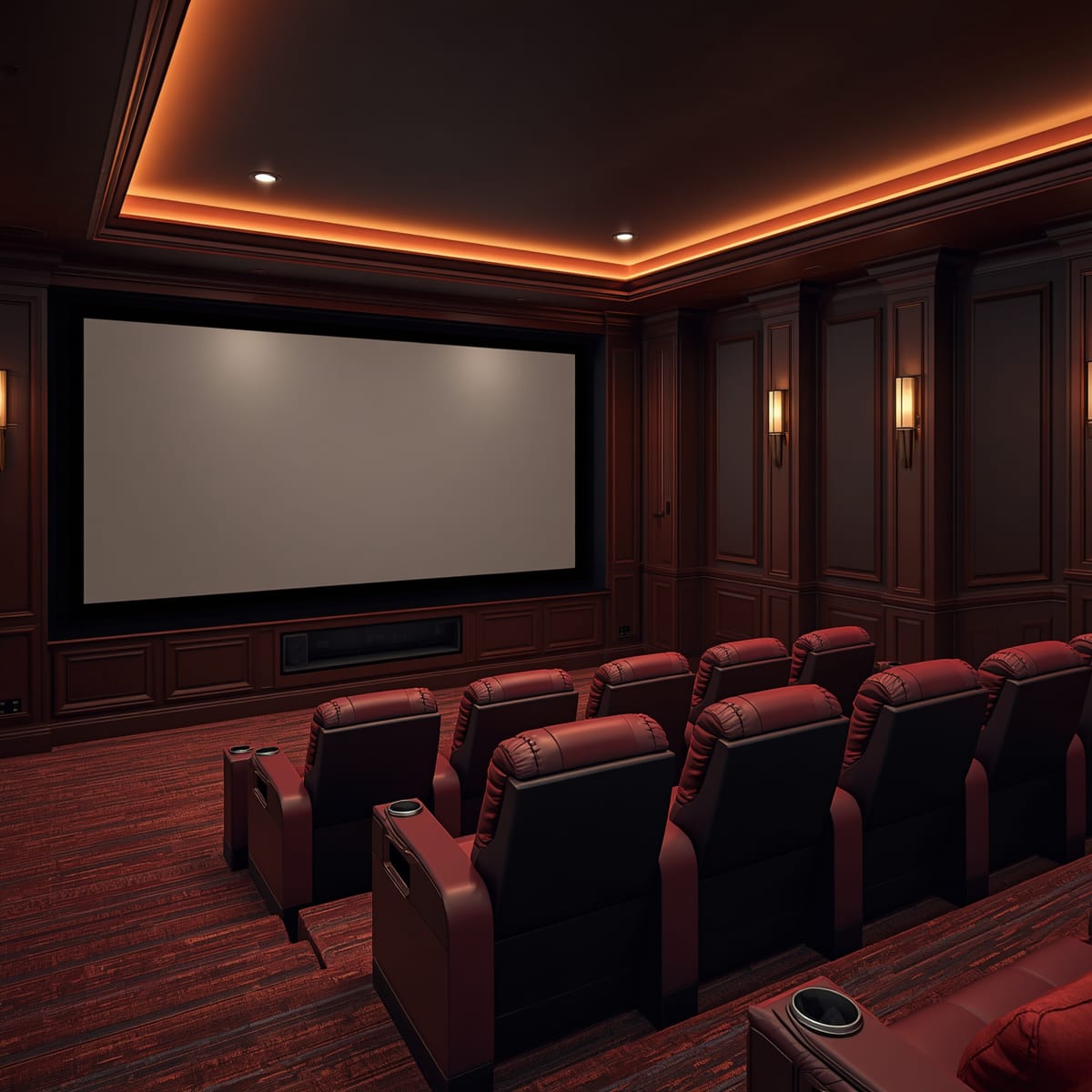
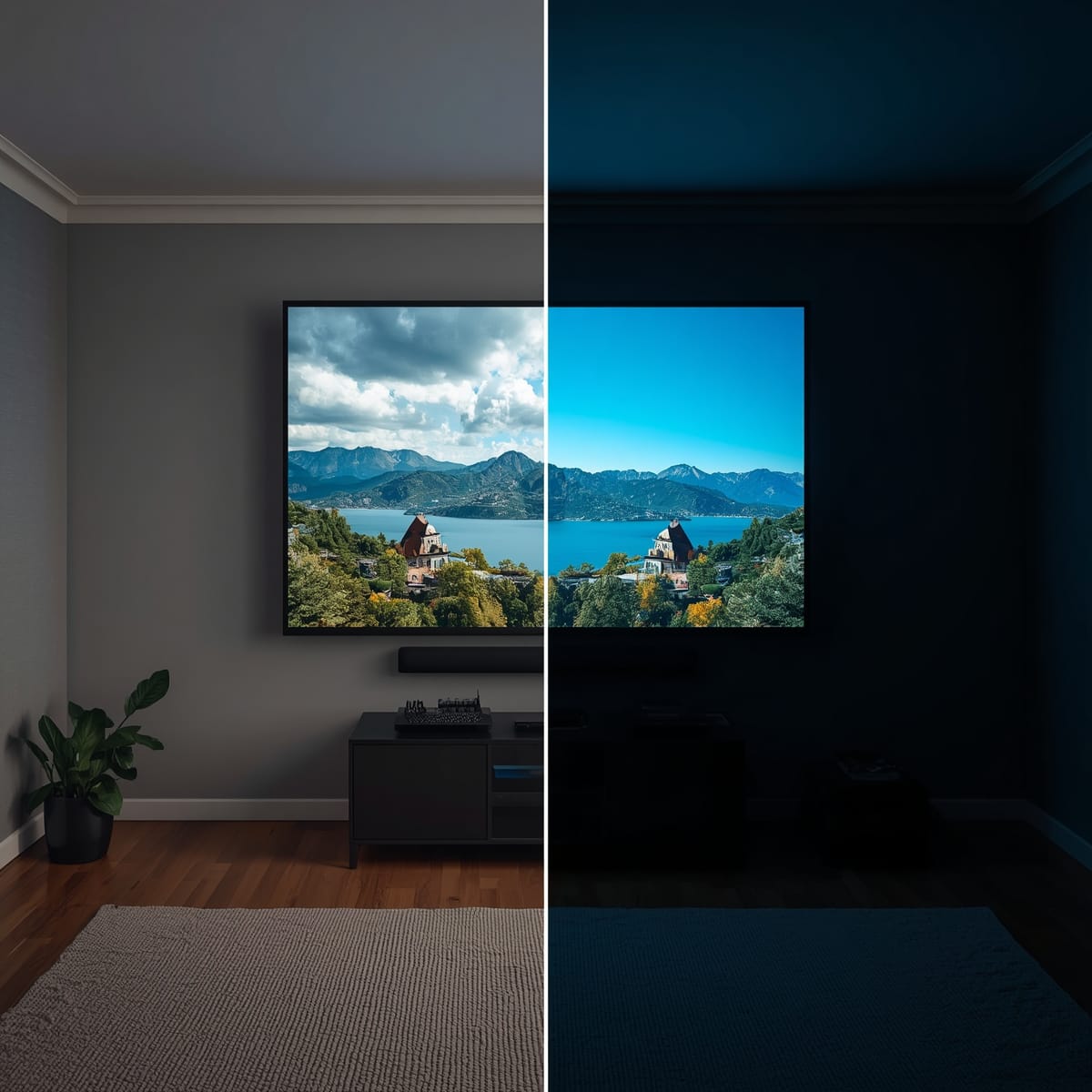
Light control comes before everything
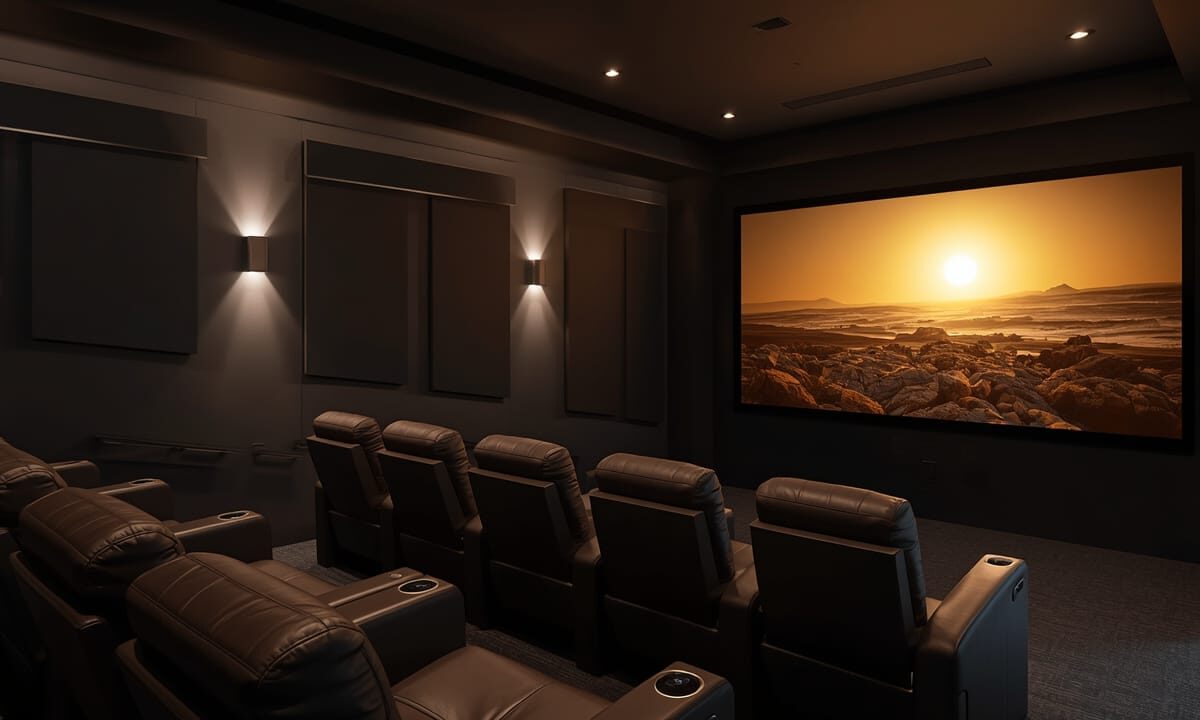
The most common home-cinema mistake is buying a big screen for a bright room. Ambient light washes out contrast and ruins the picture no matter how good the screen is. So control light first: blackout blinds or curtains, darker wall colours behind and around the screen, and a dimmable bias light. Get the room dark and even a modest screen looks superb; leave it bright and an expensive one disappoints.
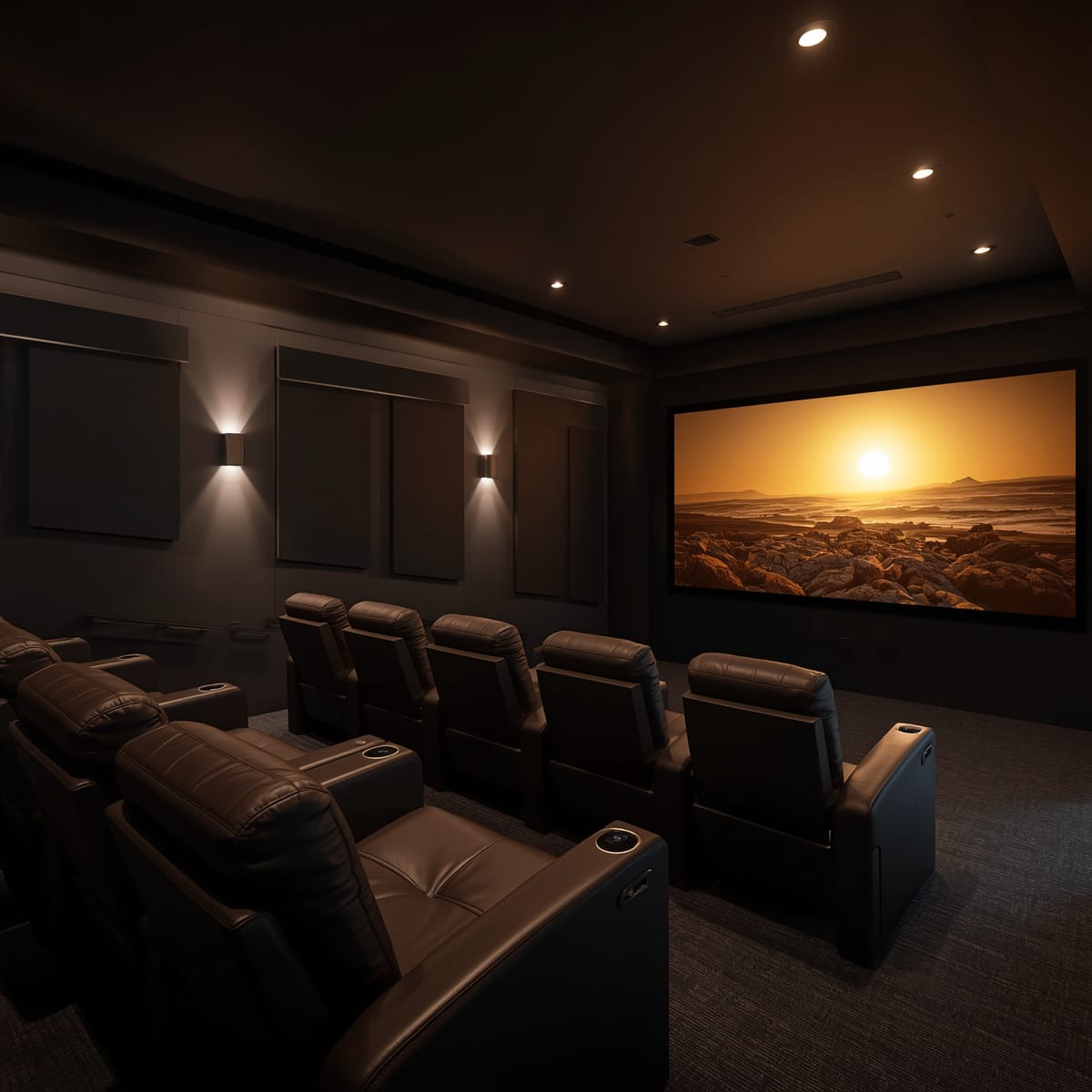
Screen vs projector for your room size
A large TV is brighter, simpler, and the right call for a room you can’t fully darken or one that doubles as a living space – it just works with the lights on. A projector and screen deliver true cinema scale and immersion but need a darker room and enough throw distance to fill the screen. Measure your room and be honest about how dark it gets before choosing.
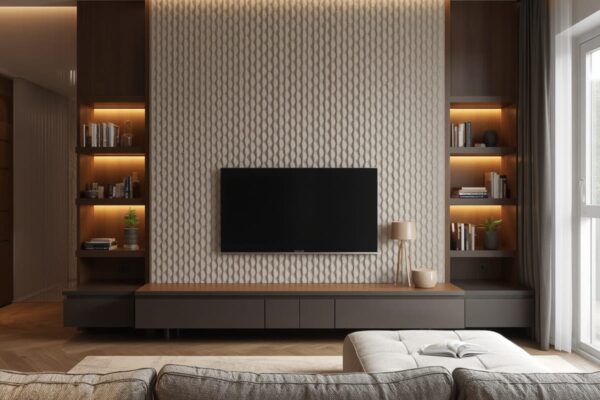
If the space is shared, a projector pairs well with a 3D-textured feature wall that doubles as a backdrop when the screen is up, keeping the room attractive in daily use.
Seating distance and rows
Comfortable viewing distance depends on screen size: too close strains the eyes, too far loses the immersion. As a rough guide for a TV, sit roughly 1.5–2.5 times the screen’s diagonal away; projectors allow more distance for a given size. If you want two rows, raise the back row on a riser so everyone has a clear sightline over the heads in front.
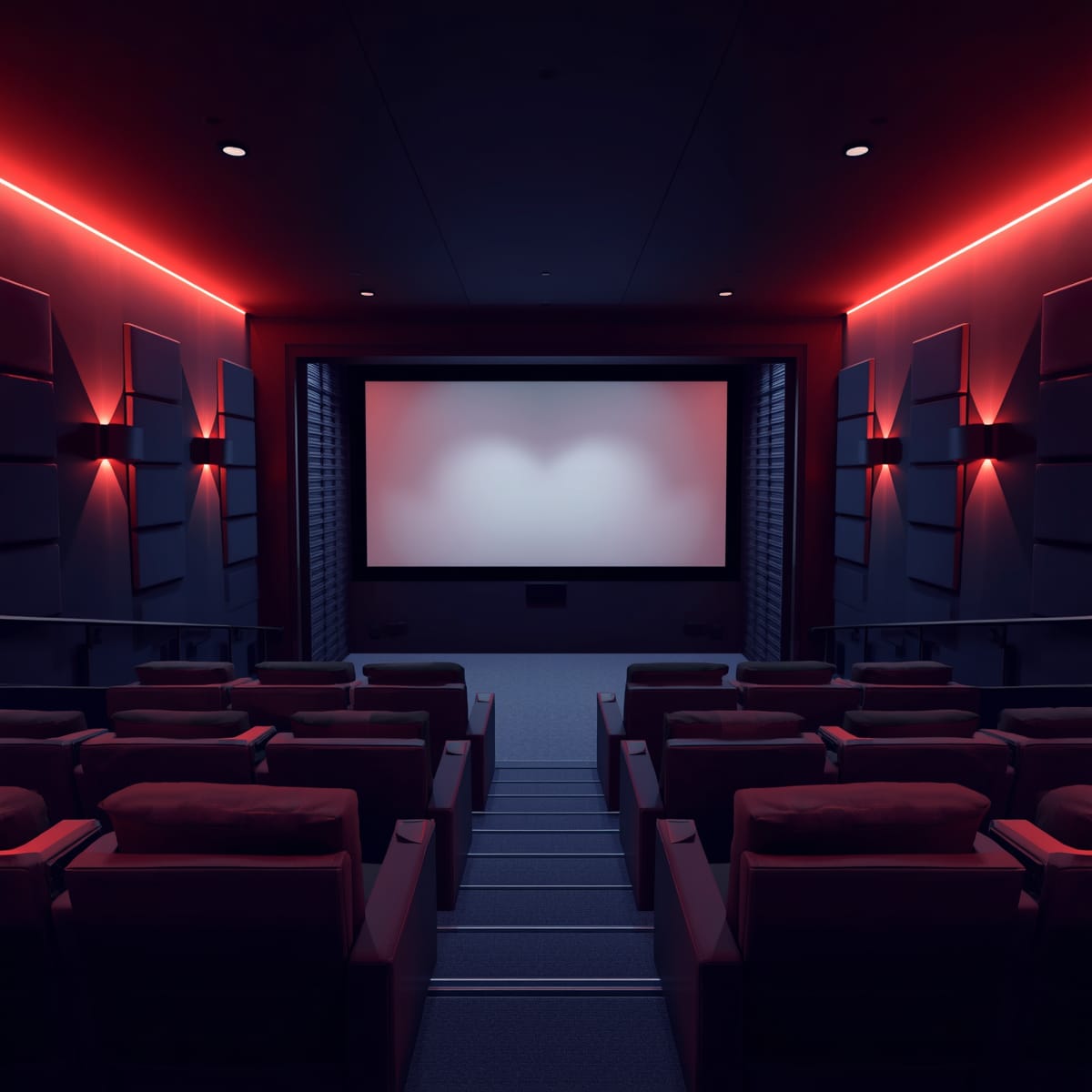
Sound: speakers and placement
Sound is half the cinema experience. Position the front speakers around the screen at roughly ear height, and place surround speakers beside and behind the seating. A subwoofer adds the low-end impact that makes films feel immersive. Getting placement right matters more than spending huge sums – well-placed mid-range speakers beat expensive ones thrown in the corners.
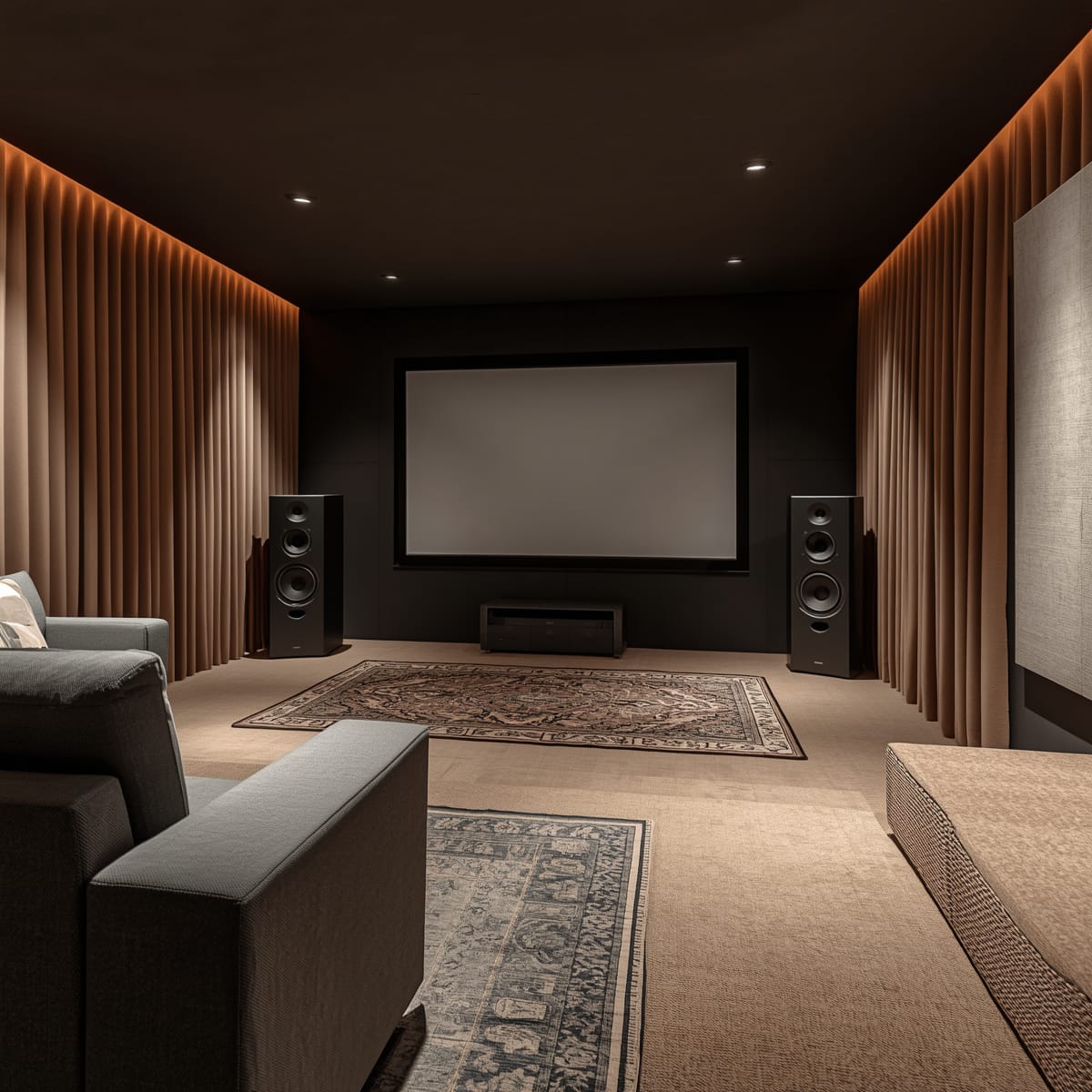
Acoustics: tame the echo
Hard, bare rooms echo and muddy the audio. Soften the space with rugs, curtains, upholstered seating, and a few acoustic panels to absorb reflections. Timber slat walls are an attractive way to do this – the same echo-taming benefit covered in our modern hall and interior design and useful enough that many living-room media spaces borrow it. A treated room sounds dramatically better than an untreated one with pricier gear.
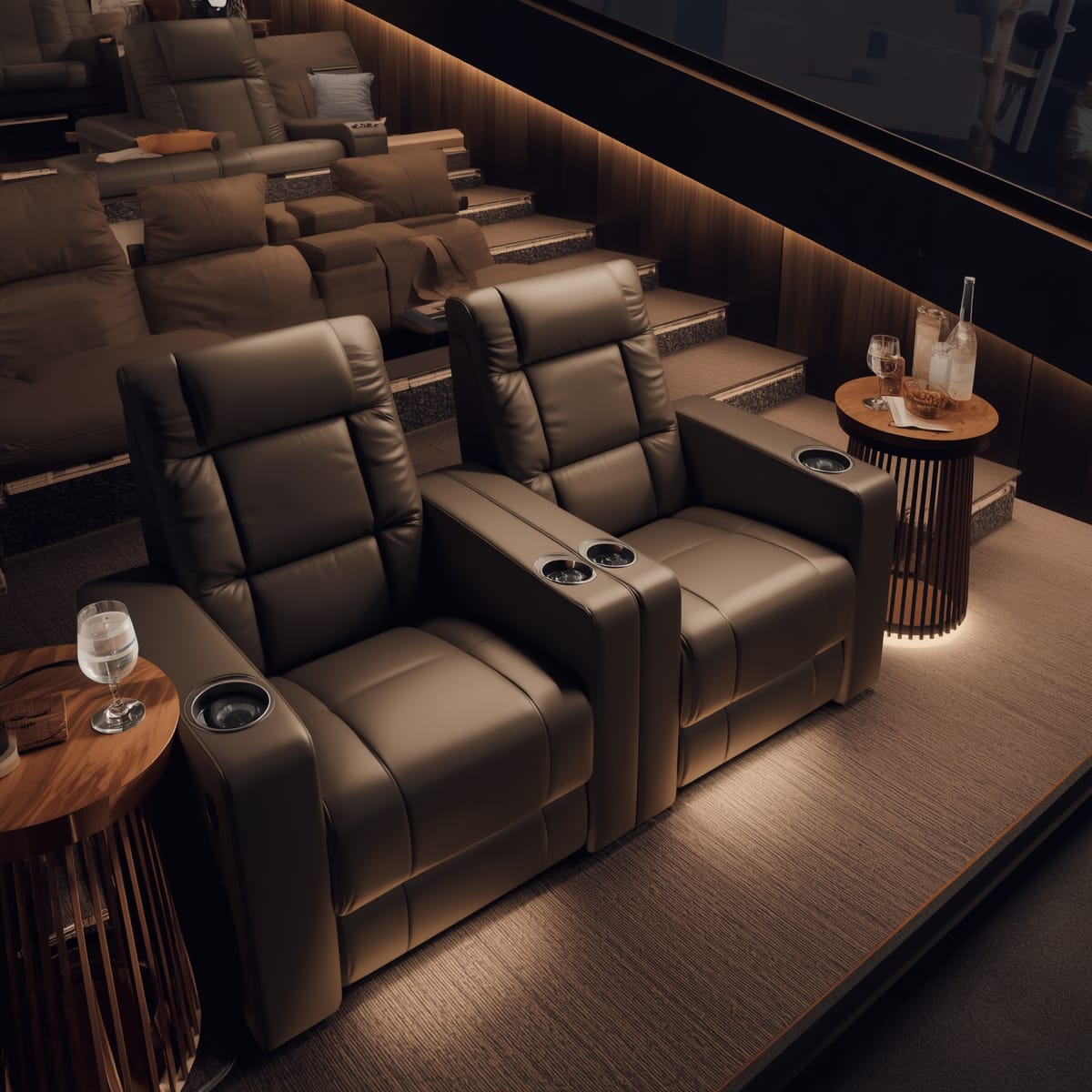
Comfort and the small details
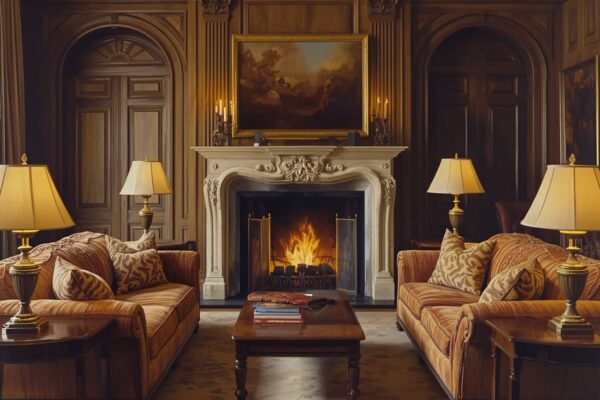
The details turn a media room into somewhere people actually want to spend the evening: reclining seating, a spot for drinks and snacks, soft bias lighting behind the screen to reduce eye strain, and tidy cable management so nothing trails. Keep the rest of the decor calm and dark-toned so nothing competes with the screen, taking cues from a restrained classic interior palette.
Furniture and integrating the room
If the theatre is a multi-use room, choose furniture that suits both jobs – a comfortable sofa that works for everyday lounging and movie nights, with storage for kit. The same comfort-and-cohesion thinking from our modern bedroom furniture sets applies: pick pieces that are genuinely comfortable, scaled to the room, and calm in finish so the screen stays the star.
Common home-theatre mistakes
The frequent errors are prioritizing a big screen over light control, choosing a projector for a room that can’t be darkened, sitting too close or too far, leaving the room acoustically bare, and tangled cabling. Darken the room first, match screen to room, get the seating distance right, treat the acoustics, and tidy the cables – and a modest setup will outperform an expensive one in a poorly planned room.