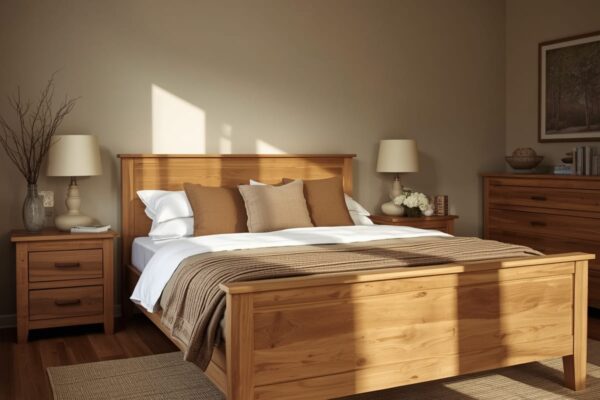
After a decade of pale oak and blonde everything, the pendulum has swung back to dark wood – and Mahogany Bedroom Furniture is leading it. Designers are openly calling out a shift toward mahogany and walnut now that beige minimalism has run its course, because deep reddish-brown timber does something light wood can’t: it makes a bedroom feel grounded, calm, and quietly expensive.
This is the complete guide to mahogany bedroom furniture. You’ll find the styles worth considering, an honest explanation of how to tell real mahogany from a “mahogany finish” (it matters more than most shops let on), the wall colors and materials that flatter it, and how to keep it looking good for decades. Skip around using the contents below.
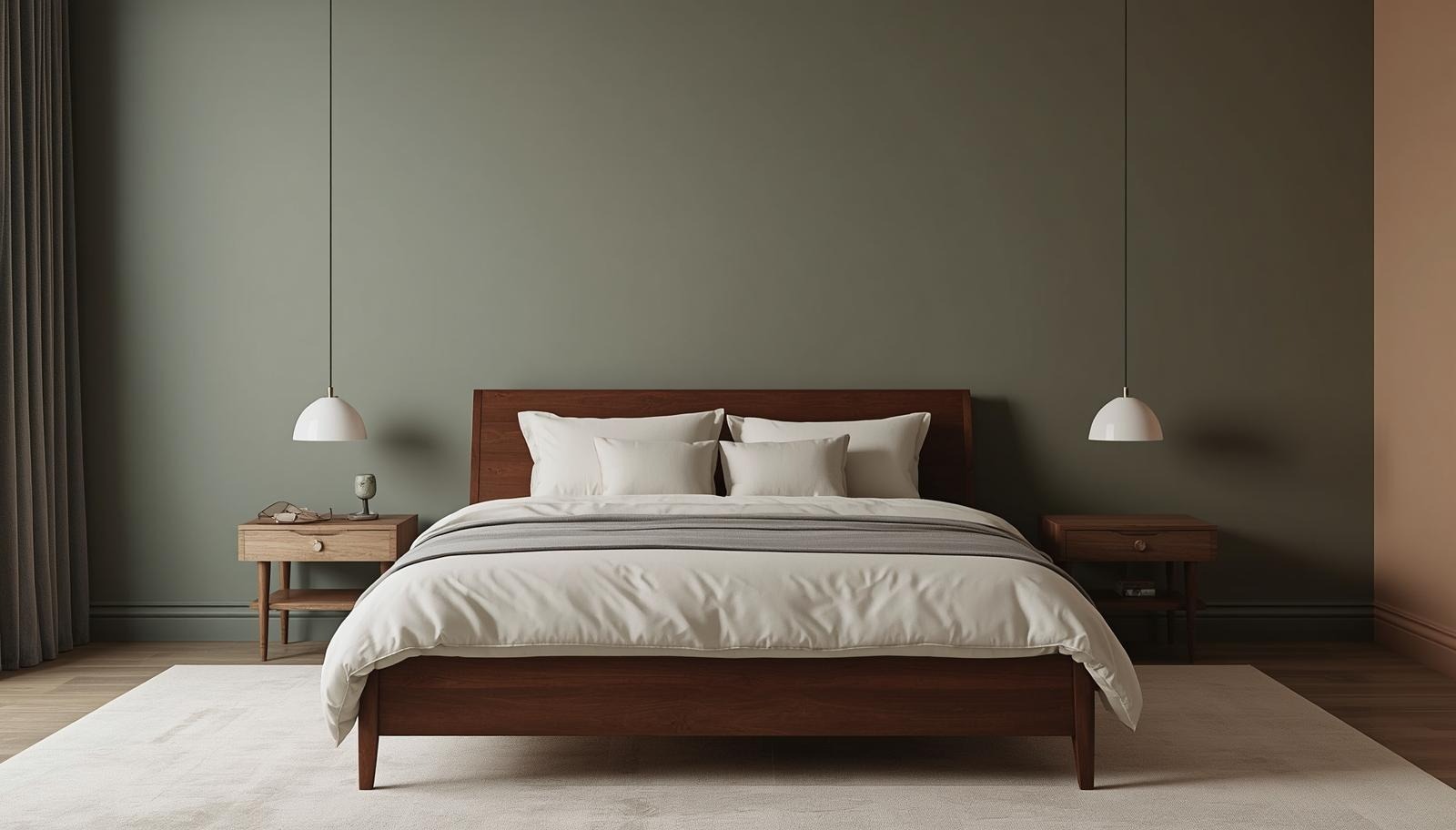
Why mahogany is back in the bedroom
For years, the safe bedroom was light: oak or painted furniture, white walls, everything airy. It photographs beautifully, but a lot of those rooms started to feel a little flat and a little the same.
The 2026 shift is toward warmth, depth and “collected” interiors that look gathered over time rather than bought in one delivery. Dark wood is the natural centrepiece of that look, and mahogany in particular carries a sense of permanence and heritage. There’s a sustainability angle too – a well-made mahogany piece, especially a vintage one, can outlive several cheap flat-pack replacements, which is part of why brown furniture has become a genuine trend rather than a throwback.
The trick is to use it with a bit of restraint. A single mahogany bed or dresser against a soft wall reads as intentional and elegant. A full matching set of dark furniture in a small, dark room reads as a hotel from 1994. More on how to avoid that below.
Real mahogany vs. “mahogany finish”: what you’re buying
This is the part most furniture listings gloss over, and it’s worth understanding before you spend real money.
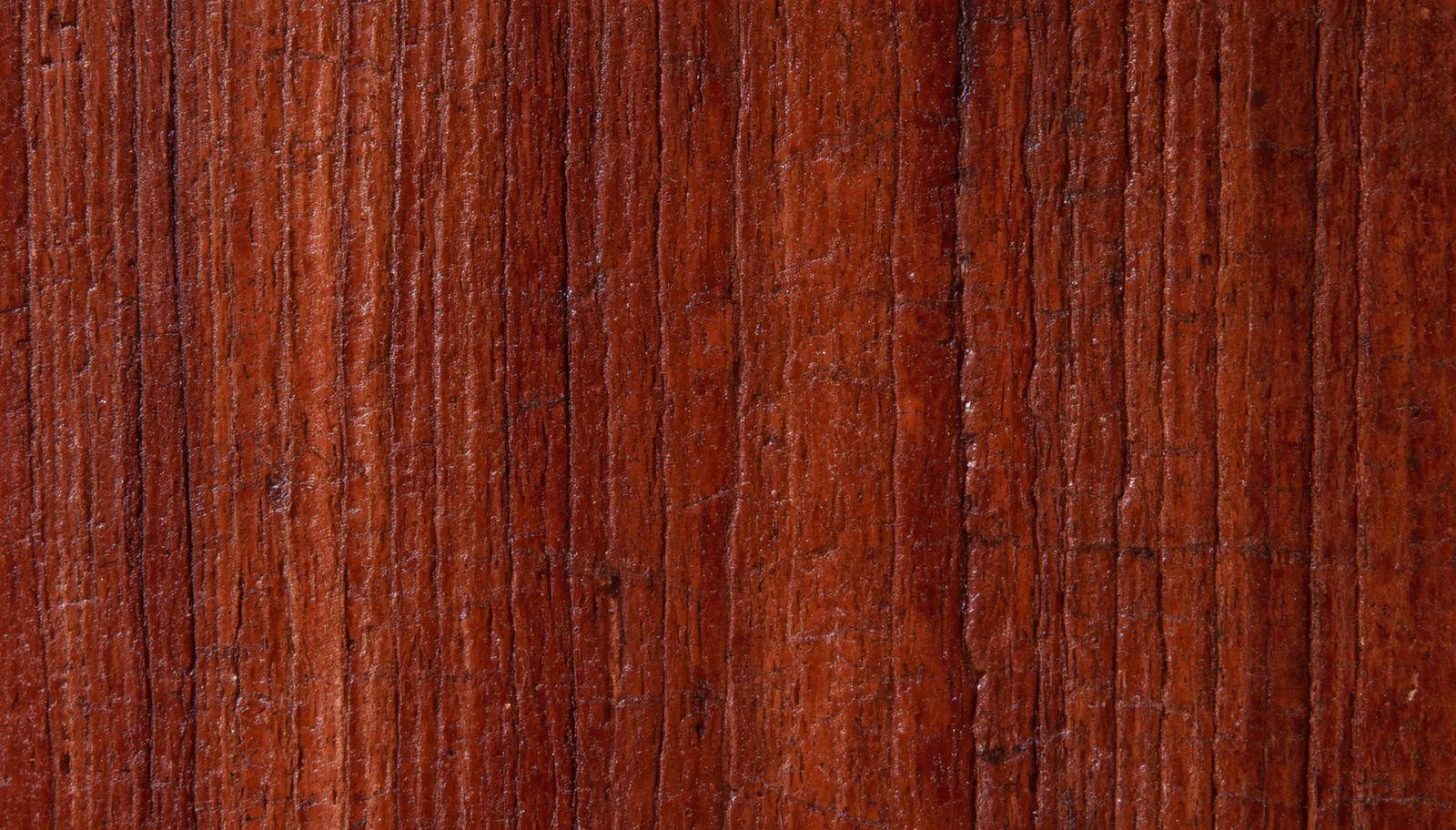
Genuine mahogany comes from the Swietenia genus – Honduran or “big-leaf” mahogany is the one you’ll usually find today. It’s prized for its fine, even grain, its stability, and the way it deepens from pinkish-brown to a rich red-brown as it ages. Because of heavy historical logging, genuine mahogany has been regulated under CITES Appendix II since 2003 (outbound authority link), which limits supply and pushes the price up. One thing that surprises people: real mahogany is actually fairly soft – closer to walnut than oak on the hardness scale – so it’s beautifully stable but can dent if you’re rough with it.
Most furniture sold as “mahogany” today isn’t Swietenia at all. The common stand-ins are:
- African mahogany (Khaya) – a close, more affordable relative with a calm, traditional grain. Very common in bedroom furniture.
- Sapele – harder and more durable than genuine mahogany, with a striking “ribbon stripe” shimmer when quarter-sawn. Often sold as “sapele mahogany.”
- “Philippine mahogany” (lauan/meranti) – not a true mahogany at all; softer and used in budget pieces.
- Mahogany veneer or “mahogany finish” – a thin real-wood veneer, or simply a reddish stain over a cheaper wood or MDF.
None of these are automatically bad – African mahogany and Sapele are excellent, hard-wearing woods, and a good veneer over a solid frame can be perfectly durable. The point is to know what you’re paying for. Ask the seller for the species, and look for FSC certification to confirm it was legally and responsibly sourced.
8 mahogany bedroom furniture ideas
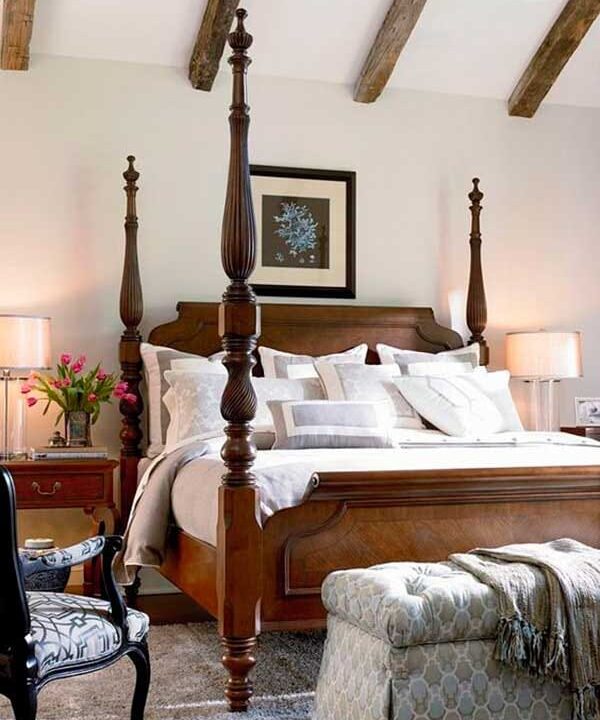
i. The four-poster (or poster) bed
The four-poster is mahogany’s signature piece – those tall spindled posts show the wood off and give a room instant vertical drama. A slim, turned-post version feels classic without being heavy; a plain squared-off post reads more contemporary.
Make it work: In a room with a normal ceiling, choose a poster bed without a canopy frame so it doesn’t visually close the space in.
ii. The sleigh bed
With its curved head- and footboard, the sleigh bed leans into mahogany’s warmth and craftsmanship. It’s a commitment – it takes up visual space – so it suits a bigger room where the curves have room to breathe.
Make it work: Pair it with simple, light bedding so the eye reads the wood shape, not a busy duvet.
iii. The classic panel bed
The most versatile option: a solid headboard (and often footboard) in flat or lightly moulded panels. It’s the easiest mahogany bed to live with because it plays nicely with almost any style around it.
Make it work: This is the piece to buy if you only want one mahogany item and everything else stays neutral.
iv. Carved French and traditional styles
Louis-style, Rococo and other carved mahogany pieces bring old-world detail – scrollwork, cabriole legs, ornate crestings. Used sparingly, one such piece becomes a real focal point.
Make it work: Let carved furniture be the star; keep walls and textiles plain so the room doesn’t tip into fussy.
v. Contemporary, clean-lined mahogany
Mahogany doesn’t have to mean traditional. Slab headboards, low platform beds and minimalist dressers in mahogany or a warm mahogany veneer give you the richness of the wood with a modern, quiet silhouette.
Make it work: Choose straight legs, minimal hardware and a matte finish to keep it firmly current.
vi. One statement piece: dresser, chest or nightstands
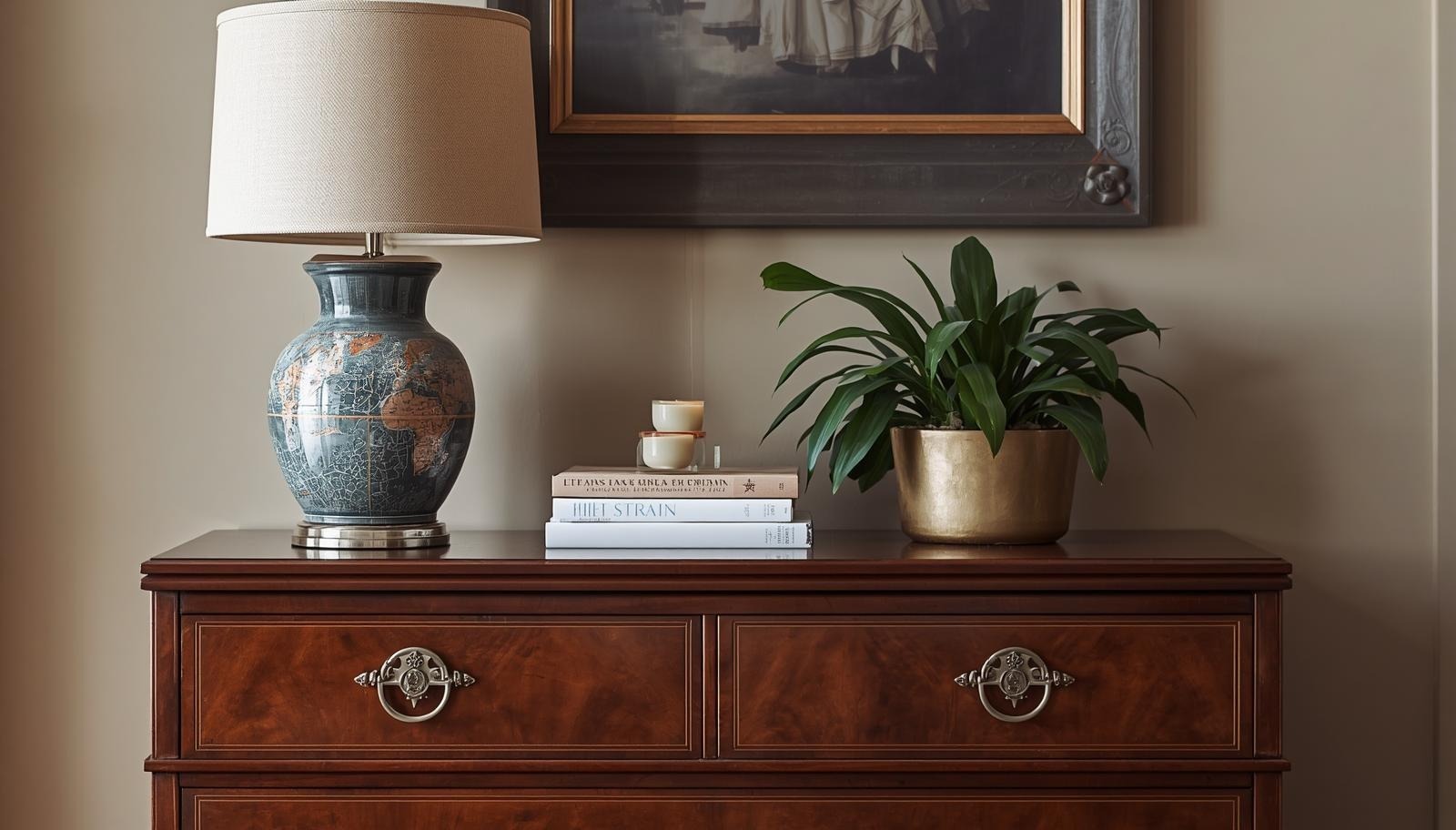
You don’t need a whole set. A single mahogany dresser or a pair of nightstands against a painted bed and neutral walls is often the most modern move of all – it gives you the warmth without the matched-suite look.
Make it work: Swap dated handles for warm brass or matte-black pulls to instantly update an older mahogany chest.
vii. Mahogany wardrobe or armoire
Where built-in storage isn’t an option, a freestanding mahogany wardrobe becomes both storage and centrepiece – the kind of furniture-as-architecture that anchors a room.
Make it work: Keep the rest of the room lighter so a large dark wardrobe grounds the space instead of shrinking it.
viii. Vintage and heirloom mahogany
Some of the best mahogany furniture is second-hand. Older pieces are often solid wood with craftsmanship you’d pay a fortune for new, and buying vintage sidesteps the sustainability questions around new tropical hardwood entirely. It’s very on-trend, and usually cheaper.
Make it work: A light sand and re-wax, or new hardware, revives most tired mahogany pieces beautifully.
Colors that go with mahogany furniture
Mahogany’s warm red-brown wants to be balanced, not matched. The palettes that flatter it in 2026:
- Soft blues and dusty blues – the classic partner; the cool tone offsets the warm wood and feels calm.
- Sage and muted greens – nature-adjacent and current; makes mahogany feel fresh rather than formal.
- Warm whites, cream and greige – the easy, airy choice that lets the wood be the star.
- Moody charcoal or deep green – for a rich, cocooning bedroom, dark walls make mahogany glow instead of disappear.
Bring in brass, gold or bronze metals rather than chrome, keep bedding light for contrast, and add a textured rug or linen to soften all the polished surfaces.
Mixing mahogany with other woods and modern pieces
The single most important rule for 2026: don’t match everything. The old fully-matched mahogany suite – bed, two nightstands, dresser, mirror, all identical – is exactly what makes a room feel dated.
Instead, mix. Pair a mahogany bed with a painted nightstand, or a mahogany dresser with an oak or cane accent chair. Different wood tones can absolutely share a room as long as you keep an undertone in common (warm with warm) and let one wood dominate. A little mid-century shape, some linen upholstery, and a brass lamp keep mahogany from reading as your grandmother’s bedroom and turn it into something collected and personal.
How to care for mahogany furniture
Mahogany rewards a little maintenance:
- Dust regularly with a soft, dry or barely-damp cloth; skip harsh all-purpose sprays, which can dull the finish.
- Keep it out of direct, prolonged sunlight – mahogany changes color as it ages, and uneven sun exposure can fade or darken patches unevenly.
- Aim for stable humidity. Like all solid wood, mahogany moves with big swings in moisture; avoid placing it right against a radiator or a cold exterior wall.
- Use coasters and pads on top surfaces – real mahogany is on the softer side, so it marks more easily than oak.
- Wax or polish occasionally (a couple of times a year) to feed the finish and keep the depth of color. Blot spills quickly to avoid water rings.
Is mahogany bedroom furniture worth it?
For most people, yes – with eyes open. Genuine mahogany is stable, ages gorgeously, and holds heirloom and resale value, though it’s pricey and a little soft, so it suits people who’ll treat it kindly. African mahogany and Sapele give you a similar look with more everyday toughness at a lower price. A quality veneer over a solid frame is the budget-smart route and can last for years.
Whichever you choose, the value case is strongest when you buy well once – solid construction, dovetailed drawers, a species you’ve confirmed – rather than replacing cheap furniture every few years. And if you want the look guilt-free and affordably, a restored vintage piece is hard to beat.