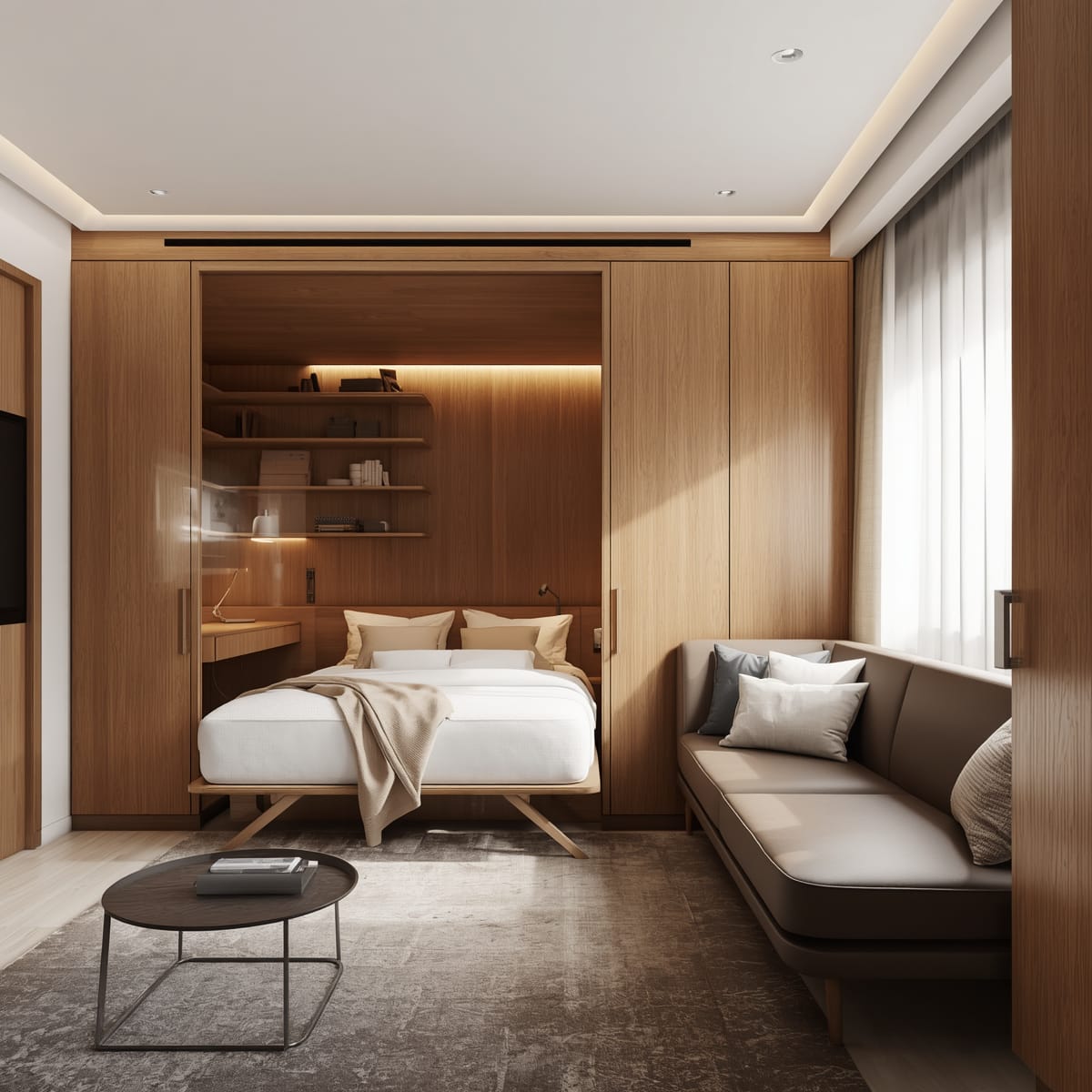
When foldable furniture is worth it
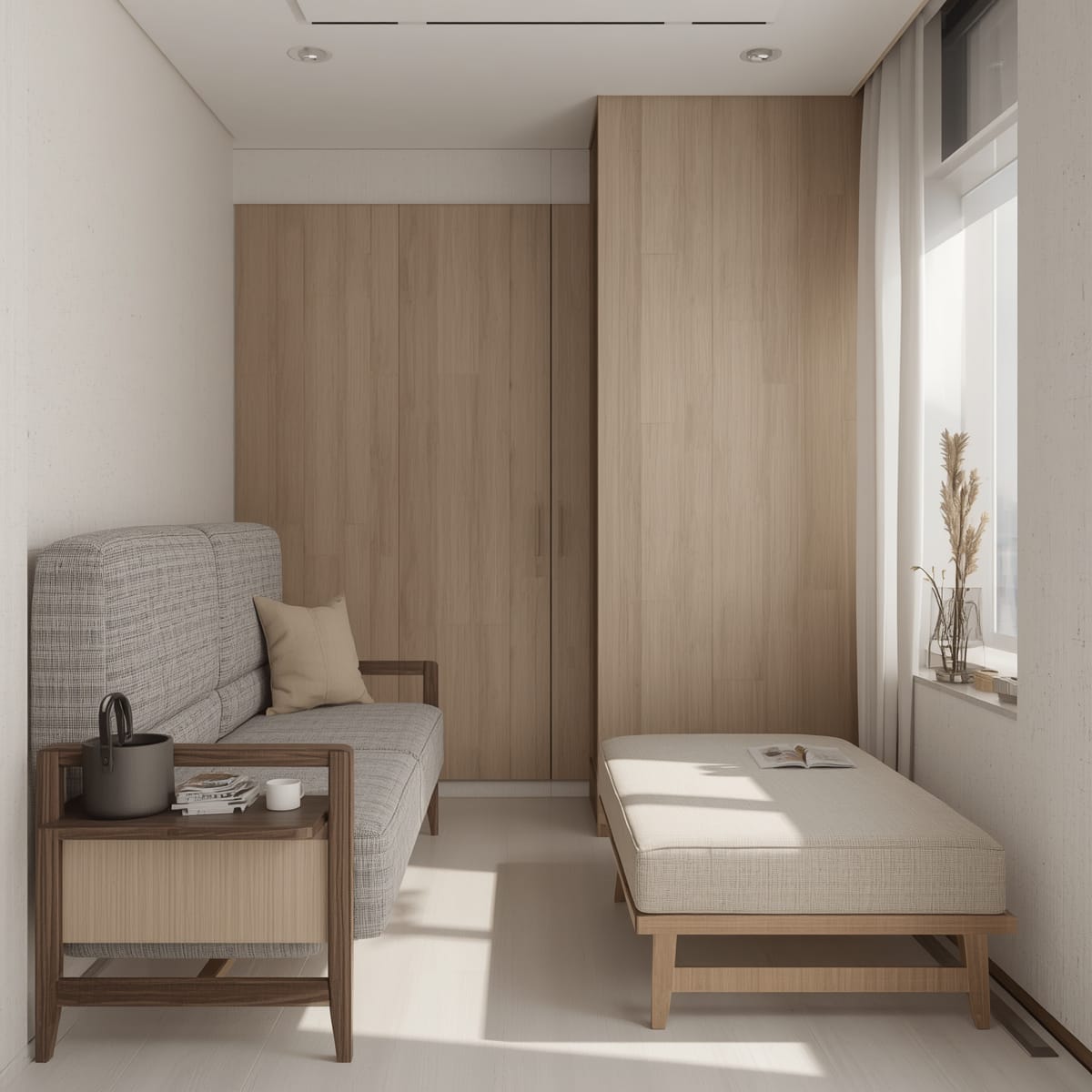
Foldable and multi-functional furniture earns its place when a room has to do more than one job – a bedroom that’s also a home office, a guest room used twice a year, or a genuinely tiny space where standard furniture simply won’t fit. In those situations, it’s transformative.
If the room is only ever a bedroom and has space for normal furniture, a good modern bedroom set is usually more comfortable and cheaper. Foldable furniture is a solution to a specific problem, not a default – so be honest about whether you have that problem.
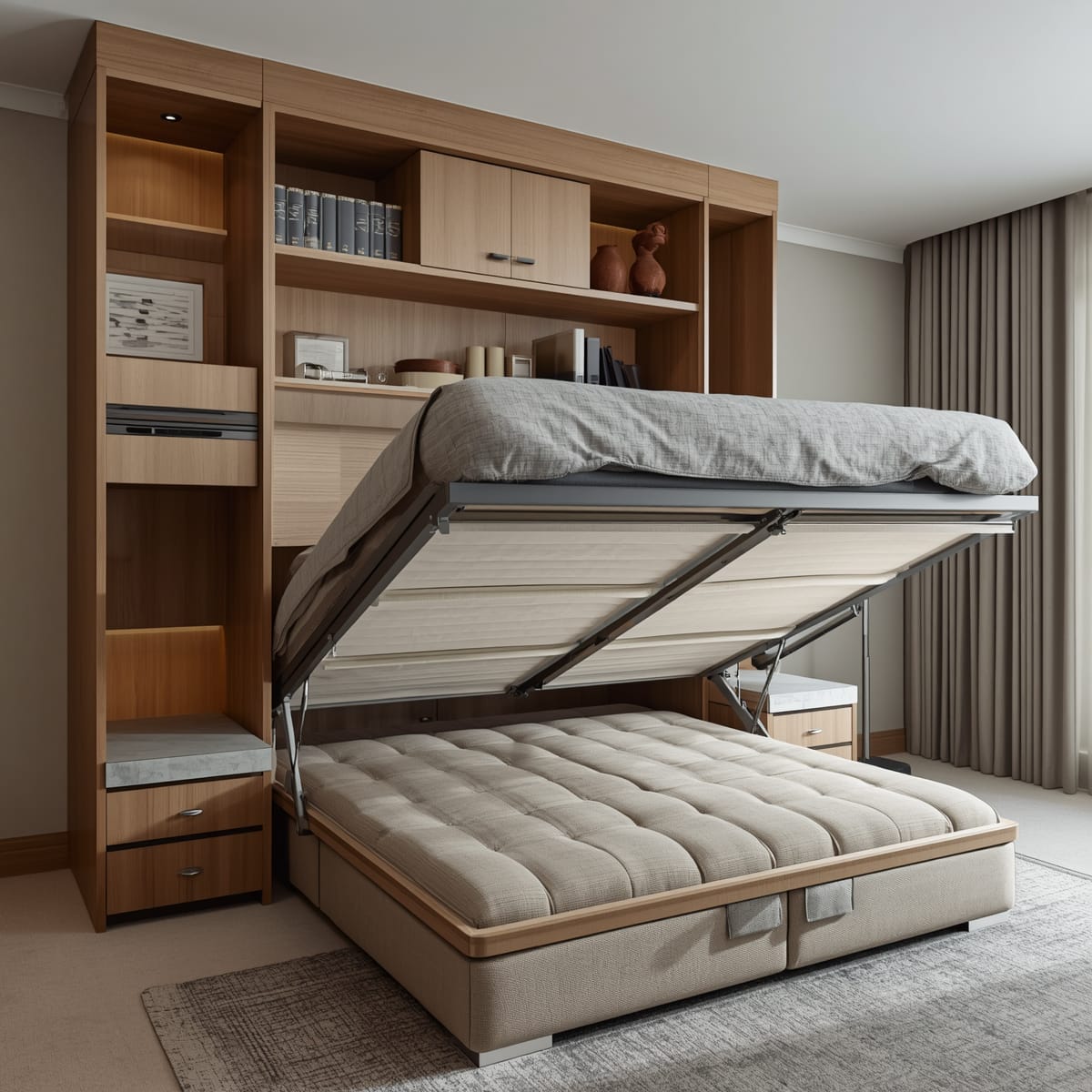
Murphy/wall beds: the big move
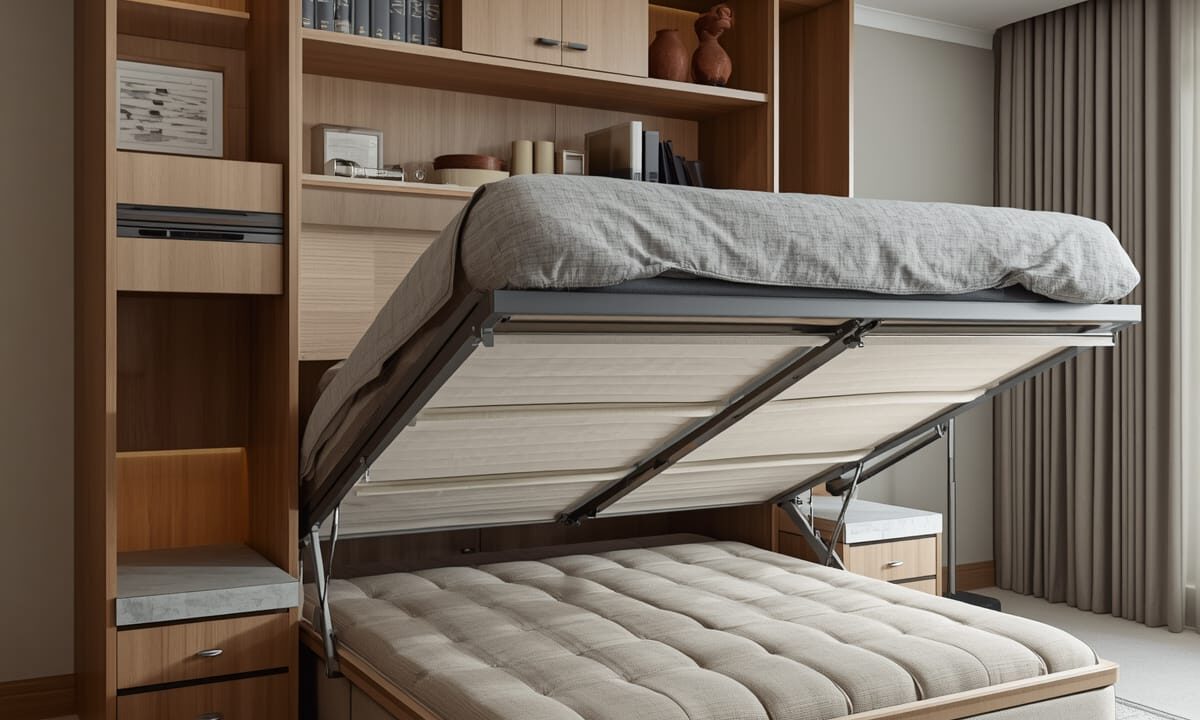
A wall (murphy) bed is the single biggest space reclaim available. It folds the bed vertically into a cabinet, freeing the floor for a desk, sofa, or play space by day, and many designs integrate a desk or sofa that stays usable when the bed is up. It’s the piece worth the most of your budget, because a cheap mechanism turns a clever idea into a daily annoyance – and a heavy one into a hazard.
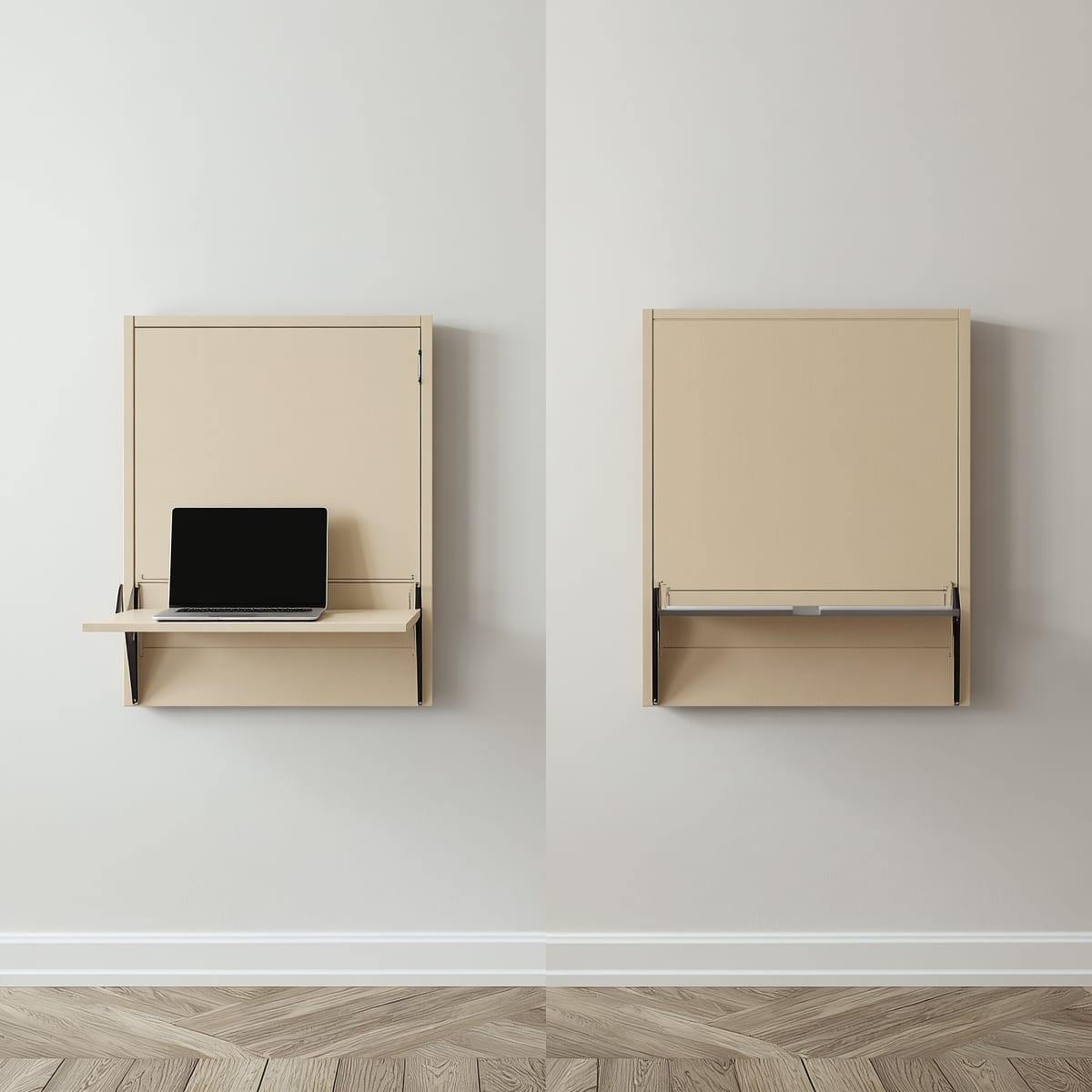
Fold-down desks and drop-leaf tables
A wall-mounted fold-down desk gives a real workspace that disappears when folded, ideal for a bedroom that doubles as an office. Drop-leaf and nesting tables, folding chairs, and slim consoles that extend all flex the room for occasional needs without permanent bulk. These are the same space-first moves we use in a small bathroom and a small kitchen – furniture that appears when needed and vanishes when not.
Multi-use pieces that don’t fold
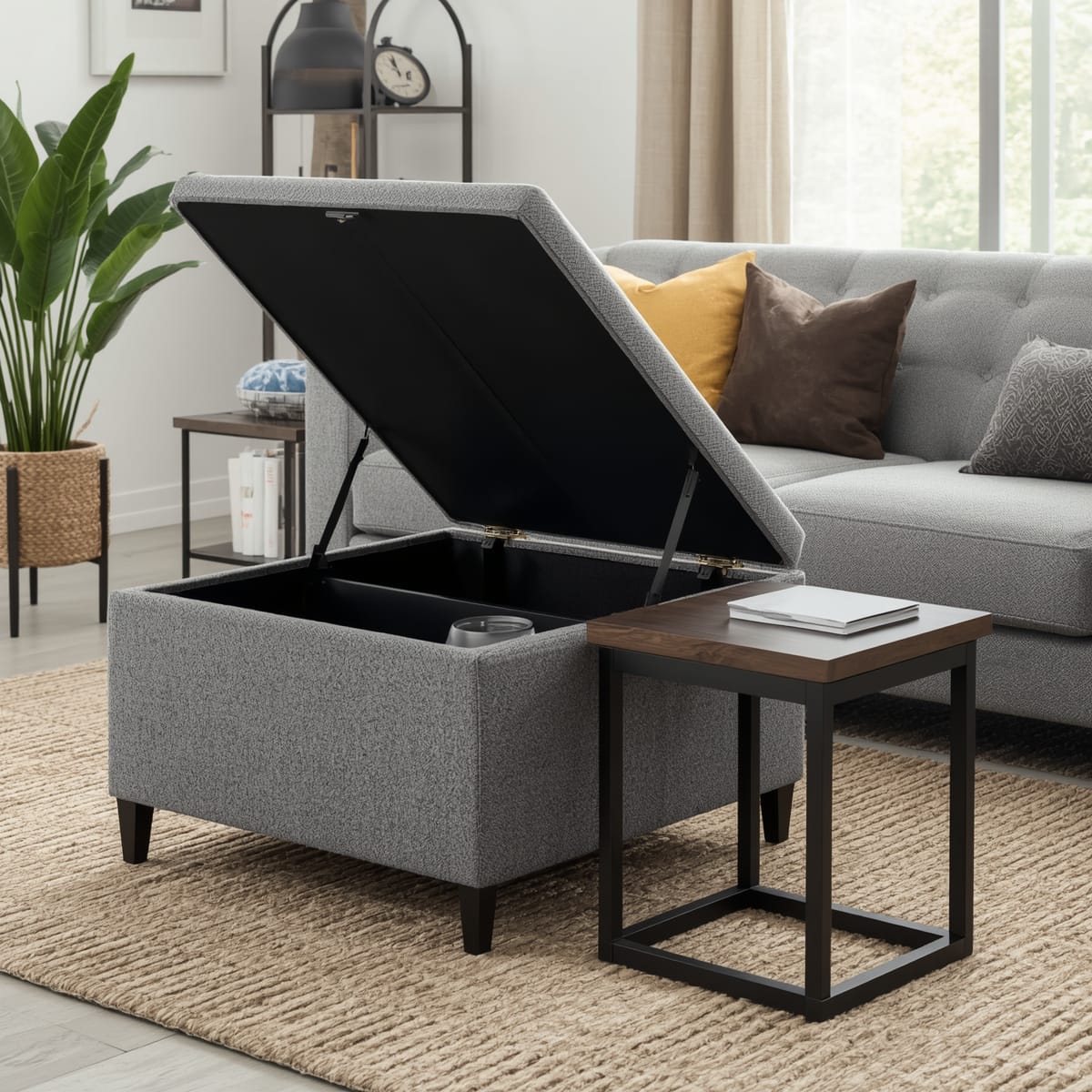
Not every space-saver has a hinge. A storage ottoman doubles as a seat and a blanket box; a bed with deep base drawers replaces a chest; nesting tables tuck inside each other; a headboard with built-in shelving removes the need for nightstands. These multi-use pieces are often more robust than folding hardware and add capacity without anything to operate.
Mechanisms and build quality matter most
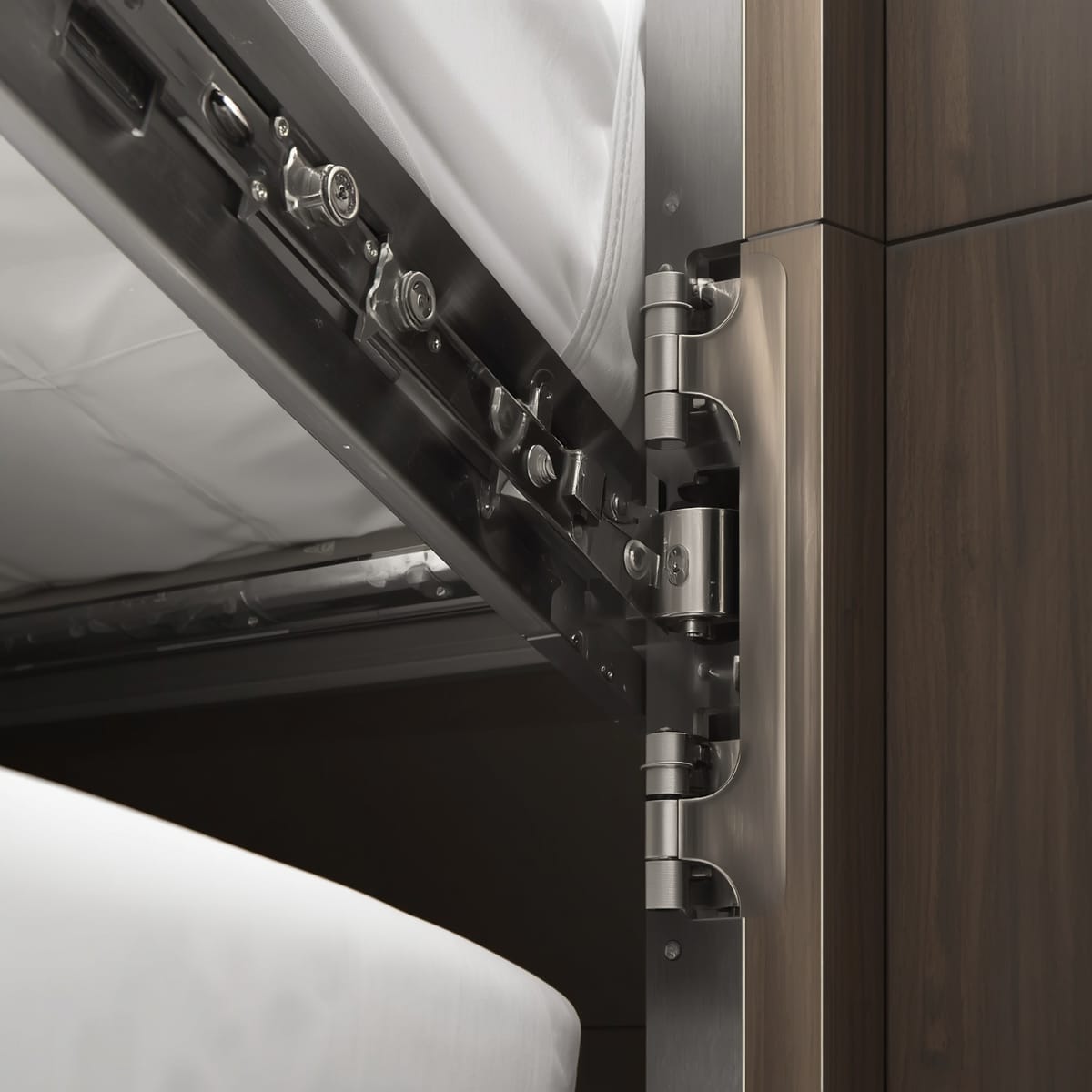
With anything that folds, the hardware is everything. Look for sturdy gas-piston lifts on wall beds, solid hinges, and frames rated for repeated daily use. A beautiful fold-down piece with a flimsy mechanism becomes scrap within a year and can be unsafe, so this is the area to spend on even if you economize on the finish. Where possible, try the mechanism in person before buying.
Measuring and planning the space
Foldable furniture only works if you plan the clearances. A wall bed needs floor space to fold down into; a fold-down desk needs clear wall and a chair that stores nearby. Measure both the folded and unfolded footprints, and check the room can accommodate the swing. Marking the unfolded footprint on the floor with tape before buying saves expensive mistakes.
Foldable furniture in a child’s or shared room
In a child’s small room, a fold-down desk or a bed with built-in storage keeps the floor clear for play, and a wall bed can turn a box room into a flexible space. Pair foldable pieces with the durable, reachable storage from our boys bedroom furniture ideas so the room stays both space-efficient and genuinely usable for a child.
Don’t over-fold the room
One or two well-chosen transforming pieces make a small room work; a room full of folding gadgets feels fussy and cheap, and the constant setting-up and packing-away becomes a chore. Combine a single hero piece – usually the bed – with simple fixed storage, and the room stays calm and practical rather than feeling like a puzzle.