
Red is a commitment – start small
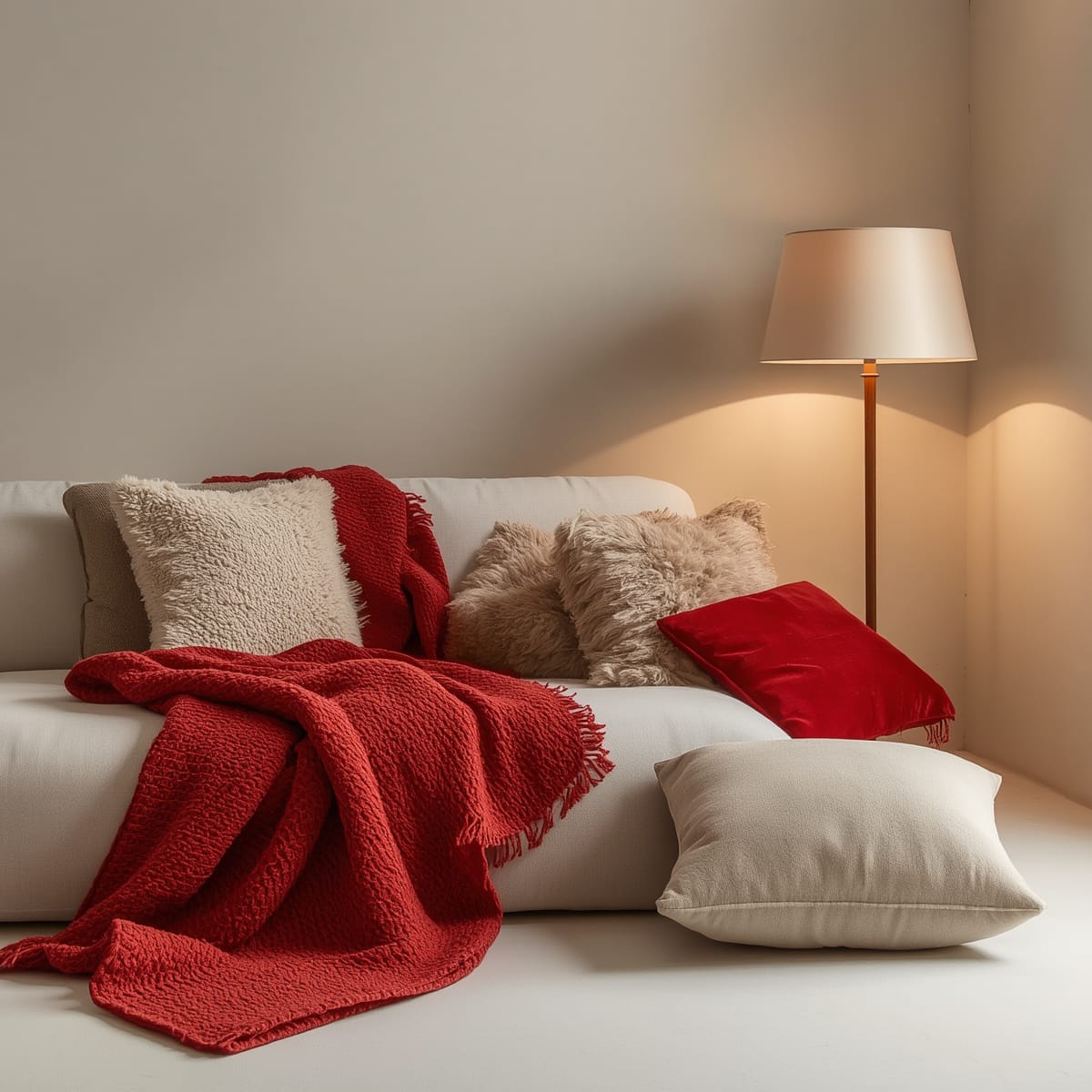
Red is the most stimulating colour you can put in a room meant for sleep, so it deserves respect. Rather than painting four walls and hoping, introduce red through bedding, cushions, a throw, or a lampshade first and live with it for a while. You’ll quickly learn how much red the room – and you – can comfortably take.
This start-with-an-accent caution applies to any bold colour, including the black kitchen cabinets approach we recommend in the kitchen: commit gradually, in one grounded place, before going all in.
Warm red vs cool burgundy: pick your undertone
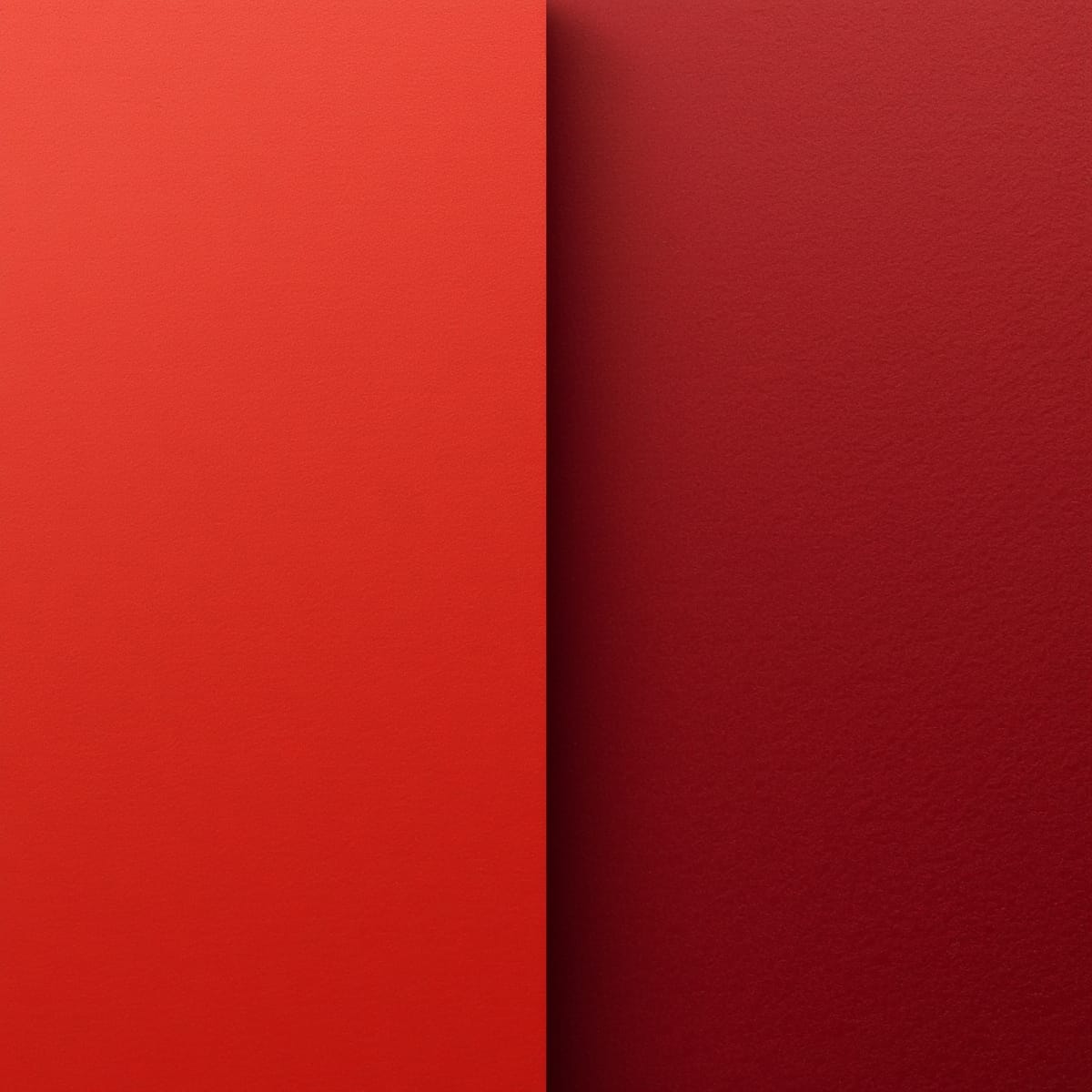
Reds split into two camps. A warm, orange-leaning red – tomato, brick, terracotta – is energetic and cosy in small doses but can feel intense over large areas. A cool, blue-leaning red – burgundy, oxblood, wine – is far more restful and the safer pick for a bedroom. Decide the mood you want first, then test swatches at night, because red darkens and can turn muddy under warm bulbs.
Where to put red so it calms down
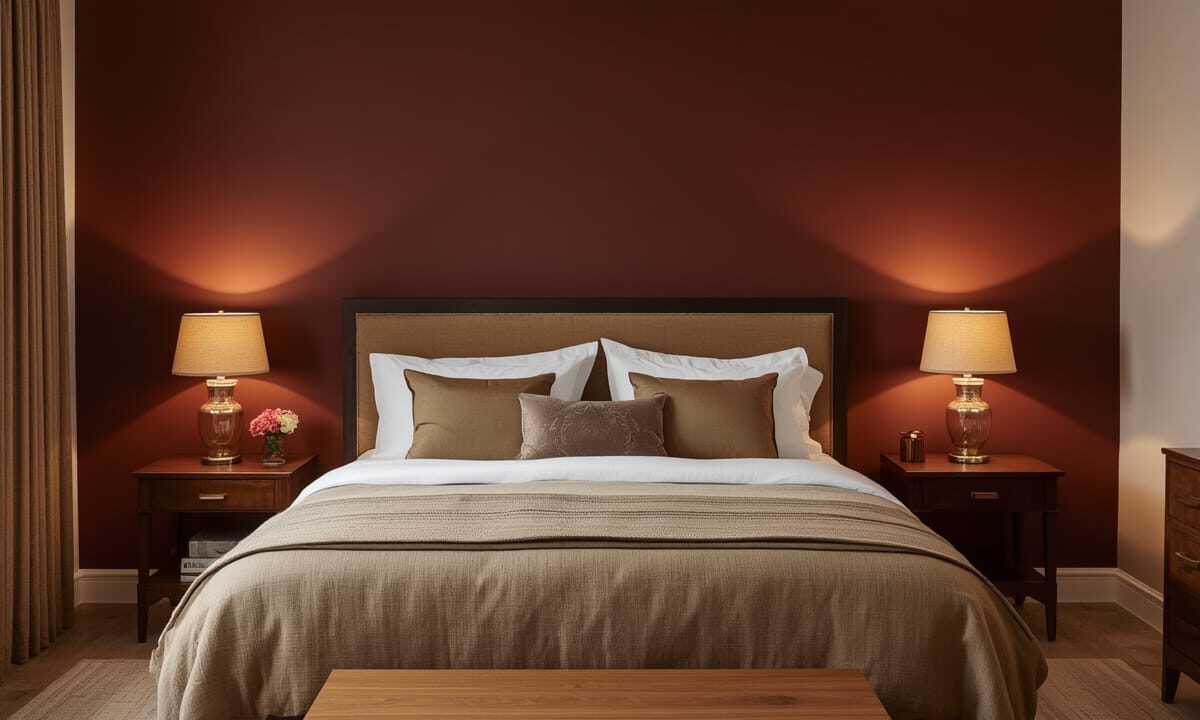
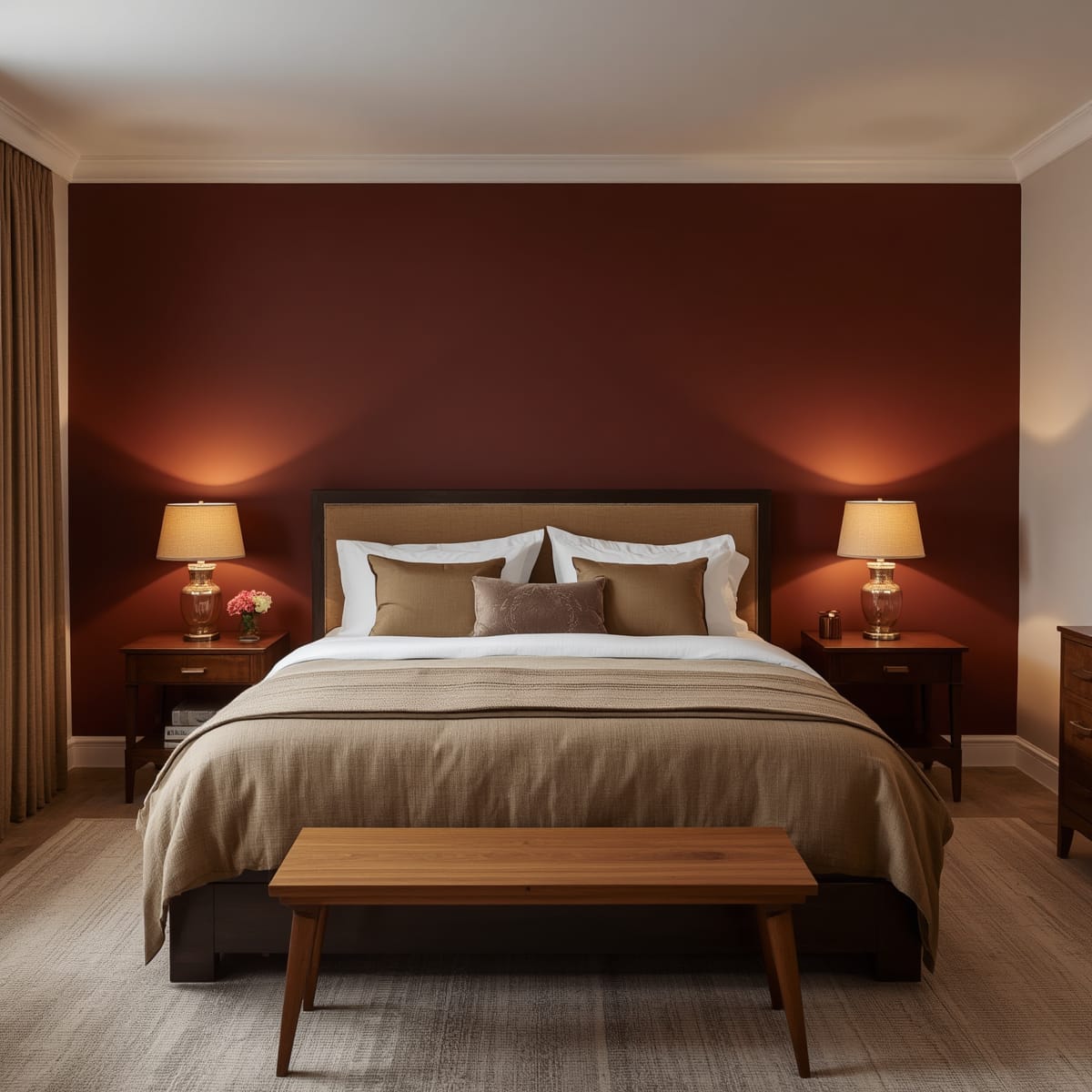
Contain the colour. A single deep-red wall behind the headboard gives the bed a rich backdrop without surrounding you with red on every side, and it keeps the most stimulating colour out of your direct eyeline as you fall asleep. Avoid red on the ceiling or on all four walls in a sleep space.
If you’d rather have pattern than a flat painted wall, a muted red 3D textured wallpaper softens the intensity by breaking the colour into smaller pieces.
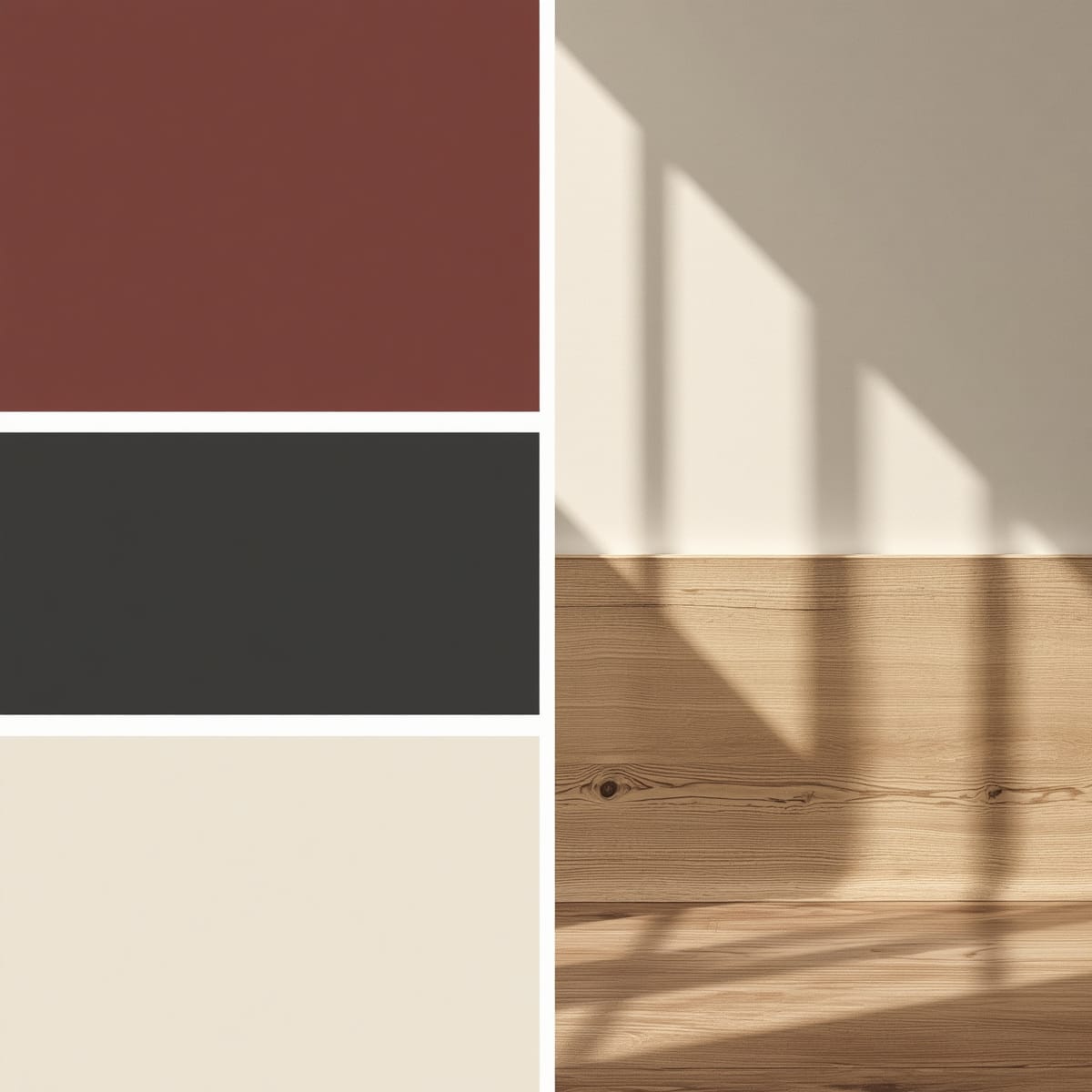
Pairings that tame red
Red needs calm company. Charcoal and warm grey ground it; cream and oatmeal soften it; oak and walnut add warmth without competing. Keep the bedding and the larger furniture in quiet neutrals so red stays the accent rather than the whole story.
Oak and walnut pieces from our wooden bedroom furniture ideas sit beautifully against a burgundy wall, and the cohesive-set logic in our modern bedroom furniture sets helps keep the rest of the room restrained.
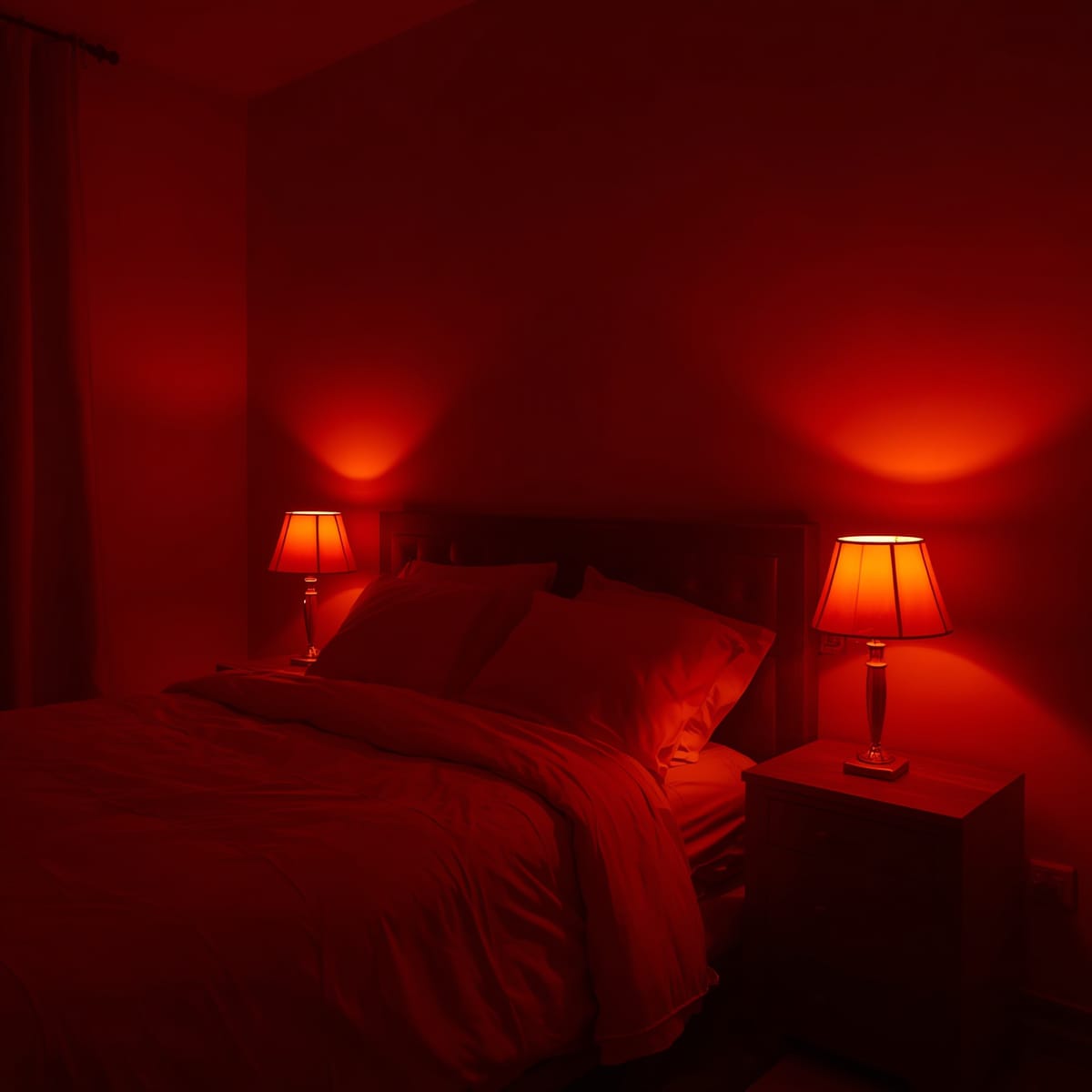
Lighting a red room
Red drinks light, so a single cool overhead will leave a red room feeling dark and heavy. Layer warm light instead: bedside lamps, a soft wall wash, and warm-white bulbs. Good layered lighting keeps a deep-red room feeling rich and enveloping rather than gloomy, and warm tones stop the colour shifting toward brown after dark.
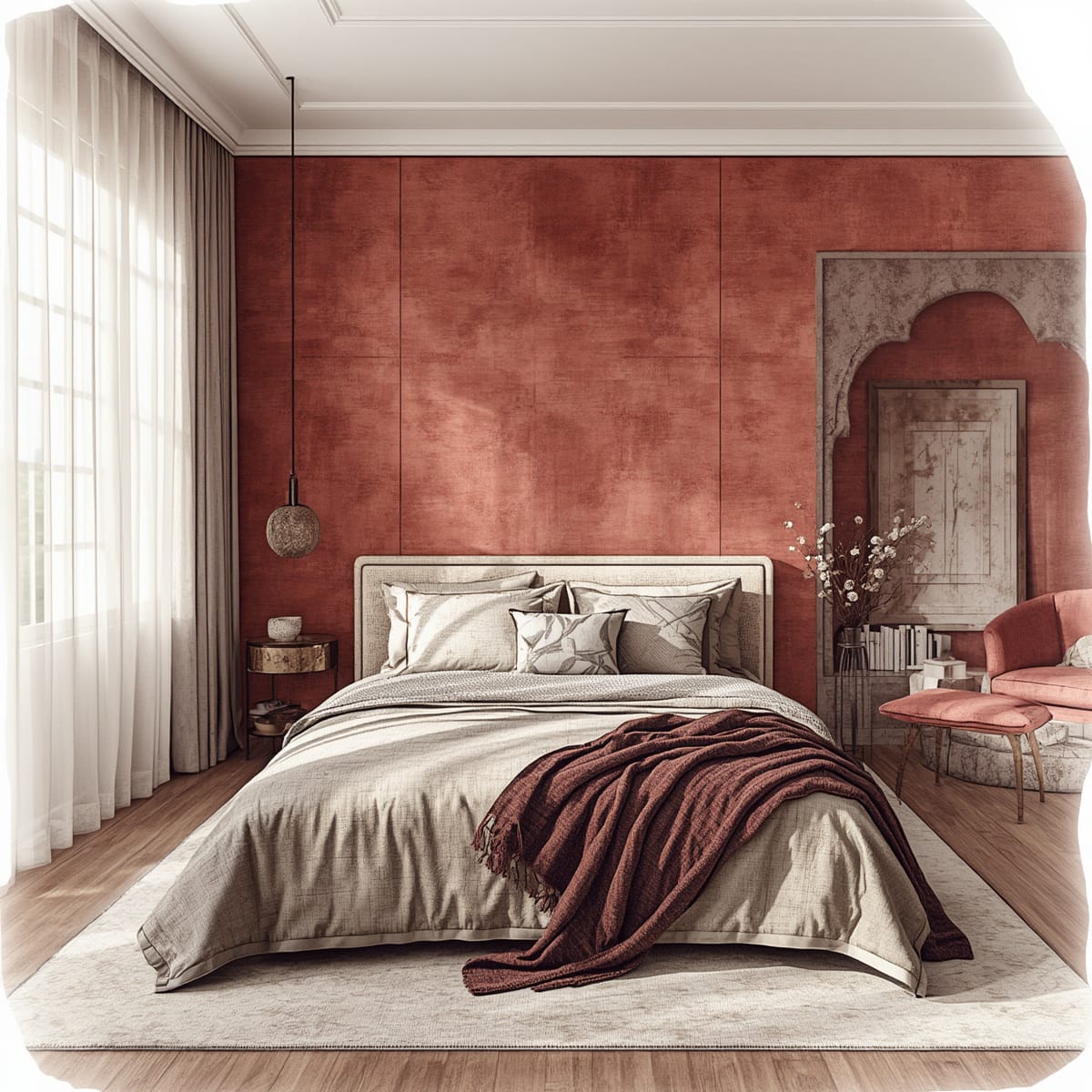
Red in a small bedroom
Red can work in a small room, but keep it to a single accent – a wall behind the bed or textiles – and keep everything else light so the room doesn’t close in. A deep burgundy accent against pale walls and warm wood can actually feel cosy rather than cramped, provided the rest of the palette stays calm and the lighting is warm and layered.
Red as part of a warm palette
If you like the warmth of red but want something gentler, it pairs naturally with softer warm tones. Our pink bedroom design ideas guide sits at the calmer end of the same family, and a dusty, muted red can read almost like a deep rose – a useful halfway house if full burgundy feels too strong.
Common red-bedroom mistakes
The frequent errors are using red on too many surfaces, choosing a hot, energetic red for a room meant for rest, pairing red with more bright colours instead of calm neutrals, and under-lighting the room so red turns muddy. Pick a cool, deep red, contain it to one wall or textiles, surround it with neutrals, and light it warmly.